A High-Efficiency Particulate Air (HEPA) filter captures particles, but it leaves gases and moisture untouched. The filter solves one mechanical job. Running a standalone hepa air purifier clears solid debris like dust and pollen, but it does not remove chemical fumes.
The rating comes from an explicit government standard. According to the United States Department of Energy (DOE) standard specification DOE-STD-3020-2015, a true filter must capture at least 99.97 percent of particles at a diameter of 0.3 micrometers. Particles at that exact dimension represent the hardest target for fibrous media to collect.
Retail packaging frequently displays unverified marketing terms. Phrases like HEPA-type or HEPA-like carry no legal meaning under federal standards, allowing manufacturers to sell lower-efficiency material to unsuspecting buyers. Knowing what the standard requires protects you from buying hardware that leaks dirty air back into your home.
The Department of Energy Standard Defines True HEPA Performance
The United States Department of Energy (DOE) standard specification DOE-STD-3020-2015 requires a true HEPA filter to collect at least 99.97 percent of airborne particles measuring 0.3 micrometers in diameter. This specific efficiency rating was created to contain radioactive dust in government laboratories during the Manhattan Project. It remains the baseline benchmark today.
The 0.3-micrometer benchmark targets the Most Penetrating Particle Size (MPPS). Particles above this dimension smash directly into the glass fibres because their mass carries them forward. Small objects behave differently.
Because 0.3 micrometers represents the hardest particle size to trap, efficiency rises for both larger and smaller diameters. According to research published by the National Institute for Occupational Safety and Health (NIOSH), a true HEPA element captures particles down to 0.01 micrometers with efficiency exceeding 99.97 percent. The rating describes a strict floor, not a ceiling.
Fibrous Weaves Capture Particles Through Three Physical Mechanisms
A HEPA filter does not act like a tiny kitchen strainer. Instead of blocking particles with uniform holes, it relies on a dense, non-woven mat of randomly arranged borosilicate glass fibres. Particles get trapped through three distinct physical processes as air twists through the media.
These three mechanisms overlap across the particle spectrum. The Environmental Protection Agency (EPA) notes that diffusion makes fibrous filtration exceptionally effective against ultrafine combustion particles and virus carriers. The media collects particles across all three modes without requiring an electrical charge.
- Interception occurs when a medium-sized particle follows an airstream close to a fibre and sticks to its surface.
- Impaction captures larger particles that possess too much inertia to follow the curving airflow, slamming them directly into a glass strand.
- Diffusion dominates particles smaller than 0.1 micrometers, where Brownian motion pushes particles across streamlines until they strike a fibre.
Unsealed Housings Allow Airflow to Bypass the Filter Element
Air purifiers lose substantial real-world performance when air leaks around the perimeter of the filter frame. This failure mode is called filter bypass. Because air always follows the path of least resistance, a gap of two millimetres allows uncleaned air to circumvent the filter completely.
Industrial units avoid bypass by clamping the filter against closed-cell foam or rubber gaskets. Budget plastic frames frequently warp under fan suction, breaking the seal. Quality equipment uses compression latches.
A filter medium certified to 99.97 percent capture rate delivers far lower real-world cleaning if the appliance chassis lacks continuous perimeter gaskets. In unsealed units, fan pressure pulls dirty room air straight through internal seams and exhaust ports without forcing it through the fibrous mat.
A HEPA Air Purifier Removes Particles but Ignores Gaseous Pollutants
A HEPA filter cannot capture gas molecules, chemical vapours, or volatile compounds. Gas molecules measure less than 0.001 micrometers in diameter, passing freely between the glass strands without sticking. They simply drift through the weave.
According to the Environmental Protection Agency (EPA), removing gaseous pollutants like formaldehyde and benzene requires an adsorbent bed containing activated carbon or alumina. If your indoor air problem stems from new paint, synthetic rugs, or chemical off-gassing, a standalone particle machine will not help. Check air contaminant levels with a dedicated VOC meter before purchasing hardware.
Many consumer units include a thin carbon mesh. These lightweight sheets weigh only a few ounces and saturate within weeks of continuous operation. Treating heavy chemical odours requires several pounds of granular activated carbon alongside the particle filter.
Room Sizing Depends on Clean Air Delivery Rate Instead of Floor Area
Retail box square-footage claims rarely match residential rooms. You should size equipment using the CADR rating established by the Association of Home Appliance Manufacturers (AHAM). This number reflects real-world output.
The Association of Home Appliance Manufacturers (AHAM) specifies the two-thirds rule for proper room sizing. Under this standard, the smoke CADR rating must equal at least two-thirds of the room floor area in square feet to provide four to five air changes per hour. A 300-square-foot room demands a smoke CADR of at least 200.
The Environmental Protection Agency (EPA) emphasizes that air exchange rate decides how fast indoor particle levels drop. Consult our guide on sizing an air purifier for a room to calculate your required airflow accurately. Undersized units run loud and leave rooms uncleaned.
| Room Size (Sq Ft) | Minimum Smoke CADR (CFM) | Target Air Changes per Hour | Primary Room Application |
|---|---|---|---|
| 150 | 100 | 4 to 5 | Small bedroom or private home office |
| 250 | 167 | 4 to 5 | Standard bedroom or nursery |
| 350 | 233 | 4 to 5 | Open master bedroom or kitchen |
| 500 | 333 | 4 to 5 | Large living room or shared living area |
Marketing Terms Like HEPA-Type Lack Regulatory Enforcement
Terms such as HEPA-type, HEPA-style, and 99% HEPA have no legal definition under federal standards. Appliance brands use these invented labels to market inexpensive filters that mimic the appearance of certified glass-fibre media. These imitations capture coarse dust but allow fine particles to pass through.
Testing under ASHRAE standard 52.2 classifies air filters by Minimum Efficiency Reporting Value (MERV). Under ASHRAE 52.2, a MERV 13 filter captures at least 50 percent of particles between 0.3 and 1.0 micrometers. That is a useful rating for an HVAC system, but it falls well short of true HEPA performance.
True filters always state 99.97 percent efficiency at 0.3 micrometers. If product literature omits the 0.3-micrometer particle size, the rating is meaningless. Never trust a percentage without an accompanying diameter.
Moisture Sources and Active Mold Require Structural Remediation Instead of Filtration
An air cleaner cannot resolve an active mold problem while a moisture source remains. A true HEPA filter captures airborne fungal spores, but living colonies release millions of new spores continuously until you stop the dampness. Filtration treats the symptom while the moisture feeds the cause.
According to the Environmental Protection Agency (EPA), mold growth requires moisture, and resolving mold requires fixing plumbing leaks or elevated humidity. The EPA advises that visible mold covering more than 10 square feet usually requires professional remediation. Do not rely on an air purifier for mold to handle structural dampness.
High indoor humidity also degrades filter media over time. In humid spaces like basements or crawl spaces, installing a dedicated basement dehumidifier must precede any particle filtration. Dry air stops mold propagation.
Continuous Operation on Low Settings Maintains Stable Particle Clearance
Air purifiers must run continuously to keep airborne particle concentrations low. Indoor activities like cooking, folding laundry, and walking across carpets re-suspend settled particles constantly throughout the day. Turning a machine on for an hour provides only temporary relief.
Noise levels dictate whether you keep an air cleaner running. Because maximum fan settings produce noticeable motor noise, you should purchase a unit with excess capacity so it can run quietly on medium speed. This prevents you from shutting the machine off at night.
Place the unit away from walls and curtains. Clean the outer mesh pre-filter every two to four weeks so coarse dust does not clog the primary glass-fibre media. Measure your room dimensions and check the certified CADR rating before you set up your next hepa air purifier.
What to Buy for This
Each entry below is a specification rather than a single model, because stock and pricing on this equipment change constantly. The products shown are what currently matches that specification. Match the spec, then buy whatever meets it.
True HEPA filtration console with minimum smoke CADR of 150 CFM, sealed rubber gasket housing, and three-stage mechanical pre-filter
Delivers five complete air changes per hour in rooms up to 225 square feet while running below 30 decibels on low speed for quiet sleep.
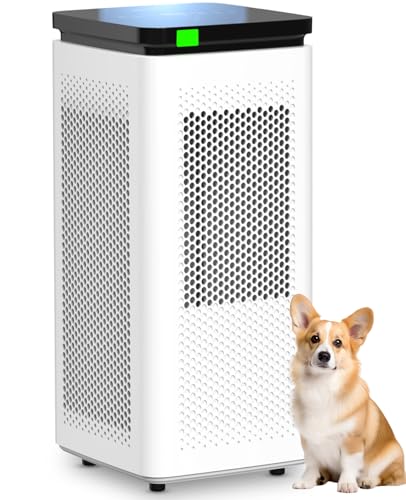

High-capacity true HEPA air cleaner with smoke CADR above 300 CFM, dual-sided air intakes, and AHAM Verifide certification
Moves sufficient air volume to manage rapid particle spikes from cooking, pets, and outdoor dust across spaces up to 450 square feet.


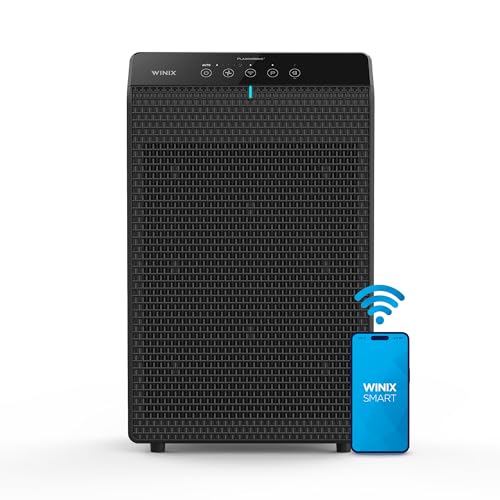
True HEPA air cleaner paired with at least two pounds of granular activated carbon in an airtight metal or heavy polymer housing
Combines 99.97 percent fine particle capture with sufficient sorbent mass to adsorb combustion gases and irritating smoke odours.
Prices are not shown here because they change daily and we will not display a stale one. Links open on Amazon, where the current price and availability are live.
Common questions
Can a HEPA air purifier remove viruses and bacteria?
A certified HEPA filter captures airborne droplets and aerosols carrying viruses and bacteria, because the 0.3-micrometer standard is the most penetrating particle size and smaller particles are collected by diffusion. The Centers for Disease Control and Prevention (CDC) recommends portable HEPA filtration units to help reduce concentrations of infectious aerosols in indoor spaces. However, the filter traps pathogens on the fibrous media rather than killing them instantly.
How often do you need to replace a true HEPA filter?
Most manufacturers specify replacing the main HEPA filter cartridge every 6 to 12 months under normal residential use. The Environmental Protection Agency (EPA) notes that operating an air cleaner in dusty or smoke-heavy environments loads the media faster, requiring earlier replacement. Inspect your pre-filter monthly and change the primary filter whenever airflow drops noticeably or the material turns dark grey.
Does a HEPA filter remove pet odours and cooking smells?
A HEPA filter does not remove pet odours or cooking smells because odour molecules are gases rather than solid particles. Gaseous chemicals pass through the fibrous filter weave without being trapped. To capture household odours, you need an air cleaner equipped with a dense activated carbon bed alongside the particle filter.
What is the difference between true HEPA and HEPA-type filters?
A true HEPA filter meets the United States Department of Energy standard by capturing at least 99.97 percent of particles at 0.3 micrometers. A HEPA-type filter is an unregulated marketing descriptor that often captures only 85 to 90 percent of fine particles. Manufacturers use the term HEPA-type because it sounds official while using cheaper, less dense filter media.
Can you wash and reuse a true HEPA filter?
You should not wash a standard true HEPA filter with water or vacuum it with a household cleaner. Wetting or scrubbing the delicate borosilicate glass fibres breaks the microscopic weave and creates channels through which unfiltered air bypasses the media. Always replace disposable cartridges with new factory-sealed filters unless the manufacturer explicitly specifies a washable design.