A standalone filter cleans apartment air without any physical changes to your lease. That is the most practical step for renters dealing with secondhand smoke, dust, or hallway odors. Shared ventilation ducts circulate air between units in many multi-family complexes. You cannot tear open the walls to seal those chases. Installing an air purifier for apartment living allows you to treat the air in your personal footprint while keeping your deposit safe.
Most rental units lack dedicated outdoor air intake. You rely on windows, door undercuts, and leaky wall junctions for basic air exchange. The Environmental Protection Agency (EPA) reports that indoor levels of certain pollutants can be two to five times higher than outdoor levels. Contaminants migrate through shared plumbing chases and electrical conduits when your neighbors cook or smoke.
Controlling your indoor air requires portable filtration alongside passive perimeter barriers. You do not need landlord approval to run a freestanding mechanical filter. Calculate your room volume first. Then position the unit where air moves freely.
Portable Cleaners Clear Particles Without Modifying Your Walls
Portable air cleaners remove airborne particulates by using an internal fan to draw room air through dense filter media. They operate completely independently of the central heating and cooling infrastructure of your building. This separation protects you from landlord disputes over electrical modifications or duct penetrations. Take the machine with you when your lease ends.
Central systems in apartment buildings often run on shared return ducts or simple recirculating loops. Those building-wide systems rarely contain filters dense enough to capture fine combustion particles or pet dander from adjacent units. A dedicated unit gives you local control over the specific rooms where you sleep and work. Airflow matters. Review our guide to choosing an air purifier to understand how fan motors and filter housings interact.
- No drilling or mounting hardware required for operation
- Standard electrical wall plugs draw minimal power during continuous use
- Mobility allows moving the cleaner between rooms as daily routines shift
Size an Air Purifier for Apartment Living by Clean Air Delivery Rate
The Clean Air Delivery Rate (CADR) determines how quickly a machine clears a room, whereas manufacturer square footage claims assume ceiling heights you might not have. The Association of Home Appliance Manufacturers (AHAM) measures CADR under standardized laboratory conditions for smoke, dust, and pollen. Smoke CADR reflects performance on the smallest particles, measuring between 0.09 and 1.0 microns. Check the smoke rating first.
The EPA recommends that a unit have a smoke CADR equal to at least two-thirds of the room area in square feet. For a 300-square-foot living room, you need a smoke CADR of at least 200 cubic feet per minute (CFM). High ceilings change the calculation. If your apartment has ten-foot ceilings rather than standard eight-foot ceilings, multiply your required CADR by 1.25 to account for the extra air volume.
| Room Area (Square Feet) | Minimum Smoke CADR (CFM) | Target Air Changes Per Hour |
|---|---|---|
| 150 | 100 | 4 to 5 |
| 225 | 150 | 4 to 5 |
| 300 | 200 | 4 to 5 |
| 400 | 265 | 4 to 5 |
Shared Walls Bring Contaminants Through Framing Gaps
Air pressure differences pull cooking particles, tobacco smoke, and hallway odors through electrical outlets and baseboard gaps. Buildings experience the stack effect when warm indoor air rises and escapes through upper floors. This draws replacement air upward from lower units, crawlspaces, and adjacent corridors. Pressure moves air constantly.
According to the American Society of Heating, Refrigerating and Air-Conditioning Engineers (ASHRAE), air leakage between apartment units can account for up to 20 percent of a unit's total air exchange. Mechanical purifiers capture particles carried on these inward air currents as they circulate through your room. They cannot stop infiltration at the boundary. You must address the incoming leakage pathways and the ambient room air together.
True High-Efficiency Particulate Air Filters Catch Fine Dust and Smoke
A High-Efficiency Particulate Air (HEPA) filter captures at least 99.97 percent of particles down to 0.3 microns according to the United States Department of Energy standard. These filters trap fine particulate matter (PM2.5), which includes wildfire smoke, pollen, mold spores, and vehicle exhaust from nearby roads. Dense glass fiber mats force particles to collide with fibers through interception, impaction, and diffusion. The mechanism relies on physics.
Avoid purifiers that use ionizing needles or electrostatic plates as their primary cleaning mechanism. The EPA warns that ozone generators and electronic cleaners produce ozone, a respiratory irritant that damages lung tissue. Mechanical fiberglass filters produce zero ozone.
Check your pre-filter every month. Pre-filters catch coarse hair and lint, which preserves the life of the delicate internal HEPA layer. Rinsing or vacuuming the outer screen keeps airflow high.
Odor and Gas Removal Requires Thick Carbon Beds
Thin sheets of carbon-impregnated mesh remove cooking smells for only a few weeks before the material saturates. Gaseous pollutants pass straight through standard particulate filters. These gases include volatile organic compounds (VOCs), formaldehyde from furniture, and unburned fuel from gas stoves. They require activated carbon, which traps gases through physical adsorption inside billions of microscopic pores. Carbon acts like a sponge.
Units with a thin carbon foam wrap hold only a few ounces of sorbent material. That foam saturates rapidly when exposed to constant hallway cooking odors or neighbor smoking. For chronic gas problems, look for purifiers containing three to fifteen pounds of granular activated carbon pellets in a sealed canister. You can track indoor gas concentrations using a consumer VOC sensor to monitor when your carbon bed reaches its adsorption capacity.
Noise Levels Dictate Usable Clean Air Delivery
Purifiers only clean the air when the fan is running, which makes acoustic output the primary factor in daily compliance. Manufacturers test CADR ratings at maximum fan speed. That top speed often generates sound levels between 55 and 65 decibels. That volume matches a loud conversation or an older dishwasher. Most people cannot sleep or work next to that continuous drone. Noise changes everything.
When you dial the fan down to its lowest setting, the CADR frequently drops by 60 to 80 percent based on AHAM test procedures. Buy an oversized unit rated for a room 50 percent larger than your space. Sizing up allows you to run the machine on medium speed, achieving your required air changes per hour while keeping sound below 40 decibels in your apartment bedroom.
Temporary Sealing Stops Neighbor Infiltration at the Perimeter
Weatherstripping on entry doors and foam gaskets behind outlet covers block hallway drafts without damaging building surfaces. Sealing these gaps prevents neighboring air from entering your apartment faster than your cleaner can process it. These temporary measures require zero permanent adhesives and leave no marks when removed at move-out. Simple barriers work immediately.
Inspect the perimeter of your primary entry door first. If light passes through the gap beneath the door, air and particulate matter pass through as well. Add foam gaskets behind outlets on common walls to halt draft movement through wall cavities.
- Install a silicone slide-on door sweep along the bottom edge of your front door to close the hallway gap
- Place closed-cell foam insulation gaskets behind plastic electrical switch and outlet plates on shared walls
- Apply removable, non-marking draft seal tape along window frames during cold seasons to block exterior vehicle emissions
Ventilation Demands Fresh Air Intake Alongside Air Cleaning
An air cleaner does not reduce carbon dioxide levels or replenish oxygen in an enclosed apartment. In compact apartments with closed doors and windows, human respiration causes carbon dioxide (CO2) to accumulate rapidly. The CDC notes that poor indoor ventilation leads to lethargy, headaches, and impaired cognitive concentration. Purifiers do not add oxygen.
Running a mechanical filter cleans the air, but you must still flush the space with outdoor air periodically. Open windows on opposite sides of your apartment for ten minutes to generate a cross-breeze when outdoor particulate levels are low. You can gauge ventilation effectiveness in your living area using carbon dioxide monitors or track overall particulate trends using indoor air quality sensors. Position an air purifier for apartment rooms in your central living area today, keep interior doors unlatched, and let the unit run continuously on medium speed.
What to Buy for This
Each entry below is a specification rather than a single model, because stock and pricing on this equipment change constantly. The products shown are what currently matches that specification. Match the spec, then buy whatever meets it.
A compact true HEPA console with a certified smoke CADR between 140 and 180 CFM and a washable foam pre-filter
Provides four air changes per hour in spaces up to 250 square feet while operating under 45 decibels on medium speed


A high-capacity true HEPA tower with a certified smoke CADR of at least 250 CFM and auto-dimming display lights
Delivers the necessary volume exchange for open floor plans without requiring maximum fan speed
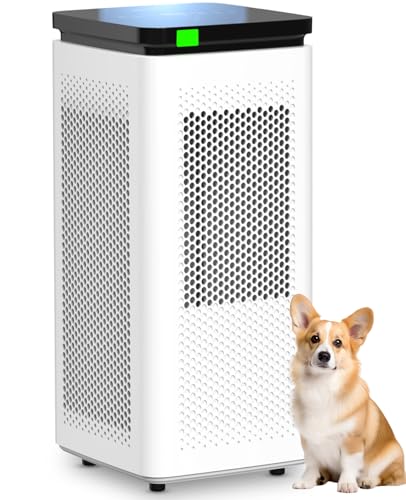

A heavy-canister mechanical air purifier containing at least three pounds of granular activated carbon pellets alongside a true HEPA filter
Adsorbs volatile organic compounds and persistent tobacco or cooking odors that pass directly through standard particulate filters
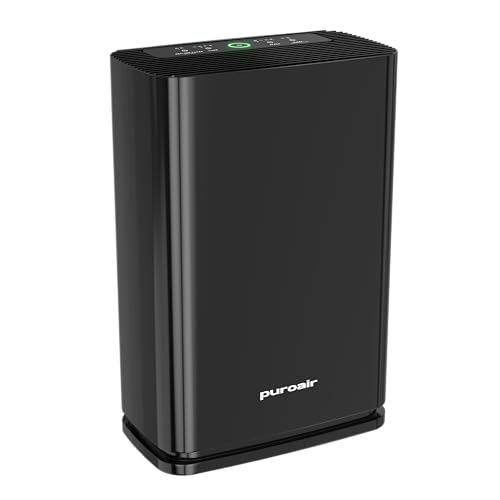
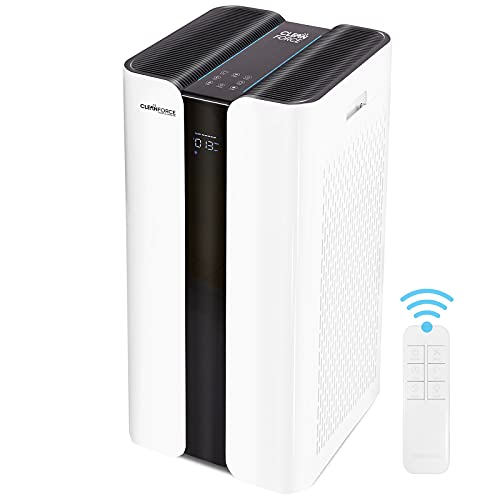
Prices are not shown here because they change daily and we will not display a stale one. Links open on Amazon, where the current price and availability are live.
Common questions
Can an air purifier run all day in a rental apartment?
Yes, continuous operation keeps particle concentrations stable as new dust and smoke enter through building gaps. Modern mechanical filter fans consume between 20 and 50 watts of electricity on medium speed according to the Department of Energy. Running the unit constantly costs pennies per day and prevents pollutant spikes.
Where is the best place to put an air purifier in an apartment?
Place the air purifier near the center of the room or close to the suspected contaminant source, such as a drafty entry door. Maintain at least eighteen inches of open clearance around all intake grilles so airflow remains unrestricted. Avoid tucking the unit into tight corners, behind heavy curtains, or under desks.
Will an air purifier remove cooking smells from neighboring apartments?
A standard particulate filter will trap grease droplets and visible smoke, but it will not eliminate gaseous odor molecules. To capture neighbor cooking aromas, you need an air purifier equipped with a thick bed of granular activated carbon. Thin carbon-coated sheets saturate too quickly to provide long-term odor control.
How often should a renter replace the HEPA filter?
Most manufacturers recommend replacing true HEPA filters every six to twelve months depending on ambient air conditions. If you live with pets or experience regular tobacco smoke migration from neighbors, replacement intervals may drop to every four to six months. Vacuuming the pre-filter monthly extends the life of the primary filter.
Does an air purifier get rid of mold in an apartment?
An air cleaner captures airborne mold spores, but it cannot kill or remove the physical mold colony growing on building materials. Active mold growth requires moisture control, plumbing repairs, or surface cleaning to resolve completely. If you have visible growth on bathroom drywall or window sills, read our guide on mold removal sprays to treat the physical colony.