An under sink water filter cleans your drinking water through carbon adsorption or membrane separation. Each method solves a different problem. Carbon captures chemicals that affect taste or odor. Reverse osmosis strips dissolved mineral salts and heavy metals. Most kitchens do not need both.
You mount these units beneath the counter on the cold water pipe. They treat water only at that specific sink. This point-of-use approach conserves filter media. Washing dinner plates does not burn through expensive replacement cartridges. Water flows on demand without taking up counter space.
Choosing the right system requires identifying your specific water quality challenges. A simple carbon block neutralizes chlorine and volatile organic compounds. Dissolved minerals, lead, and nitrates demand membrane separation. Testing your water first keeps you from buying unnecessary hardware.
Carbon Blocks Trap Organic Chemicals Through Surface Adsorption
Activated carbon removes contaminants by attracting non-polar organic molecules to microscopic internal pore surfaces. The process is called adsorption. Carbon does not strain particles like a sieve. Instead, dissolved chemicals bond chemically to the porous carbon surface as water passes through the cartridge. Extruded carbon blocks pack pulverized carbon particles tightly together with a binding agent. This dense structure forces water through uniform pores, which prevents the channeling common in granular carbon filters. Water cannot bypass the media. According to standards set by NSF International (NSF) and the American National Standards Institute (ANSI), NSF/ANSI 42 validates systems for aesthetic effects like chlorine taste and odor. NSF/ANSI 53 certifies units for specific health hazards, including volatile organic compounds (VOCs) and lead. Carbon blocks excel at capturing disinfection byproducts, pesticides, and unpleasant odors. They cannot remove dissolved minerals. Hardness minerals, sodium, and nitrates pass through unchanged.
Contact time governs how thoroughly carbon adsorbs chemical impurities. Fast-moving water exits before contaminants bind to the pores. Engineers call this empty bed contact time. Under the sink, cartridge thickness and flow restrictors dictate contact duration. Dense blocks force water through tortuous paths. That winding journey increases contact time in a compact housing. Cartridge volume directly influences total chemical capture.
| Feature | Extruded Carbon Block | Granular Activated Carbon |
|---|---|---|
| Media Structure | Solid compressed porous cylinder | Loose packed carbon granules |
| Channeling Risk | Extremely low due to uniform density | Moderate if water forms bypass channels |
| Contact Time | High contact time through dense pathways | Variable depending on line pressure |
| Sediment Resistance | Vulnerable to surface clogging | Moderate space between granules |
| Primary Target | Chlorine, lead, fine particulates, VOCs | Basic chlorine taste and general odors |
Reverse Osmosis Forces Water Through a Semi-Permeable Membrane
Reverse Osmosis (RO) separates clean water molecules from dissolved mineral ions by applying line pressure against a dense synthetic sheet. Normal osmosis draws water toward high mineral concentrations. Plumbing line pressure reverses that natural flow. According to the Centers for Disease Control and Prevention (CDC), reverse osmosis membranes have an effective pore size around 0.0001 microns. That barrier blocks dissolved salts, arsenic, nitrates, fluoride, and heavy metals. Clean water permeates the sheet. Rejected ions wash down the drain line as concentrated brine. According to the Environmental Protection Agency (EPA), typical consumer reverse osmosis systems discharge several gallons of reject water for every gallon of purified water produced. This wastewater is the mechanical price of membrane separation. Because the membrane purifies water slowly, the system stores clean water in a pressurized under sink tank. You draw finished water directly from that storage bladder. NSF/ANSI 58 establishes the construction and performance criteria for residential reverse osmosis systems. Learn more about system limitations in our overview of reverse osmosis systems.
Demineralized water tastes flat to many palates. Because the membrane rejects alkaline minerals, finished water often exhibits a slightly acidic pH between 6.0 and 6.5, according to the Water Quality Association (WQA). Many multi-stage units incorporate a post-membrane remineralization cartridge. This final stage adds food-grade calcite or magnesium back into the stream to restore a neutral pH and improve taste. The pressurized tank also requires periodic sanitization. Bacterial biofilm can colonize the internal rubber bladder over time.
A Dedicated Faucet Protects Your Filter Cartridges From Premature Exhaustion
Most under sink water filters feed a small auxiliary faucet mounted beside the main kitchen tap. This design isolates your filtered drinking water from routine dishwashing. Kitchen faucets flow between 1.5 and 2.2 gallons per minute, according to the Environmental Protection Agency (EPA) WaterSense specifications. Running filtered water at that volume exhausts filter media within weeks. A dedicated faucet limits flow to roughly 0.5 to 0.8 gallons per minute. Slower flow increases contact time. Contact time allows carbon pores to capture target chemicals thoroughly. Point-of-use filtration treats only what you ingest. For whole-home protection that covers showers and appliances, explore our guide to whole house water filters. Installing an auxiliary faucet requires an open sink knockout or drilling through the countertop. Direct-connect carbon units avoid this step by filtering cold water through your existing primary faucet. However, direct-connect cartridges exhaust faster because washing dishes uses treated water.
Connecting the system to your cold water supply requires a dedicated feed adapter valve. This brass fitting installs between the existing wall shutoff angle stop and the flexible faucet riser tube. It splits incoming cold water into two independent lines. The primary line continues to your main faucet. A small polyethylene tube routes water to the filter intake. High-quality adapters include an integrated shutoff valve. This valve lets you isolate the filters for maintenance without cutting off the entire kitchen.
Pre-Filtration Stages Shield the Main Treatment Elements From Sediment
Multi-stage under sink systems place a mechanical sediment pre-filter ahead of the primary purification stage. Suspended solids blind carbon pores. Silt, sand, and loose pipe rust accumulate on the outer surface of dense carbon blocks. This accumulation chokes water flow before the carbon adsorbs its rated chemical capacity. A spun polypropylene or pleated cartridge traps these coarse particles first. Most multi-stage units rely on a 5-micron pre-filter to catch visible grit. In reverse osmosis units, sediment protection is mandatory. Particulate matter shreds thin-film composite membranes. Read our deep dive on sediment filters to understand micron ratings. Replacing an inexpensive pre-filter every six months preserves the more expensive downstream elements. Dual-stage carbon systems pair this mechanical filter directly with an extruded block.
Graded-density cartridges offer superior service life. Loose outer fibers trap heavy sand. Dense inner cores stop microscopic silt down to 1 micron. This layered design prevents the outer surface from clogging prematurely. Well water with high clay content often requires dual sediment stages. Pairing a 20-micron pre-filter with a 5-micron secondary filter distributes the particulate load. Clear filter housings let you inspect sediment buildup without depressurizing the system.
Selecting an Under Sink Water Filter Depends on Documented Contaminants
Your incoming water chemistry dictates which filtration media your kitchen requires. Municipal water systems add chemical disinfectants like chlorine or chloramine to kill biological pathogens. An extruded carbon block certified to NSF/ANSI 42 eliminates chlorine taste and odor completely. If your home contains legacy copper piping with lead solder, select an under sink water filter certified to NSF/ANSI 53 for lead reduction. Review our analysis on removing lead in water for certification verification steps. PFAS chemicals also require specialized carbon or reverse osmosis membranes, as explained in our guide to PFAS water filters. Private well supplies carry different risks. Wells frequently contain dissolved nitrates, heavy metals, and high mineral counts that carbon cannot trap. Reverse osmosis certified to NSF/ANSI 58 is the standard point-of-use answer for private well drinking water. Ordering a comprehensive water test kit clarifies your specific treatment targets before you spend money on hardware. A point-of-use unit does not solve whole-home plumbing problems. If mineral scale ruins your water heater or laundry develops rust stains, you need treatment at the main service entry. If lab testing confirms contamination from nitrates or arsenic, simple carbon filtration fails and a certified membrane system is required.
Under the Safe Drinking Water Act, community water utilities must distribute an annual Consumer Confidence Report by July 1. This document identifies detected contaminants, maximum contaminant levels, and treatment methods used across your local municipal supply.
TDS Meters Reveal Membrane Performance Rather Than Biological Safety
Handheld total dissolved solids meters measure the electrical conductivity of water to estimate mobile charged ions. They register calcium, magnesium, sodium, chloride, and trace heavy metals. They do not detect uncharged molecules. Pesticides, gasoline additives, pharmaceuticals, and PFAS leave conductivity unchanged. According to the Environmental Protection Agency (EPA), the secondary drinking water standard recommends total dissolved solids remain below 500 milligrams per liter. A high reading does not indicate toxic water. Mineral-rich spring water shows elevated conductivity while remaining safe to drink. TDS meters serve one specific job under the sink. They measure reverse osmosis membrane rejection efficiency. When a membrane operates correctly, it rejects 90 to 98 percent of dissolved ions, according to manufacturer benchmarks verified by the Water Quality Association (WQA). If feed water reads 300 parts per million and treated water reads 20 parts per million, the membrane functions properly. A rising reading warns you that the membrane has ruptured or fouled. Read our guide on using a TDS meter to monitor your drinking water.
Cartridge Replacement Schedules Depend on Gallons Treated Instead of Dates
Manufacturers print calendar intervals on replacement packaging because months are easy to track. That timeline is a guess. A six-month recommendation assumes an average family consuming typical water volumes. Actual cartridge exhaustion depends on total gallons passed and incoming sediment loads. Usage varies wildly between homes. Carbon blocks exhaust when internal pore sites fill completely with organic chemicals. Saturated media can dump accumulated contaminants back into the stream. This phenomenon is called breakthrough. You may notice chlorine odors returning. Track usage with an inline water meter rather than arbitrary calendar alerts. Consult our breakdown on how often to change water filter cartridges for gallon calculations. Replacing filters on actual consumption protects water quality while eliminating wasted spend.
Stagnant water inside filter housings creates an environment where heterotrophic bacteria multiply. Municipal chlorine prevents bacterial growth in city mains. The carbon filter strips that disinfectant immediately upon contact. Water sitting in a filter over an extended absence can accumulate elevated bacterial counts. Sanitizing the sump bowls during cartridge swaps clears this growth. Always flush new cartridges for ten minutes before drinking.
Physical Space and Drainage Determine Which System Fits Beneath the Counter
Under sink cabinets house garbage disposals, plumbing traps, pull-out spray hoses, and cleaning supplies. Single-stage and dual-stage carbon filters occupy minimal space. They mount directly to the cabinet wall. Reverse osmosis systems require substantial cabinet clearance. A standard three-gallon storage tank measures roughly 11 inches in diameter and 15 inches tall. You must also mount a multi-cartridge manifold and route four separate tubing lines. Reverse osmosis units need a drain saddle clamped around the sink drain pipe for brine discharge. According to the International Association of Plumbing and Mechanical Officials (IAPMO) Uniform Plumbing Code, reverse osmosis drain lines must include a physical air gap to prevent wastewater back-siphonage. Without an air gap, a backed-up sink drain can contaminate your drinking water system. Standard reverse osmosis membranes require water pressure of at least 40 pounds per square inch (PSI), according to specifications from the Water Quality Association (WQA). Low pressure reduces pure water production and increases brine waste. If your home has low plumbing pressure, install a unit with a dedicated booster pump. Pull your municipal utility annual water quality report before purchasing an under sink water filter so you match the media to your home plumbing.
Plumbing codes in many jurisdictions mandate an air-gap faucet for reverse osmosis installations. The air gap creates a physical break between the filter discharge tubing and the household sewer pipe, preventing sewage backup into clean water lines.
What to Buy for This
Each entry below is a specification rather than a single model, because stock and pricing on this equipment change constantly. The products shown are what currently matches that specification. Match the spec, then buy whatever meets it.
Two-stage under sink system with a 5-micron spun sediment pre-filter and a solid extruded carbon block certified to NSF/ANSI 42 and 53
Strips disinfectant chemicals, bad tastes, and particulate heavy metals without generating wastewater or requiring a bulky holding tank
 EcoPure ECOP20 2 Stage Under Sink Water Filter System – NSF-Certified to Reduce 58 Contaminants – Clean Drinking Water – Easy Filter Changes – Includes Chrome Faucet & FiltersEcoPure
 Frizzlife SW10 Under Sink Water Filter System, NSF/ANSI 53&42 Certified, Reduces 99.99% Lead, Chlorine, Bad Taste & Odor, Direct Connect Water Filter, 8K Gallons High Capacity, 0.5 Micron, USA TechFRIZZLIFE
Four-stage reverse osmosis system featuring sediment pre-filtration, dual carbon blocks, a 50-gallon-per-day (GPD) membrane certified to NSF/ANSI 58, and an air-gap faucet
Eliminates dissolved nitrates, fluoride, arsenic, and heavy metals that bypass conventional carbon blocks
 iSpring RCC7AK-BN NSF Certified, 75 GPD, Alkaline 6-Stage Reverse Osmosis System, pH+ Remineralization RO Water Filter System Under Sink Patented Top-Mounted Faucet Design for Easy InstallationiSpring
 iSpring RCC7-BLK, NSF/ANSI 58 Certified, 5-Stage Reverse Osmosis System, RO Water Filter System Under Sink, Drinking Water Filter, 75 GPD, Stylish Black RO FaucetiSpring
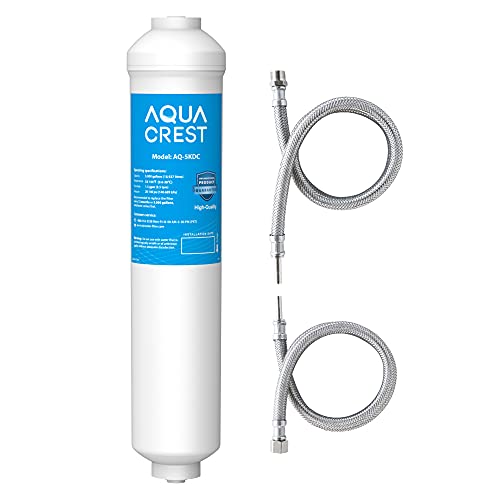
High-flow single-stage catalytic carbon block filter connecting directly to the primary 3/8-inch cold water shutoff valve
Fits into tight spaces without drilling a secondary countertop hole or mounting an auxiliary drinking faucet

Reverse osmosis system equipped with an integrated 24-volt electric booster pump, automatic shutoff valve, and NSF/ANSI 58 certified membrane
Maintains optimal operating pressure above 60 PSI to ensure maximum membrane rejection when household plumbing delivers under 40 PSI
 iSpring RCC7P-AK, 6-Stage Reverse Osmosis System Under Sink Alkaline Water Filter and Pump, RO Drinking Water Filtration System, Patented Top-Mounted Faucet Design for Easy InstallationiSpring
 iSpring RCC7P, 75 GPD Reverse Osmosis System with Pump, 5-Stage Boosted Performance Under Sink RO Water Filtration System with Patented Top-Mounted Faucet Design for Easy InstallationiSpring
Prices are not shown here because they change daily and we will not display a stale one. Links open on Amazon, where the current price and availability are live.
Common questions
Does an under sink water filter reduce water pressure at the kitchen faucet?
A dedicated auxiliary faucet system does not alter water pressure at your primary kitchen tap. Dedicated systems draw water through a small diversion valve, leaving main faucet flow completely unaffected. Direct-connect inline filters may cause a slight drop of roughly 0.5 gallons per minute depending on cartridge micron density.
What is the difference between NSF/ANSI 42 and NSF/ANSI 53 certifications?
NSF/ANSI 42 certifies filtration performance for aesthetic water quality attributes like chlorine taste, odor, and particulate cloudiness. NSF/ANSI 53 certifies removal of specific health-related contaminants with established federal safety limits, such as lead, mercury, and volatile organic compounds. A filter carrying only NSF/ANSI 42 is not certified to protect against toxic chemicals.
Why does a reverse osmosis under sink water filter produce wastewater?
Reverse osmosis requires a continuous cross-flow of water across the membrane surface to prevent mineral fouling. The system directs clean water through the membrane pores while flushing rejected salts and minerals down the drain as brine. Without this wastewater stream, mineral scale would clog the synthetic membrane within days of installation.
Can an under sink water filter soften hard water?
Standard carbon under sink filters cannot remove dissolved calcium and magnesium ions that create hard water. A reverse osmosis system will strip these minerals from drinking water, but point-of-use systems do not protect water heaters, dishwashers, or bathroom fixtures. Whole-home water softening requires an ion-exchange softener installed at the main water entry point.
How do you know when an under sink carbon filter is exhausted?
The primary indicator of carbon exhaustion is a noticeable return of chemical odors or chlorine taste in your drinking water. A sharp drop in water flow rate can also signal that the sediment pre-filter or outer carbon surface has blinded with particulate matter. Tracking your household water volume with an inline flow meter provides the most reliable replacement schedule.
Does a carbon under sink filter remove fluoride from tap water?
Standard activated carbon blocks do not remove fluoride because fluoride ions remain dissolved in water without binding to carbon pores. Fluoride reduction requires either a reverse osmosis membrane certified to NSF/ANSI 58 or a specialized cartridge containing activated alumina media. If fluoride reduction is your primary goal, select a multi-stage membrane system.