A petri dish mold test kit cannot tell you if your room has an active fungal problem. Mold spores exist naturally in every cubic meter of outdoor and indoor air. When you remove the plastic lid, drifting spores fall onto the wet gel. The plate provides water and sugar. The spores germinate within days. That growth proves only that your air contains biology, which is true of every breathable space on earth.
Retail test kits exploit human fear. Fuzzy black and green mold growing in a plastic dish looks horrifying on a countertop. You see dark fuzz and assume your drywall is rotting with toxic growth. Yet viable spores on an agar plate reveal nothing about airborne concentration, species toxicity, or moisture intrusion. Understanding what these kits measure prevents wasted money and unnecessary panic.
Gravity Settling Plates Distort Real Spore Exposure
Settling plates collect only the spores that drop out of the air by gravity. Heavy particles fall rapidly. Lightweight spores remain suspended in air currents and drift past the dish. Fungal species like Cladosporium produce large, dense spore clusters that sink quickly to the floor. Fungi in the Aspergillus and Penicillium families produce tiny, lightweight spores that stay airborne for hours on normal room drafts. A gravity plate captures heavy spores while missing tiny ones entirely.
This mechanical bias skews every sample. The plate reflects particle weight. Professional testing equipment relies on volumetric collection devices that pull a measured volume of air through an impaction cassette. A calibrated pump pulls fifteen liters of air per minute through the intake. That steady draw captures both light and heavy particles proportionally. Placing a passive dish on a bedroom shelf ignores airflow dynamics. The resulting culture tells you what happened to fall during that hour, not what you breathe.
A running ceiling fan keeps lightweight fungal particles suspended indefinitely. An open dish sitting in still air collects far more falling debris than the same dish placed near an active return vent. That draft variation makes room-to-room comparisons meaningless.
Every Gel Plate Cultivates Common Outdoor Fungi
The nutrient agar inside a retail kit cultivates mold in virtually any environment. Exterior doors, open windows, and clothing introduce thousands of outdoor spores into homes daily. The Environmental Protection Agency (EPA) notes that mold spores occur naturally in indoor air and that outdoor air remains the primary source. An open plate left in an open field cultivates mold. The exact same plate left in a clean bedroom cultivates mold.
A positive culture reveals no building failure. Mold requires moisture, warmth, and organic food to colonize building materials like drywall paper or pine. A dry wall board prevents germination. The nutrient gel provides optimal moisture and simple sugars that indoor building surfaces do not supply on their own. The dish manufactures ideal growing conditions that do not exist on clean baseboards.
Testing without controls creates confusion. Legitimate environmental investigations collect outdoor air samples alongside indoor room air samples. If outdoor air holds four hundred spores per cubic meter and indoor air holds one hundred, the indoor fungal ecology is completely normal. A standalone petri dish lacks controls. It simply confirms that living fungal spores landed on jelly.
Lab Mailers Provide Genus Names Without Air Concentrations
Retail test boxes frequently offer mail-in laboratory analysis for an added processing fee. You mail the sealed culture dish and receive a printed sheet. That report lists fungal genera like Penicillium and Aspergillus. Those scientific names sound alarming to homeowners. Yet technicians can only report the organisms that managed to grow on that gel.
Certain problematic molds refuse to grow on consumer agar. The fungus Stachybotrys chartarum, commonly discussed as black mold species, requires prolonged water saturation on cellulose before producing spores. Fast-growing molds like Mucor or Rhizopus outcompete Stachybotrys on wet agar within forty-eight hours, smothering it before a laboratory analyst can identify it. Mail-in dish kits can produce a false negative for damp-loving species while overrepresenting harmless airborne molds.
The laboratory cannot calculate an airborne concentration from an open dish. Volumetric air sampling expresses results in spores per cubic meter of air to allow room comparisons. Settle plates report only qualitative presence or colony counts. A positive result for Aspergillus confirms that one spore landed and formed a colony. It cannot tell you if your air holds ten spores or ten thousand.
Surface Tape Lifts Identify Stains Without Culturing Air
Direct surface sampling reveals whether a stain contains fungal hyphae or grime. If you spot dark discoloration behind a washing machine or along bathroom trim, open dishes are useless. A clear tape lift applied over the discolored patch captures intact structures. A microscopist examines that tape directly under four-hundred-times magnification without waiting days for a culture to grow in an incubator.
Direct microscopy spots real colonization patterns. Technicians look for root-like hyphae and fruiting structures embedded in the adhesive surface layer. Finding hyphae confirms that fungi are actively digesting the material rather than resting as settled household dust. Tape samples distinguish living fungal colonies from soot, efflorescence mineral salts, and dark thermal bridging stains on exterior walls.
| Sampling Method | What It Detects | Major Limitation |
|---|---|---|
| Passive Agar Settle Plate | Viable spores that fall by gravity onto nutrient gel | No concentration metric and overrepresents heavy outdoor spores |
| Surface Tape Lift or Swab | Physical structures and spores growing directly on a material | Tells you nothing about airborne spore distribution across the room |
| Calibrated Volumetric Cassette | Total airborne spores per cubic meter of indoor air | Requires specialized pump equipment and formal laboratory calibration |
Finding Active Moisture Matters More Than Identifying Fungal Species
Indoor mold cannot grow without moisture. Fungal spores remain dormant on dry building assemblies without causing damage or releasing toxins. The Centers for Disease Control and Prevention (CDC) states that routine mold testing is generally unnecessary because all indoor mold requires removal regardless of species. Spending money to identify a specific fungus distracts from repairing the plumbing leak.
Building inspections uncover the root cause. Water enters through failed roof flashing, plumbing fittings, or humid crawl space soils. When moist air hits cold exterior walls during winter months, surface condensation fuels fungal growth on organic dust. Learning how to remove mold starts with stopping the water flow rather than buying agar test plates. Stopping the moisture stops the mold permanently.
The Environmental Protection Agency (EPA) recommends scrubbing visible mold on hard surfaces with water and detergent while discarding wet porous drywall. You do not need a laboratory culture report to justify washing a stained shower tile surround. You need working exhaust ventilation and a steady habit of drying wet surfaces.
When Professional Inspection Beats a Retail Mold Test Kit
Professional environmental assessments make sense when dealing with hidden leaks or extensive damage. A certified microbial investigator uses diagnostic equipment that extends far beyond a retail mold test kit. They inspect crawl spaces, map moisture patterns inside wall cavities, and evaluate whole-house air exchange rates. Their investigation combines physical inspection with calibrated air collection tools.
The EPA outlines clear area thresholds for do-it-yourself mold cleanup. If visible mold covers an area under ten square feet, you can typically clean the affected building material yourself using basic precautions. When growth exceeds ten square feet, or when sewage enters the building envelope, professional remediation assistance is strongly advised. A retail petri dish cannot calculate contaminated square footage or evaluate structural wood rot.
Third-party chain of custody matters in disputes. When negotiating real estate repairs or documenting rental problems, self-administered petri dishes carry zero legal weight. Testing laboratories reject samples that lack documented air volumes, calibration logs, and unbroken custody chains. A professional mold inspection provides defensible documentation that insurance adjusters, property managers, and courtrooms recognize.
Physical Diagnostic Tools Provide Actionable Moisture Data
Physical diagnostic instruments deliver immediate, actionable data about your indoor environment. A digital thermo-hygrometer measures indoor temperature and relative humidity continuously. The EPA advises keeping indoor relative humidity between thirty and fifty percent to stop fungal spores from germinating indoors. When relative humidity climbs above sixty percent, common indoor molds can germinate within forty-eight hours. Installing and sizing a dehumidifier maintains target humidity levels during warm, muggy seasons.
Moisture meters pinpoint leaks behind building finishes. A dual-depth pinless moisture meter checks drywall, subflooring, and framing lumber without leaving holes in paint or trim. Scanning baseboards beneath plumbing fixtures alerts you to hidden leaks long before discolored colonies appear on wall surfaces. Finding elevated wood moisture tells you exactly where to focus your repair efforts.
Our position on testing would shift if consumer kits provided calibrated volumetric pumps with outdoor control comparison cassettes. Until active sampling systems become accessible, open gravity dishes remain unhelpful gadgets. Renters documenting landlord disputes or buyers in escrow should skip retail kits and hire certified industrial hygienists.
Inspect your plumbing fittings, check wall moisture with a pinless meter, and put away the retail mold test kit until you have fixed the active leak.
What to Buy for This
Each entry below is a specification rather than a single model, because stock and pricing on this equipment change constantly. The products shown are what currently matches that specification. Match the spec, then buy whatever meets it.
Pinless and pin-type dual moisture meter with digital percentage display
Identifies hidden moisture behind drywall and beneath subfloors before mold can germinate on building materials.


Digital thermo-hygrometer with high-low tracking and calibrated sensor
Allows continuous monitoring of indoor relative humidity to keep levels within the EPA recommended thirty to fifty percent range.
 Pyle Indoor Digital Hygro-Thermometer - Thermometer and Humidity Gauge with Temperature Humidity Monitor, High & Low Records, Pocket-sized for Portability - Pyle PHHT15Pyle
 Pyle Meters Indoor Humidity and Temperature Monitor-Portable Digital Hygrometer Thermometer, Moisture Temperature and Humidity Sensor Gauge w/ Dew Point, Wet Bulb Temperature Meter Tester PTHM20 (Red)Pyle
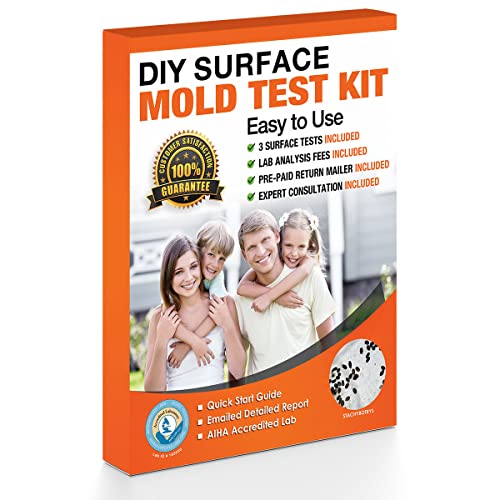
Direct surface tape lift sampling kit with prepaid AIHA-accredited laboratory analysis
Directly captures fungal hyphae from stained surfaces to confirm whether dark spots are active fungal growth without growing ambiguous air cultures.

True HEPA filtration unit with AHAM Verifide clean air delivery rate
Physically captures airborne fungal spores and particulate matter down to 0.3 microns without relying on ozone or chemical additives.


Prices are not shown here because they change daily and we will not display a stale one. Links open on Amazon, where the current price and availability are live.
Common questions
Does a positive petri dish mold test kit mean my home has toxic black mold?
A positive petri dish does not mean your home has toxic black mold. Harmless outdoor molds land on nutrient gel and produce alarming dark colonies within three to four days. Identifying dangerous species requires microscopic examination by an accredited laboratory, not visual inspection of a culture dish.
Does the Environmental Protection Agency recommend using DIY mold test kits?
The Environmental Protection Agency does not recommend using DIY mold test kits for routine home assessments. The agency states that if visible mold is present, sampling is unnecessary because all mold should be removed regardless of species. The critical action is locating and fixing the underlying moisture intrusion.
Can a retail mold test kit detect hidden mold behind drywall or in air ducts?
A retail mold test kit cannot reliably detect mold hidden inside walls or air duct assemblies. Settling plates only collect heavy spores falling in their immediate vicinity within open rooms. Detecting concealed moisture and hidden fungal growth requires a pinless moisture meter, thermal imaging, or physical inspection by a professional.
Why do store-bought mold test plates always grow fuzzy colonies within 48 hours?
Store-bought test plates always grow mold because natural airborne spores exist in all breathable air. The gelatin inside the dish provides optimal moisture, warmth, and carbohydrates designed specifically to force fungal germination. Even filtered hospital rooms can cultivate colonies if an agar dish is left exposed to ambient air.
When is a surface tape lift more useful than an open air dish?
A surface tape lift is far more useful when you need to confirm whether visible discoloration is active mold or harmless dirt. Applying clear tape over a stain preserves fungal structures like hyphae and fruiting bodies for laboratory microscopy. That physical evidence confirms whether fungi are actively digesting your building material.
What indoor relative humidity level prevents mold from germinating indoors?
The Environmental Protection Agency recommends keeping indoor relative humidity between thirty and fifty percent to prevent fungal germination. Relative humidity levels above sixty percent create ideal conditions for mold spores to grow on household dust, furniture fabrics, and drywall surfaces. Using a calibrated hygrometer and a dehumidifier keeps moisture in the safe zone.