A charcoal radon test kit gives you a reliable baseline within four days. If your result exceeds federal action levels, you confirm the number before hiring a contractor. Soil gas enters basements through sub-slab depressurization and foundation cracks.
Radon gas lacks odor, color, and taste. The Centers for Disease Control and Prevention (CDC) cites radon as the second leading cause of lung cancer in the United States, causing approximately 21,000 deaths per year. That radioactive decay damages delicate bronchial tissues over time.
You cannot estimate indoor concentrations based on your neighbor's results. Soil permeability and foundation settling differ from house to house. When prioritizing environmental checks, our triage guide on what to test first places soil gases ahead of cosmetic air issues.
Activated Charcoal Captures Radon Decay Products in Four Days
Activated carbon granules inside a short-term canister absorb radon gas and trap its radioactive decay particles. Standard charcoal test procedures from the Environmental Protection Agency (EPA) require canisters to remain exposed between 48 and 96 hours. The collector seals immediately after exposure.
You mail the sealed packet to an accredited laboratory for gamma-ray analysis. Our home test kit comparison explains how prompt postal transit protects sample integrity before radioactive decay degrades the signal. If the package spends extra days in transit, the isotope bismuth-214 decays past readable limits.
Liquid scintillation devices use a similar adsorption principle inside a smaller vial. The laboratory mixes the exposed mineral fluid with a fluorescent cocktail to count emitted alpha particles. Both methods deliver an accurate four-day snapshot of indoor radiation.
Short-term test labs measure gamma decay from short-lived decay products like lead-214 and bismuth-214.
Because radon-222 has a half-life of 3.8 days, the laboratory must count the canister within several days of collection.
A Second Radon Test Kit Confirms Elevated Winter Baselines
A follow-up test validates an initial elevated screening before you spend capital on sub-slab remediation. The Environmental Protection Agency (EPA) recommends installing a mitigation system if your test result reaches or exceeds 4.0 picocuries per liter (pCi/L). The Environmental Protection Agency (EPA) also notes that readings between 2.0 pCi/L and 4.0 pCi/L carry risk and may justify mitigation in living areas.
Weather shifts skew short-term readings. Winter heating drives stack effect airflow, pulling higher gas volumes through concrete slabs. A single high result in July might reflect open basement doors rather than foundation infiltration.
If your initial test reads above 8.0 pCi/L according to Environmental Protection Agency (EPA) thresholds, start a second short-term test right away. If the initial number sits between 4.0 pCi/L and 8.0 pCi/L, deploy a long-term device instead. When passive canisters land in flooded crawl spaces, high humidity saturates charcoal pores and ruins accuracy, requiring professional chamber diagnostics instead.
- Deploy your first short-term test in the lowest occupied living space.
- Read the laboratory report against the 4.0 pCi/L federal mitigation threshold.
- Confirm any screening above 4.0 pCi/L with a second simultaneous or consecutive test before hiring a contractor.
Continuous Digital Monitors Track Daily Ventilation Swings
A continuous radon monitor (CRM) tracks real-time radiation fluctuations to reveal how weather and ventilation patterns alter your exposure. Unlike an optical air quality monitor that tracks particulate matter, an electronic radon sensor registers alpha radiation. Internal pulsed ionization chambers detect alpha particles from decaying radon gas.
Hourly readings show diurnal cycles. High winds push gas toward the leeward side of your basement. If continuous monitoring shows levels persistently below 2.0 pCi/L throughout both heating and cooling seasons, extensive sub-slab renovation remains unnecessary.
Digital monitors eliminate laboratory delays. You read rolling seven-day averages on an onboard screen or mobile application. That immediate feedback lets you measure how opening foundation vents or adjusting heating cycles alters soil gas intake.
Alpha Track Films Measure Annual Cumulative Exposure Accurately
Alpha track detectors record physical micro-damage caused by decaying alpha particles on a specialized plastic film over multiple months. The Environmental Protection Agency (EPA) defines long-term radon measurement as any test running between 90 and 365 days. Long testing windows smooth out seasonal anomalies.
Decaying radon produces microscopic damage tracks on an allyl diglycol carbonate plastic sheet. At the laboratory, technicians bathe the exposed chip in a chemical etchant to enlarge the impact pits. An optical counter tallies the pits per square millimeter to calculate average indoor radiation.
Long-term monitoring provides the definitive metric for chronic health exposure. Because residents breathe indoor air across all four seasons, a 12-month average reflects real lung exposure far better than a weekend sample. Year-long checks prevent hasty mitigation during temporary winter temperature inversions.
| Feature | Activated Charcoal | Alpha Track Film | Continuous Digital Monitor |
|---|---|---|---|
| Test Duration | 48 to 96 hours | 90 to 365 days | Ongoing continuous |
| Mechanism | Adsorption on porous carbon | Microscopic track etching on plastic | Pulsed ionization chamber or silicon diode |
| Lab Processing | Required via postal mail | Required via postal mail | None required |
| Live Readings | No real-time data | No real-time data | Hourly and daily averages |
| Best Application | Real estate screening and initial checks | Definitive annual exposure calculation | Ongoing ventilation and mitigation tracking |
Closed House Conditions Prevent False Low Clearance Readings
Closed house conditions simulate worst-case winter air exchange to prevent outdoor breezes from masking structural radon accumulation. Protocols from the Environmental Protection Agency (EPA) require closing windows and exterior doors for at least 12 hours before starting a short-term test. Normal entry and exit remain permitted.
Open windows dilute indoor air with outdoor air. The Environmental Protection Agency (EPA) estimates the national average outdoor radon concentration at 0.4 pCi/L. Diluting indoor air during a screening gives a false sense of security while foundation leaks persist.
Maintain standard heating and cooling settings throughout the collection window. When mapping indoor safety protocols, follow our framework on how to test air quality at home to avoid cross-contamination. Keep whole-house attic fans, window fans, and fireplace dampers closed until you seal the detector.
- Set the detector at least 20 inches above the floor in the lowest livable level, following Environmental Protection Agency (EPA) placement guidelines.
- Keep the device at least 3 feet from exterior windows and doors according to Environmental Protection Agency (EPA) spacing recommendations.
- Position the collector away from direct sunlight, heating supply registers, and high humidity areas like bathrooms or laundry rooms.
Basement Air Pressure Pulls Soil Gas from Foundation Cracks
The stack effect lowers air pressure in basements, drawing radon gas out of the surrounding soil through floor joints and wall seams. Warm air rises naturally toward upper floors and escapes through attic vents. This thermal buoyancy creates negative pressure below.
Sump pits, expansion seams, and porous concrete blocks offer direct entry pathways for soil gas. Running a basement dehumidifier controls summer dampness without exhausting soil gases trapped beneath concrete. Soil composition also dictates entry speed, as coarse gravel allows gas to migrate faster than dense clay.
Barometric pressure swings alter suction force. Falling outdoor barometric pressure allows soil air to expand upward into subterranean living spaces. Heavy rain seals surface soil pores around your home, forcing rising subterranean gas inward through basement floors.
Well Water Aeration Strips Radon Gas Before Household Distribution
Dissolved radon gas escapes from untreated private well water into bathroom air whenever hot water flows from showerheads and faucets. The Environmental Protection Agency (EPA) calculates that 10,000 pCi/L of radon in drinking water contributes approximately 1.0 pCi/L to ambient indoor air. Inhaling released gas presents far greater health risks than drinking it.
Municipal water supplies rarely carry elevated radon because open aeration reservoirs allow dissolved gas to dissipate before delivery. Private bedrock wells pull water directly from uranium-bearing granite fissures. Testing well water through an accredited laboratory identifies whether airborne spikes originate from the tap or the sub-slab foundation.
Aeration systems solve groundwater radon at the entry point. A specialized aeration tank agitates incoming water with clean outdoor air, blowing the stripped gas through a dedicated vent pipe above the roof. Consult our overview on well water testing to schedule water and air sampling in the correct sequence.
Active Suction Piping Redirects Soil Gas to the Roofline
Active soil depressurization uses an inline exhaust fan and sealed polyvinyl chloride (PVC) piping to vent sub-slab gas above your roofline. Sealing expansion joints and perimeter floor cracks improves fan efficiency. A dedicated manometer mounted on the vent pipe verifies system pressure.
While a petri dish mold test kit measures biological settling, radon mitigation requires active mechanical venting. The exhaust point must terminate above the roof eaves and away from operable windows. That clearance prevents discharged radioactive gas from drifting back through upper-story bedrooms.
Retest the living area within 30 days of installing any mitigation system to ensure the exhaust fan maintains clearance. The Environmental Protection Agency (EPA) recommends testing mitigated homes every two years to verify fan operation. Pick an activated charcoal radon test kit to log your initial winter measurement before scheduling professional mitigation.
What to Buy for This
Each entry below is a specification rather than a single model, because stock and pricing on this equipment change constantly. The products shown are what currently matches that specification. Match the spec, then buy whatever meets it.
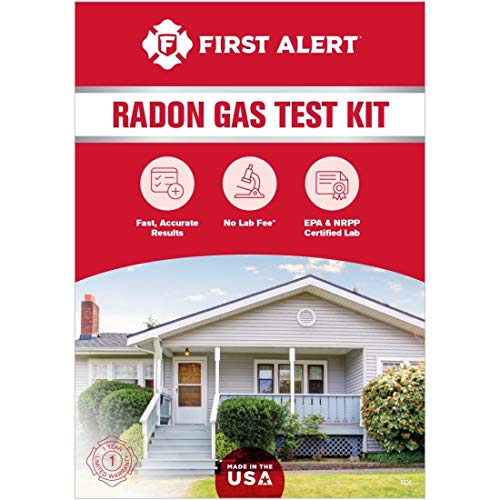
Dual-canister activated charcoal test pack with laboratory analysis and return mailers included
Deploying two charcoal canisters side by side provides an immediate average that meets real estate transaction standards while catching severe winter spikes in 48 hours.


Polycarbonate alpha track long-term detector rated for 90 to 365 days of continuous exposure
Slow passive track etching captures seasonal heating and ventilation shifts to deliver an accurate 12-month cumulative exposure reading.

Electronic continuous radon monitor with pulsed ionization chamber, digital display, and Bluetooth data logging
Hourly sensor tracking displays rolling averages and alerts you immediately if weather inversions or fan failures cause soil gas buildup.
 AEGTEST HOUND-1011S Portable Radon Detector, High-Accuracy Sensor for Home, Lightweight, Audible & Visual Alarms, Long-Term Monitoring, Easy-to-Use Radon Tester in pCi/L or Bq/m³ for BasementAEGTEST
 Airthings Corentium Home Radon Detector 223 Portable, Lightweight, Easy-to-Use, (3) AAA Battery Operated, USA Version, pCi/LAirthings
Desiccant-shielded liquid scintillation radon test vial with prepaid laboratory processing
Liquid scintillation fluid resists moisture saturation better than open charcoal trays in subterranean spaces with elevated relative humidity.
Prices are not shown here because they change daily and we will not display a stale one. Links open on Amazon, where the current price and availability are live.
Common questions
How long does a short-term radon test take to complete?
A short-term radon test requires 48 to 96 hours of uninterrupted exposure in your lowest living space. Standard protocols from the Environmental Protection Agency (EPA) mandate that you keep all exterior windows and doors closed for 12 hours before and during the measurement. Once exposed, you immediately seal the packet and mail it to a laboratory for evaluation.
What radon level requires professional mitigation in a home?
The Environmental Protection Agency (EPA) recommends installing an active mitigation system when indoor radon levels measure 4.0 picocuries per liter (pCi/L) or higher. The agency also encourages homeowners to consider mitigation between 2.0 pCi/L and 4.0 pCi/L because prolonged exposure still carries health risks. Levels below 2.0 pCi/L rarely require active sub-slab remediation.
Where should you place a radon test kit inside your house?
Place the detector in the lowest lived-in level of your home, such as an occupied basement or ground-floor bedroom. Placement guidelines from the Environmental Protection Agency (EPA) specify keeping the device at least 20 inches above the floor and at least 3 feet from exterior walls or windows. Avoid kitchens, bathrooms, laundry rooms, and areas near heating vents where humidity and air currents distort results.
What is the difference between short-term and long-term radon testing?
Short-term tests run between 2 and 7 days to provide a rapid screening of immediate exposure, making them ideal for home purchases. Long-term detectors remain in place between 90 and 365 days to measure year-round cumulative radiation across changing seasons. The Environmental Protection Agency (EPA) considers long-term testing the most accurate representation of annual health risk because it averages out seasonal ventilation swings.
Can you open windows while running a radon test?
You must keep all windows and exterior doors closed during a short-term radon test, except for normal momentary entry and exit. Opening windows introduces outdoor air, which dilutes indoor concentrations and produces artificially low results. Protocols from the Environmental Protection Agency (EPA) require closed-building conditions for at least 12 hours prior to testing and throughout the entire 48-hour sampling window.
Do continuous digital radon monitors need recalibration?
Most manufacturers recommend having continuous digital radon monitors factory recalibrated every one to three years to maintain sensor precision. Over time, dust accumulation and sensor drift inside ionization chambers can alter electronic pulse detection. Professional continuous monitors used for certified real estate inspections require annual calibration checks according to National Radon Proficiency Program (NRPP) standards.