The best humidifier for most rooms is an evaporative model using clean tap water. It releases pure water vapor. Evaporation slows naturally as the surrounding air reaches saturation. Ultrasonic models push liquid droplets into the room instead. If your tap water contains dissolved minerals, an ultrasonic unit broadcasts those solids as fine indoor dust. Hard water creates white dust. Anyone shopping for the best humidifier must weigh wick maintenance against mineral dispersal before selecting a tank size.
Portable units solve localized dry air during cold months. Central heating dries indoor air. When outdoor air enters a heated building, its relative humidity plummets. This dry environment triggers static electricity, cracked skin, and irritated airways. You can fix this. Yet running the wrong appliance causes mold growth on cold exterior walls or coats electronics in mineral powder.
Safety depends on how you clean the water tank. Stagnant water breeds bacteria. Microbes multiply in unwashed basins within forty-eight hours. Choosing the right equipment means picking a machine you are willing to wash every three days. Maintenance is not optional.
Choosing the Best Humidifier Depends on Your Tap Water
Water chemistry dictates which humidifier technology operates safely in a home. Hard water ruins ultrasonic equipment quickly. When an ultrasonic transducer vibrates, it shatters liquid water into microscopic droplets. Those droplets carry every mineral dissolved in the reservoir. The water evaporates midair. The mineral residue then settles onto surfaces or stays suspended as respirable particulate matter. The Environmental Protection Agency (EPA) notes that ultrasonic humidifiers can disperse substantial amounts of minerals into indoor air when filled with ordinary tap water.
Evaporative humidifiers avoid this problem through simple physics. An internal fan blows room air through a porous paper wick. Water transitions from liquid to gas at the wick surface. Minerals cannot evaporate at room temperature. Calcium and magnesium stay trapped inside the fibers. If your tap water contains high mineral levels, an evaporative system eliminates the chore of buying bottled distilled water. You simply discard the calcified filter when airflow drops.
Evaporative Units Self-Regulate but Require Constant Wick Maintenance
Evaporative humidifiers resist over-humidifying a room because evaporation rates decline as relative humidity rises. Dry air absorbs moisture rapidly from a wet wick. Moist air absorbs water much more slowly. This natural process prevents standing condensation around the base of the machine. You do not need a complicated digital control board to avoid damp carpets.
The trade-off is biological growth. A damp paper filter sitting in a dark, warm basin creates an environment where mold and bacteria thrive. The Centers for Disease Control and Prevention (CDC) warns that stagnant water reservoirs can harbor pathogens if neglected. Airflow falls as minerals clog the pores. Moisture output drops by half within weeks when using hard water. You must replace wicking filters regularly throughout the winter season.
| Feature | Evaporative Mist | Ultrasonic Cool Mist | Warm Mist Steam |
|---|---|---|---|
| Moisture Delivery | Vapor through wet wick | Aerosolized droplets | Steam from boiling water |
| Mineral Output | Trapped in wick filter | Dispersed as white dust | Left in heating chamber |
| Over-Humidification Risk | Low due to natural physics | High without digital shutoff | Moderate to high |
| Noise Profile | Continuous fan sound | Near-silent humming | Quiet water simmering |
| Cleaning Focus | Filter replacement and basin wash | Daily tank wipe and scale removal | Descaling boiling element |
Ultrasonic Discs Disperse Dissolved Minerals Straight Into the Air
Ultrasonic humidifiers use a high-frequency metal diaphragm to blast liquid water into an aerosol. The diaphragm vibrates over one million times per second. This vibration creates microscopic droplets. A small fan pushes this cold plume out through a directional nozzle. The output looks like steam, but it remains liquid water.
Because the water never boils, everything dissolved in the reservoir enters your room. If your tap water contains 200 parts per million of dissolved solids, that mass enters your air. The EPA notes that these minerals settle onto furniture as fine white dust. Many of these airborne particles measure smaller than 2.5 microns. Particles that small penetrate deep into lung tissue. People managing asthma or respiratory allergies can experience coughing fits from these suspended mineral solids.
Using distilled water prevents white dust. That requirement adds continuous grocery store trips and plastic jug waste. Demineralization cartridges help reduce mineral output, but they saturate rapidly in hard water areas. Ultrasonic units run silently. They draw very little electricity. Still, they demand mineral-free water to operate without degrading indoor air quality.
Target Humidity Thresholds Determine Real Moisture Needs
Maintaining indoor relative humidity between 30 and 50 percent prevents physical discomfort without inviting mold growth. The EPA recommends keeping indoor levels below 50 percent to deter dust mites and fungal spores. When indoor air drops below 30 percent, skin dries out. Nasal passages crack. Static electricity shocks increase. Wood furniture and flooring shrink from moisture loss.
You need an accurate gauge before running any humidification appliance. Built-in humidistats on portable units are rarely accurate. The sensor sits inches from the moisture exhaust. It registers damp air near the machine while the far corner of the room stays dry. Pair your unit with an independent hygrometer placed across the room at breathing height. Review our guide on ideal humidity in house settings to balance respiratory comfort against moisture risks on cold exterior surfaces.
Warm Mist Steam Eliminates Pathogens but Adds Energy Demands
Steam humidifiers boil water internally to produce sanitary, mineral-free vapor. An electric heating element brings the water bath to 212 degrees Fahrenheit. Boiling destroys bacteria, mold spores, and viruses before moisture enters the room. Steam creates a clean output. This makes steam units helpful for individuals with compromised immune systems.
Boiling leaves minerals behind in the heating vessel. Calcium forms a rock-like crust directly on the heating element. Scale accumulates quickly. You must descale the boiling chamber with distilled white vinegar weekly to prevent the heating element from overheating. Energy consumption is the secondary drawback. While ultrasonic fans draw between 15 and 45 watts, a steam humidifier draws 250 to 400 watts continuously. Boiling water also presents a burn hazard around children and pets.
Cleaning Schedules Decide Whether a Unit Stays Safe to Run
A humidifier operating with contaminated water distributes bacteria and mold directly into your breathing zone. Biofilm develops on plastic surfaces submerged in standing water within forty-eight hours. Adding fresh water to a dirty basin simply feeds existing bacteria. Slime builds up fast.
The Consumer Product Safety Commission (CPSC) recommends draining, rinsing, and drying portable humidifiers every day. Perform a thorough chemical sanitization every three days. Unplug the unit. Disassemble the water tank, base reservoir, and mist nozzle. Soak washable parts in a solution of one gallon of water and one teaspoon of unscented household bleach for twenty minutes. Bleach kills microbial spores. Pure distilled white vinegar dissolves stubborn mineral scale.
Rinse every component thoroughly with cold tap water until all chemical odors vanish. Let the pieces air dry before reassembling the unit. Never run bleach through an operating humidifier. If a model features narrow crevices that a bottle brush cannot reach, avoid buying it.
Situations Where Adding Humidity Causes Structural Damage
Introducing humidified air into an uninsulated or poorly ventilated house causes hidden moisture accumulation inside exterior walls. Warm, moist air moves toward cold exterior surfaces. Water vapor condenses on cold window panes immediately. Droplets pool on wooden window sills. Our guide on condensation on windows details how cold glass indicates house-wide moisture imbalance.
The larger threat occurs inside exterior wall cavities. Water vapor migrates through drywall toward cold exterior sheathing. In older homes lacking exterior foam insulation, that vapor condenses against wood wall studs. Wet framing breeds mold. Over time, structural rot develops out of sight. If you notice heavy moisture beads on window glass, turn off your humidifier immediately. Lower your target relative humidity. During freezing weather, indoor humidity should remain near 25 to 30 percent in older homes to protect wall assemblies. If you are uncertain whether your space suffers from excess dryness or hidden dampness, check our humidifier vs dehumidifier comparison.
When a Portable Unit Fails and Whole-House Systems Take Over
Whole-house humidifiers plumbed into forced-air ductwork solve the capacity and maintenance limits of portable tabletop units. A single portable unit rarely treats more than one room. Multi-story homes require constant water refilling. Carrying heavy gallon jugs up and down stairs every day becomes exhausting. Portable tanks empty fast.
Central units connect directly to domestic plumbing lines. An electric solenoid valve opens when the central humidistat calls for moisture during a furnace heating cycle. Water flows across an aluminum evaporator pad. Furnace airflow distributes pure water vapor through every heating duct in the house. Our breakdown of whole house humidifier options details how bypass, fan-powered, and central steam units compare in water efficiency.
Bypass units drain wastewater continuously. This flushing action washes away loose mineral scale and prevents standing pools of water. Maintenance involves swapping one metal water panel once each year. Central humidification saves time. However, homes without forced-air ductwork must rely on large portable console units.
Operating Humidifiers Safely Around Air Purifiers and Electronics
Placing an ultrasonic humidifier near an optical air quality sensor or high-efficiency air purifier triggers false pollution alerts and fouls filters. Optical particle sensors measure airborne particles using laser light scattering. The sensor cannot distinguish between toxic smoke, mineral dust, and liquid water droplets. Sensors misread water mist. When an ultrasonic plume reaches an air cleaner, the device ramps its fan speed to maximum.
Mineral dust also coats the HEPA filter media. Fine calcium crystals clog pore spaces that should capture pollen, pet dander, and combustion soot. Filter lifespan plummets. Our guide on choosing an air purifier explains how aerosol exposure degrades pleated filter media. Keep all humidifiers at least six feet away from air cleaners and sensitive electronics.
Elevate tabletop humidifiers two feet off the floor. Placing cool mist units on bare carpet or hardwood causes localized puddling. Damp carpets invite dust mites. Wood flooring warps under standing moisture. Select the best humidifier specification for your water supply, monitor ambient levels with an independent hygrometer, and clean the water basin every three days.
What to Buy for This
Each entry below is a specification rather than a single model, because stock and pricing on this equipment change constantly. The products shown are what currently matches that specification. Match the spec, then buy whatever meets it.
Multi-gallon evaporative console humidifier with wicking paper filter, multi-speed fan, and analog dial control
Traps mineral scale within replaceable paper wicks instead of spraying white dust into living areas, while evaporating up to twelve gallons of water per day across open floor plans.


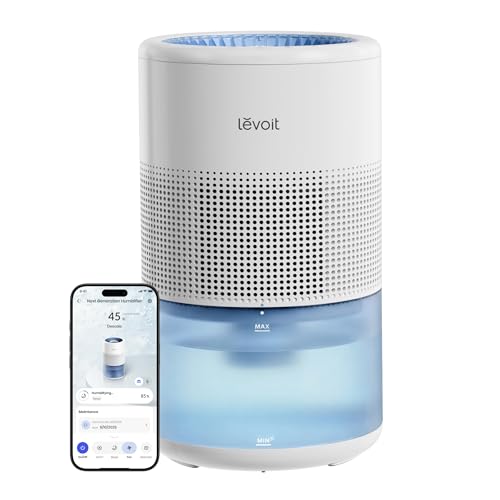
Top-fill cool mist ultrasonic humidifier with wide-mouth cleanable water tank and automatic shutoff
Operates without fan noise for light sleepers, featuring a top-opening basin without narrow tubes so you can wipe away biofilm daily without specialty tools.

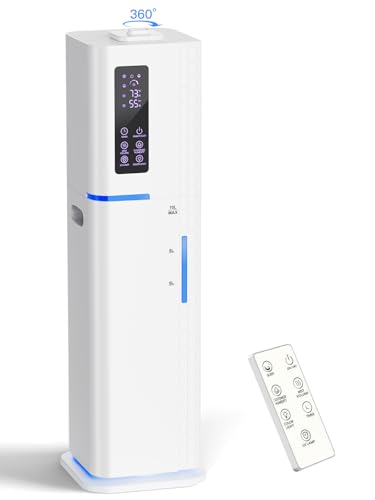
Warm mist steam humidifier with medical-grade boiling chamber, dual moisture outputs, and mechanical safety lock
Boils water to 212 degrees Fahrenheit to eliminate biological organisms before steam release, ensuring no bacteria or fine mineral dust reaches sensitive infant airways.


Direct-evaporative desktop humidifier with dishwasher-safe water basin and standard antimicrobial replacement filter
Supplies self-regulating humidity directly to your immediate breathing zone without dampening paperwork, electronics, or wooden desk surfaces.

Prices are not shown here because they change daily and we will not display a stale one. Links open on Amazon, where the current price and availability are live.
Common questions
Can I use regular tap water in an ultrasonic humidifier?
You can use tap water, but it will release any dissolved minerals into the air as fine white dust. The Environmental Protection Agency warns that these airborne minerals can cause lung irritation and settle onto nearby furniture. If your home has hard tap water, fill ultrasonic units with distilled or reverse osmosis water, or switch to an evaporative model.
How often should you clean a portable humidifier?
You should rinse and dry the water basin daily and perform a deep sanitizing clean every three days. The Consumer Product Safety Commission recommends soaking washable parts in a dilute bleach or white vinegar solution to eliminate bacterial slime and mineral buildup. Never allow water to sit idle in the reservoir between uses.
Why does my humidifier make my air purifier turn red?
Ultrasonic humidifiers emit liquid water droplets and microscopic mineral particles that optical air quality sensors detect as hazardous particulate pollution. The sensor cannot differentiate between tap water minerals and smoke particles. Move the humidifier at least six feet away from your air purifier, or switch to an evaporative humidifier that emits invisible water vapor.
What indoor humidity level should I maintain during winter?
Keep indoor relative humidity between 30 and 40 percent when outdoor temperatures fall below freezing. The Environmental Protection Agency advises staying below 50 percent year-round to prevent mold growth and dust mite proliferation. In severely cold weather, dropping the target to 30 percent prevents window condensation and hidden wall rot.
Will a humidifier help with morning sore throats and dry skin?
Yes, increasing indoor humidity above 30 percent lubricates mucous membranes and slows the evaporation of natural skin oils. Dry winter heating systems pull moisture from your body, causing irritated nasal passages and chapped lips. A bedroom humidifier restores ambient moisture to comfortable levels during sleep.
Do evaporative humidifiers produce white dust?
No, evaporative humidifiers do not produce white dust. Because water evaporates naturally from a porous paper wick, dissolved minerals remain trapped in the filter fibers rather than entering the room air. You simply throw the mineral deposits away when you replace the saturated wick.