A humidifier for plants works best when directed at the plants rather than the entire room. At The Indoor Report, our rule is that the room's safety comes before the plant's preference. Tropical houseplants often thrive in humid air. Standard living spaces do not. Attempting to match high tropical humidity everywhere indoors quickly damages drywall and window framing.
Indoor spaces have hard moisture ceilings. The Environmental Protection Agency (EPA) warns homeowners not to humidify indoor relative humidity (RH) above 50 percent. The EPA says to keep room air below 60 percent RH because mold grows on damp building materials above that. Control the moisture locally and both the plant and the house are fine.
The mistake we see most often is treating the entire room like a tropical greenhouse. Moisture accumulates in cold corners, behind bookshelves, and along baseboards. Focus your equipment on the plant canopy itself.
Whole-Room Humidification Causes Building Moisture Damage
Raising whole-room humidity to satisfy tropical houseplants risks severe fungal growth and structural decay. The EPA recommends keeping indoor relative humidity between 30 and 50 percent. Relative humidity above 60 percent creates ideal conditions for mold spores to colonize building materials. While tropical species flourish in moist conditions, standard residential drywall and insulation fail when exposed to sustained dampness.
Moisture damage rarely shows up on the plant shelf first. Instead, water vapor migrates toward the coldest surfaces in the room, condensing behind wall hangings and furniture. The EPA notes that if wet or damp materials are dried within 24 to 48 hours, mold will not grow in most cases. Continuous whole-room humidification prevents that drying cycle from occurring. When mold colonization exceeds 10 square feet, the EPA advises obtaining professional remediation assistance.
This whole-room humidification approach is not for anyone living in standard residential housing with uninsulated exterior walls. Homeowners attempting to recreate rainforest conditions in an open living room will destroy paint and framing. If your space cannot handle high moisture loads, keep your room within the ideal house humidity range and protect your structure by learning how to prevent mold before adding moisture.
Winter Heating Demands Lower Indoor Moisture Thresholds
Cold outdoor weather lowers the maximum moisture level an indoor room can tolerate safely. ENERGY STAR recommends maintaining indoor relative humidity between 30 percent and 40 percent during the heating season to prevent window condensation. When indoor air is humidified while exterior glass stays cold, liquid water condenses on window panes.
Condensation puddles ruin window casings, peel paint, and soak wall framing. Liquid water collecting on structural sills creates hidden dry rot and mold colonies. The EPA directs occupants to act quickly to dry wet surfaces and reduce the moisture source whenever condensation appears on windows, walls, or pipes. Lowering humidifier output protects the building envelope during cold snaps.
Watch the windows in winter. When outdoor temperatures drop, indoor glass becomes a natural dehumidifier that draws vapor out of the air. If you run a humidifier heavily in an effort to fix dry air in house environments, you risk soaking window tracks. Use an indoor hygrometer to verify that winter room air stays within safe parameters.
Humidifier for Plants Placement Keeps the Moisture Around the Plants
Humidifier placement must concentrate vapor around plant leaves without wetting surrounding building surfaces. Moisture levels are highest right at the mist outlet nozzle and drop off sharply with distance and room air movement. Placing a unit directly against an exterior wall or corner creates a localized microclimate of damp air against paint or plaster.
Elevate portable humidifiers off the floor on a solid, water-resistant stand or table, so the vapor blends into the plant canopy before it sinks. Cool mist naturally drops as it travels. An elevated discharge prevents moisture from pooling directly onto floorboards or soaking electrical baseboard heaters.
Keep the discharge nozzle pointed directly toward the foliage while maintaining clearance from electronics and finished woodwork. Do not point the mist straight into the leaves at close range. The goal is humid air around the leaves, and the leaves themselves should stay dry. Mount an independent sensor among the pots to monitor the microclimate accurately.
- Keep the humidifier outlet well clear of painted drywall and papered surfaces.
- Position the discharge nozzle so vapor disperses across the foliage canopy rather than directly hitting one plant.
- Elevate the appliance on a non-porous riser to prevent condensation rings on flooring.
- Direct air movement away from electrical outlets, power strips, and grow light fixtures.
Evaporative and Ultrasonic Units Create Different Maintenance Demands
Selecting the right machine mechanism determines what enters your indoor breathing air alongside water vapor. The EPA classifies portable humidifiers into ultrasonic, impeller, evaporative, and steam vaporizer types. Ultrasonic and impeller designs produce the greatest dispersion of materials, launching minerals and microorganisms directly from the water tank into the air.
Tap water contains dissolved minerals. When pushed through an ultrasonic vibrating plate, these minerals break into fine airborne particles that settle as white dust. This white dust coats houseplant leaves and has to be wiped off. The EPA recommends using bottled water labeled "distilled" or using demineralization cartridges to prevent mineral dust dispersion. For more details on water purity, review our guide on using distilled water for humidifier equipment.
Evaporative units work through a naturally self-limiting process. An evaporative machine blows air through a damp wick filter, leaving heavy minerals behind in the wick rather than releasing them into the room. As ambient humidity rises, evaporation rates naturally slow down. Steam vaporizers boil water to create vapor, leaving minerals in the basin as solid scale. The EPA cautions that steam and boiling water can cause burns, and says to keep steam vaporizers out of the reach of children. Read our overview of types of humidifiers to compare each operating mechanism.
| Mechanism | Mineral Dispersion | Over-Humidification Risk | Primary Maintenance Task |
|---|---|---|---|
| Evaporative | Trapped in paper or fabric wick filter | Low because evaporation slows in damp air | Replacing the saturated wick filter |
| Ultrasonic | Dispersed as airborne white dust unless distilled water is used | High without an external humidistat shutoff | Descaling the vibrating plate and tank |
| Steam Vaporizer | Retained in the heating basin as hardened scale | High without a humidistat, since boiling output does not slow as the room dampens | Scrubbing scale from the heating element |
Humidistats and Timers Prevent Destructive Moisture Spikes
Operating a plant humidifier requires active control to prevent relative humidity from climbing past structural safety thresholds. An ultrasonic humidifier with a vibrating plate pushes mist into the room continuously until its reservoir empties, regardless of room conditions. Without a humidistat to cut electrical power, small rooms can quickly climb past the 60 percent mark EPA warns about.
Set your equipment to shut off before room air reaches 50 percent RH. While tropical plants can tolerate higher humidity, your residential structure cannot. Pairing your machine with an external humidistat outlet or an onboard sensor prevents over-humidification during damp weather. During rainy stretches, natural ambient humidity rises, meaning your machine needs to run far less frequently to maintain baseline comfort.
Our advice would change if you were operating an airtight, vapor-barrier-lined grow room with dedicated mechanical exhaust ventilation. In a sealed greenhouse cabinet or a purpose-built agricultural space, relative humidity can run higher than a living space tolerates. In a normal living room or bedroom, building safety dictates keeping moisture capped at EPA limits.
Containment Methods Protect Building Walls from Excess Humidity
Physical containment creates an isolated microclimate that shelters sensitive plants without raising room-wide moisture levels. Converting an enclosed glass cabinet or indoor miniature greenhouse creates a sealed pocket of humid air around delicate foliage. This contained setup allows leaf-level moisture to remain elevated while room drywall stays within safe ambient ranges.
Low-tech humidification strategies offer modest moisture improvements with zero mechanical risk. Grouping potted plants together creates a collective microclimate, as natural transpiration from surrounding foliage raises localized humidity among the leaves. A shallow pebble tray filled with water provides localized evaporation, though its measurable effect extends only a few inches above the gravel bed.
Leaf misting with a hand spray bottle provides minimal practical benefit. Misting leaves raises humidity only briefly before the water evaporates into the wider room. Enclosed cabinets and plant clusters provide far more stable hydration without exposing your ceiling and walls to moisture damage.
Regular Cleaning Stops Microorganism Growth in Water Reservoirs
Routine maintenance prevents plant humidifiers from dispersing biological contaminants into your indoor environment. The EPA warns that ultrasonic and impeller humidifiers can harbor microorganisms in their water tanks, aerosolizing them directly into breathable air. A neglected water reservoir quickly becomes a breeding ground for bacteria and mold.
Cleaning routines must happen on a strict schedule. The EPA advises emptying the water reservoir, wiping interior surfaces completely dry, and refilling portable humidifiers with fresh water daily. Every third day, perform a thorough sanitizing clean according to manufacturer instructions, using mild cleaning agents to dissolve mineral scale and eliminate biological slime.
Never allow stagnant water to sit inside a plant humidifier reservoir when the unit is turned off. Bacteria and fungal colonies multiply rapidly at room temperature. The EPA warns that contaminated tanks aerosolize microorganisms across indoor spaces. Empty the basin daily, dry all internal walls, and sanitize the appliance every third day to maintain clean indoor air quality.
Monitoring Ambient Humidity Prevents Structural Framing Damage
Maintaining balanced humidity requires tracking your space with reliable sensors rather than guessing. Wall framing and joists take on water vapor slowly, and once the wood is damp a dehumidifier or air conditioner takes a long time to dry it out.
Inspect plant leaves and nearby window frames every week for signs of mildew or moisture accumulation. If you spot condensation dripping down window glass or collecting on baseboards, reduce humidifier runtime immediately. Measure the humidity at leaf height with a hygrometer before buying a humidifier for plants.
What to Buy for This
Each entry below is a specification rather than a single model, because stock and pricing on this equipment change constantly. The products shown are what currently matches that specification. Match the spec, then buy whatever meets it.
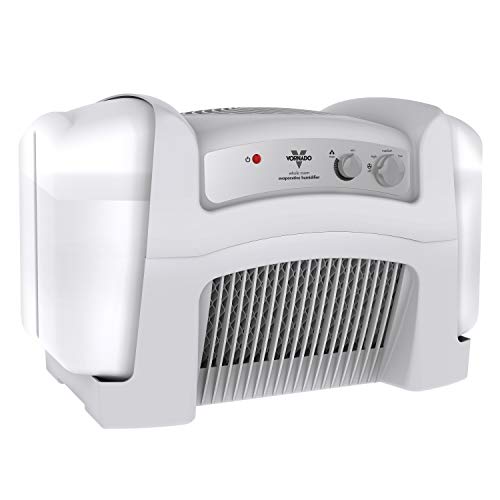
Evaporative humidifier with built-in humidistat and replaceable paper wick filter
Evaporative wicks trap tap water minerals internally, preventing white dust from coating plant leaves. The humidistat automatically cuts power before room humidity exceeds the 50 percent relative humidity ceiling recommended by the EPA.
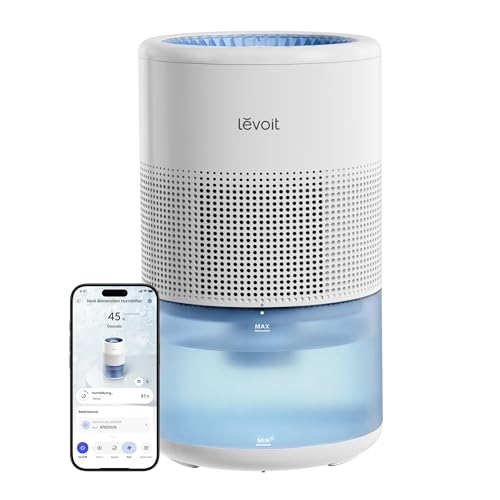
Ultrasonic cool-mist humidifier with demineralization cartridge and rotating directional nozzle
The directional nozzle aims fine mist directly into the plant canopy away from drywall and electrical fixtures. The demineralization cartridge reduces airborne mineral dispersion, keeping foliage clean when distilled water is unavailable.
Compact ultrasonic humidifier with automated shutoff timer and top-fill water basin
A compact footprint fits inside glass cabinets to build localized humidity without dampening surrounding living spaces. An integrated shutoff timer prevents over-saturation in small, sealed environments.
Prices are not shown here because they change daily and we will not display a stale one. Links open on Amazon, where the current price and availability are live.
Common questions
Are humidifiers good for plants?
Yes, humidifiers benefit tropical houseplants by raising localized air moisture, but excess humidity can damage residential buildings. The EPA advises keeping indoor relative humidity between 30 and 50 percent, warning that levels above 60 percent encourage mold growth. Humidify the specific plant area while keeping the overall room within safe structural limits.
Where should I place my humidifier for my plants?
Place the humidifier on a stand or table off the floor, a short distance from the foliage. Direct the nozzle toward the plant canopy, keeping the mist stream away from walls, electrical outlets, and furniture. Elevated placement allows vapor to mix with room air before settling.
How long should you keep a humidifier on for plants?
Run it on a humidistat rather than for a set number of hours. Set the humidistat to shut the unit off at 50 percent relative humidity, the ceiling the EPA sets for home humidifiers. That way the plants get moisture during dry spells and the room never reaches the level where mold starts.
How to make a plant humidifier?
You can create low-tech plant humidifiers using pebble trays, grouped arrangements, or enclosed cabinets. Placing potted plants on a shallow tray filled with gravel and water increases humidity in the few inches immediately above the stones. Grouping plants together traps transpired vapor, while an enclosed glass cabinet creates a contained microclimate without wetting room walls.
What is the best way to humidify my plants?
The best way to humidify plants is using localized containment or an evaporative humidifier governed by a humidistat. An evaporative unit avoids scattering white mineral dust across foliage and naturally slows evaporation as air dampens. Confining sensitive species inside a glass cabinet or plant cluster provides targeted moisture while keeping the rest of the home at safe humidity levels.