An air purifier will not stop dust from settling on your furniture. Most household dust consists of heavy particles that drop out of the air within minutes. If you buy an air purifier for dust hoping to stop wiping surfaces, the machine will disappoint you. It cannot pull settled debris off a bookshelf or out of a rug. The airflow from a portable fan simply lacks the velocity to lift heavy matter off the floor.
Dust is a mixture of materials with different weights. According to the Environmental Protection Agency (EPA), indoor dust contains soil tracked from outside, human skin flakes, textile fibers, pet dander, and degraded insect fragments. Heavy skin flakes and coarse dirt tumble downward quickly. Fine particles linger for hours. A filter only removes the particles that remain suspended long enough to enter its intake grilles.
Understanding this physical boundary saves you money. A filtration unit cleans the air you breathe. It does not scrub the tables you touch. Filtration protects your lungs from microscopic debris that causes airway irritation and nighttime coughing. It does not replace a vacuum cleaner. Knowing which job the device performs helps you set reasonable expectations before spending your money.
Why Visible Dust Settles Faster Than Purifiers Can Pull It
Gravity pulls large particles out of the air before airflow can drag them toward a filter. Research published by the Environmental Protection Agency (EPA) shows that particles larger than 10 micrometers settle out of calm air within minutes. A single human skin flake measures roughly 20 to 40 micrometers across. When you walk across a room, you shed flakes that drift immediately toward the floor. An air purifier sitting six feet away creates gentle air currents. Those currents lack the velocity to pull a falling flake sideways against gravity.
Air purifiers do not function like vacuum cleaners. A vacuum concentrates intense suction across a narrow floor nozzle. A portable room filter draws air across a wide intake grille at low velocity. Stand three feet away from a running purifier. You will barely feel any air movement pulling toward the unit. Dust on your side tables has already settled out of reach. Capturing that material requires manual cleaning.
What High-Efficiency Particulate Air Filters Actually Capture
A genuine High-Efficiency Particulate Air (HEPA) filter targets the dust you cannot see. The United States Department of Energy (DOE) standard defines a true HEPA filter as one that captures at least 99.97 percent of airborne particles measuring 0.3 micrometers in diameter. Particles in this fine category remain suspended in room air for hours. Microscopic fragments drift past nasal passages and penetrate deep into lung tissue.
Fine dust creates far more respiratory irritation than coarse lint. According to the Centers for Disease Control and Prevention (CDC), particulate matter smaller than 2.5 micrometers, known as PM2.5, enters the bloodstream and irritates respiratory tissue. Coarse dust on a table looks unsightly. Microscopic dust suspended in your breathing zone causes inflammation and coughing. A mechanical filter excels at trapping this airborne threat.
How Clean Air Delivery Rate Dust Ratings Work
Clean air delivery depends on fan volume as well as filter quality. The Association of Home Appliance Manufacturers (AHAM) tests portable air cleaners to determine their Clean Air Delivery Rate (CADR). This metric indicates how many cubic feet of clean air a purifier delivers each minute. AHAM tests three separate pollutant categories: tobacco smoke, dust, and pollen. The dust rating specifically measures particles between 0.5 and 3.0 micrometers in size.
Room dimensions dictate the required dust rating. According to AHAM guidelines, an air cleaner needs a smoke rating equal to at least two-thirds of the room area in square feet. For dust management, higher air exchange rates pull particles before gravity brings them down. Review our guide on matching an air purifier to your room size to calculate the airflow your space requires.
| Particle Category | Size Range (Micrometers) | Behavior in Still Air | Primary Control Method |
|---|---|---|---|
| Coarse Lint and Grit | 10 to 100 | Settles within minutes (EPA data) | Damp microfiber wiping and vacuuming |
| Fine Mineral Dust | 2.5 to 10 | Suspended for hours (EPA data) | Continuous HEPA room filtration |
| Respirable PM2.5 | 0.1 to 2.5 | Suspended for days (CDC data) | HEPA filtration and fresh ventilation |
| Dust Mite Waste Pellets | 10 to 25 | Settles within minutes (CDC data) | Woven allergen mattress encasements |
When an Air Purifier for Dust Makes a Noticeable Difference
Air purifiers deliver the best results when indoor activity keeps dust suspended. Running children and active pets constantly kick settled dust back into the air. Operating a purifier continuously captures these airborne bursts before they settle again. The unit acts as an airborne trap. It shortens the time that irritating particles float in your breathing zone.
Allergy sufferers notice tangible relief from continuous air filtration. People who struggle with allergens and pet dander often blame dust mites alone for their symptoms. The National Institute of Environmental Health Sciences (NIEHS) notes that dust mite feces quickly sink into mattress fibers and carpets. An air purifier will not clear your bedsheets. It does catch the airborne pet dander and fine soil fragments that inflame sensitive airways.
Dust mites do not live in airborne clouds. According to the Centers for Disease Control and Prevention (CDC), dust mite fecal particles measure 10 to 24 micrometers and settle out of room air within minutes after any disturbance. Washing bed linens in water heated to 130 degrees Fahrenheit kills live mites. A room air purifier only captures whatever particles remain floating.
Why Surface Cleaning Still Does the Heavy Lifting
Physical removal remains the only reliable defense against settled dust layers. If you want dust-free furniture, cleaning technique matters more than air filtration. Feather dusters and dry rags fling settled particles straight back into the room. The dust floats briefly before settling on the same surface. Wipe with a damp microfiber cloth instead. Microfiber uses split synthetic threads that trap dirt through mechanical friction and static charge.
Vacuum exhaust design determines whether cleaning helps or harms indoor air. Inexpensive vacuums lack sealed filtration housings. They blast fine dust out through motor vents and back into the room. The American Lung Association recommends using a vacuum equipped with a certified HEPA exhaust filter. Empty dust bins outdoors to keep captured debris from escaping back into living areas. Running an air cleaner during and after vacuuming captures the dust plumes that agitation stirs up.
- Wipe flat surfaces with a damp microfiber cloth instead of a dry feather duster.
- Run a vacuum cleaner with a sealed HEPA exhaust pathway across rugs twice weekly.
- Wash bed sheets weekly in water heated to at least 130 degrees Fahrenheit.
- Leave outdoor shoes at the entryway to keep soil minerals out of indoor living areas.
Central HVAC Filtration Versus Standalone Room Purifiers
Central HVAC blowers cycle much more air than a portable console can handle. Central air systems circulate indoor air through return grilles placed throughout the house. Upgrading an ordinary furnace screen to a pleated furnace filter substantially improves whole-house particle capture. The American Society of Heating, Refrigerating and Air-Conditioning Engineers (ASHRAE) created the Minimum Efficiency Reporting Value (MERV) scale to grade filter performance. Filters rated MERV 8 to 11 catch coarse dust and pollen without straining residential fan motors.
Air duct cleaning rarely resolves persistent dust issues. Many occupants hire duct cleaning services hoping to eliminate weekly surface dusting. The Environmental Protection Agency (EPA) states that duct cleaning has not been shown to prevent indoor dust accumulation. Most dust inside ductwork adheres firmly to sheet metal surfaces rather than blowing into rooms. Learn when duct cleaning is worth the effort before paying for unproven duct treatments.
What Would Change Our Assessment of Air Cleaners for Dust
Specific environmental conditions justify heavy reliance on air purifiers. Homes located near busy highways or unpaved dirt roads face relentless dust infiltration. The Centers for Disease Control and Prevention (CDC) explains that persistent outdoor particulate infiltration elevates indoor health risks. In those demanding environments, high-capacity filtration serves as an indispensable air quality safeguard.
Structural renovations create another acute dust hazard. Sanding drywall compound and cutting tile generate massive clouds of fine mineral debris. The Occupational Safety and Health Administration (OSHA) notes that respirable silica and fine mineral dust cause lasting pulmonary damage. Dry sweeping construction dust flings billions of microscopic particles into the air. Running commercial HEPA scrubbers during remodeling traps fine dust before it migrates into living quarters.
To manage household dust successfully, combine weekly microfiber damp wiping with a properly sized air purifier for dust placed in high-traffic living areas.
What to Buy for This
Each entry below is a specification rather than a single model, because stock and pricing on this equipment change constantly. The products shown are what currently matches that specification. Match the spec, then buy whatever meets it.
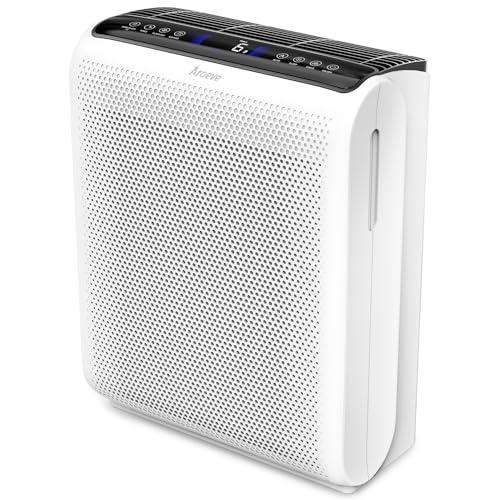
True HEPA Console with Dust CADR Above 200 and Sub-30 Decibel Sleep Setting
Extracts fine airborne skin flakes and textile fibers throughout the night without creating disruptive motor whine or drafty air currents across the bed.


High-Airflow Console with Washable Pre-Filter and Dust CADR Above 300
A removable pre-filter screen catches coarse pet hair and lint before it blocks the main pleated media, maintaining rapid room air exchanges.

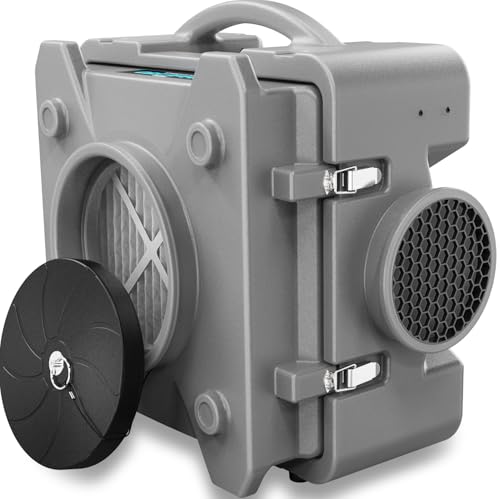
Commercial Air Scrubber with Sealed Housing and High-Capacity HEPA Filter
Handles high volumes of abrasive gypsum and silica dust without letting fine particles leak past filter gaskets into surrounding living spaces.

Prices are not shown here because they change daily and we will not display a stale one. Links open on Amazon, where the current price and availability are live.
Common questions
Does an air purifier eliminate the need to dust furniture?
No. Visible dust consists of large particles that fall to horizontal surfaces within minutes due to gravity. An air purifier only catches particles that remain suspended in the air. You will still need to wipe tables and shelves with a damp cloth.
Where should you place an air purifier to catch the most dust?
Place the unit in an open area with unrestricted airflow, roughly three to five feet away from walls and furniture. Avoid tucking the purifier into corners or behind couches where air movement is blocked. Placing it near foot traffic paths helps intercept particles stirred up by movement.
Can an air purifier help with dust mite allergies?
An air purifier helps only marginally with dust mites. According to the Centers for Disease Control and Prevention (CDC), dust mite allergens are heavy fecal pellets that settle quickly into mattresses, pillows, and carpets. Washable zippered encasements and hot-water laundry are far more effective for mite control.
Why is dust still accumulating right next to my running air purifier?
Air purifiers pull air in gently across a broad surface area, creating low air intake velocity. They do not generate the focused suction of a vacuum cleaner. Heavy dust particles drifting downward settle right beside the unit because the intake pull cannot overcome gravity.
What type of filter works best for capturing airborne dust?
A true High-Efficiency Particulate Air (HEPA) filter combined with a separate, washable pre-filter works best. The pre-filter traps large fibers, pet hair, and coarse lint so they do not choke the pleated main filter. The HEPA stage then removes fine, microscopic particles down to 0.3 micrometers.