An air purifier cleans floating particles, while a humidifier adds water to parched air. Buying the wrong machine leaves your original problem completely unaddressed. The debate between an air purifier vs humidifier comes down to whether you are fighting airborne contaminants or dry indoor surfaces. These two machines address entirely separate physical conditions in your living space.
People often mistake the two appliances because both sit on a bedroom floor and quietly move air. An air purifier draws air through dense filter media to trap solid contaminants such as pet dander, pollen, mold spores, and combustion particles. A humidifier does not trap any particles at all. Instead, it evaporates liquid water into the surrounding atmosphere to raise the ambient relative humidity. If you have itchy eyes from cedar pollen, adding water vapour to your room will not clear that allergen. If your skin cracks every January because your heating system drops indoor humidity to fifteen percent, a mechanical air filter provides zero relief.
Understanding which machine you require prevents wasted money on devices that cannot solve your discomfort. In many homes, occupants run both units in the same room during cold weather. Doing so requires knowing how moisture interacts with dry fibrous filters. When you understand the physics behind both appliances, choosing the correct tool becomes straightforward.
Air Purifiers Filter Solid Contaminants While Humidifiers Add Moisture
Air purifiers pull room air through physical filtration stages to capture suspended airborne particles. The core component in any effective air cleaner is a high-efficiency particulate air (HEPA) filter. According to the Environmental Protection Agency, a true HEPA filter standard captures at least 99.97 percent of airborne particles measuring 0.3 microns in diameter. These particles include mold fragments, dust mite droppings, pet dander, and fine smoke particulates. An internal motor drives this airflow continuously.
Humidifiers perform the opposite action by introducing evaporated water directly into the ambient environment. They do not contain particulate filters. They cannot extract contaminants from the airstream. Instead, they transform liquid water from an internal reservoir into vapour using a rotating fan or a vibrating transducer. The Centers for Disease Control and Prevention notes that dry indoor air dries out the mucous membranes in your nose and throat. This breakdown impairs your respiratory defenses.
Neither device can execute the task of the other. Expecting an air purifier to alleviate chapped lips is physically impossible because dry filter paper cannot generate water vapour. Similarly, running a humidifier will never reduce the concentration of airborne ragweed pollen or cat allergens in your living room. Confusing their functions wastes money and delays relief.
An Air Purifier vs Humidifier Choice Depends on Your Specific Symptoms
Your immediate physical symptoms indicate whether your room requires mechanical air filtration or supplemental moisture. Identifying your symptoms eliminates guesswork. When the problem stems from an immune response to foreign matter in your lungs, you need an air purifier. When your tissues lose water rapidly to dry ambient air, you need a humidifier.
Allergies and particulate irritation produce specific clinical signs. You might notice sneezing fits, itchy eyes, runny nasal passages, or wheezing after vacuuming. According to the National Institute of Allergy and Infectious Diseases, airborne allergens provoke histamine releases that cause mucous membrane inflammation. For these conditions, air purifiers help pollen and dander by stripping the offending physical proteins out of your breathing zone.
- Symptoms requiring an air purifier: frequent sneezing, itchy or watery eyes, allergic coughing, visible airborne dust motes, and lingering cooking or wildfire smoke.
- Symptoms requiring a humidifier: dry morning cough, frequent nosebleeds, scratchy throat upon waking, cracked skin on hands, and excessive static electricity on clothing.
Winter heating often causes simultaneous dryness and dust accumulation. If your nasal passages feel raw and bleed easily, lack of humidity is the primary cause. If you also develop swollen sinuses and itchy eyes, airborne allergens are active at the same time.
Ultrasonic Mists Generate Fine Mineral Dust That Triggers Particle Sensors
Ultrasonic humidifiers shatter tap water into airborne droplets that leave behind a fine white mineral dust as the water evaporates. This white powder consists of dissolved minerals, primarily calcium and magnesium. According to a study published by the Environmental Protection Agency, ultrasonic and impeller humidifiers disperse nearly all the dissolved minerals from tap water directly into indoor air as breathable aerosols. These mineral particles measure between 0.5 and 5 microns in diameter. Human lungs inhale them deeply.
This mineral aerosol triggers false alarms on nearby air purifiers. An optical laser particle counter cannot distinguish between toxic smoke particles and harmless calcium carbonate dust. The sensor merely registers light bouncing off airborne solids. Consequently, running an ultrasonic humidifier with municipal tap water causes nearby automated air purifiers to spin their fans to maximum speed. The mineral dust also clogs HEPA filter fibers prematurely.
You can avoid this problem by understanding how evaporative and ultrasonic humidifiers fail differently. Evaporative models draw air through a wet wick using a fan. Minerals remain trapped inside the wick rather than entering your room air. If you choose an ultrasonic unit, the Environmental Protection Agency recommends filling the reservoir exclusively with distilled or demineralized water.
Damp Air Strains Fibrous Filter Media When Placed Too Close
Placing an operating humidifier within six feet of an air purifier allows humid air to saturate dry filter paper and degrade performance. High-efficiency particulate air filters rely on closely woven borosilicate microfibers to capture tiny particles. When a mist plume enters the air purifier intake grill, liquid droplets deposit onto the dry pleats. This localized moisture collapses the electrostatic charge of the media. It also increases resistance against the fan motor.
Sustained moisture on a loaded air filter creates conditions for fungal colonization. A filter operating for several months holds captured pollen grains, skin flakes, and fungal spores. Feeding that organic layer with steady humidity encourages mold spore germination. The Environmental Protection Agency states that mold spores require moisture, oxygen, and an organic food source to multiply indoors. A moldy filter blows microbial odors directly into your room. We explain why an air purifier cannot fix mold while dampness remains in our structural moisture guides.
Maintain a physical separation of at least eight to ten feet between these two appliances. Position the humidifier near a heating source to aid natural vapour dispersion. Place the air purifier across the room to draw air through a broader circulation path. Point the mist nozzle away from all intake grills and walls.
Relative Humidity Above Fifty Percent Multiplies Dust Mites and Mold
Excessive moisture from an unmonitored humidifier creates biological hazards that worsen your original breathing symptoms. The Environmental Protection Agency recommends maintaining indoor relative humidity between 30 and 50 percent to balance comfort against biological growth. When indoor humidity exceeds 50 percent, conditions favor house dust mites and fungal colonies. A humidifier running without automatic shutoff can easily push a closed bedroom past 60 percent relative humidity within hours.
House dust mites depend entirely on absorbing atmospheric moisture through their bodies to survive. The Centers for Disease Control and Prevention notes that dust mites thrive when relative humidity sits between 70 and 80 percent. High moisture causes mite populations to multiply rapidly. Their fecal pellets trigger severe allergic asthma attacks. At the same time, condensation on cold window panes and wall corners invites mold growth. Running a humidifier blindly risks turning dry air into a chronic mold problem.
| Relative Humidity Range | Air Quality Effect | Primary Hazard | Recommended Action |
|---|---|---|---|
| Below 30 percent | Overly dry indoor air | Dry mucous membranes, nosebleeds, static | Run an evaporative humidifier |
| 30 to 50 percent | Target comfort envelope | Minimal biological hazard | Maintain current ventilation and settings |
| 50 to 60 percent | Elevated room moisture | Dust mite reproduction accelerates | Lower humidifier output or turn unit off |
| Above 60 percent | Excessive room moisture | Active mold spore germination on cold surfaces | Stop all humidification and ventilate |
Appliance Capabilities Across Common Household Air Quality Challenges
Air purifiers and humidifiers address fundamentally distinct household air challenges, meaning neither appliance can replace the other. A direct functional comparison demonstrates that each machine succeeds only within its intended mechanical role. An air purifier targets solid particles and chemical vapours. A humidifier modifies ambient water content. Reviewing how each appliance performs across common indoor issues prevents expensive purchasing mistakes.
| Household Air Issue | Air Purifier Performance | Humidifier Performance | Effective Solution |
|---|---|---|---|
| Pollen and plant allergens | Captures particles with HEPA filtration | No effect on airborne allergen proteins | Air purifier |
| Pet dander and shedding | Traps floating dander and hair fragments | No effect on animal dander | Air purifier |
| Dry skin and chapped lips | No effect on ambient humidity | Adds moisture to relieve tissue drying | Humidifier |
| Wildfire and tobacco smoke | Removes fine smoke soot and particulates | No effect on combustion gases or soot | Air purifier |
| Winter morning nosebleeds | No effect on respiratory tract hydration | Prevents nasal mucous membranes drying | Humidifier |
| Dust mite proliferation | Captures airborne mite fecal pellets | Increases mite growth if humidity exceeds 50% | Air purifier plus low humidity |
Do not run a humidifier to clear smoke during a wildfire event. Adding water vapour does not wash smoke particles out of the air. It merely stresses your lungs with warm or cool mist while the fine soot remains fully suspended.
Combination Units Compromise Both Air Cleaning and Moisture Output
Combination appliances that house both an air purifier and a humidifier inside one chassis deliver compromised performance for both jobs. These hybrid machines force two conflicting engineering goals into a shared cabinet. An air purifier requires dry airflow through voluminous filter media. A humidifier requires wet reservoirs and standing water. Combining them creates practical compromises.
The filtration capacity of a combination unit is restricted by the space occupied by its water tank. Under the Association of Home Appliance Manufacturers testing standards, an air cleaner is evaluated by its clean air delivery rate (CADR). The Association of Home Appliance Manufacturers measures the volume of clean air produced per minute across smoke, dust, and pollen. Hybrid appliances produce modest delivery numbers because their fans and filters are miniaturized. Review how clean air delivery rate ratings dictate room sizing before considering any compact system.
Hygiene presents an even larger concern. Standing water near paper filter pleats creates persistent moisture risks. Mineral scale can also foul internal fan mechanisms. Two dedicated units perform far better than one compromised combination machine.
Measuring Indoor Moisture with a Hygrometer Prevents Costly Mistakes
Purchasing an inexpensive digital hygrometer provides the objective data required to choose between an air purifier and a humidifier. A hygrometer measures ambient relative humidity, removing guesswork from your decision. If your room reads between 30 and 50 percent, your humidity already meets Environmental Protection Agency recommendations. In that situation, throat tickles or irritated eyes stem from airborne particles rather than dry air. You need an air purifier.
When your hygrometer reads below 30 percent in winter, adding an evaporative humidifier relieves dry mucosal tissues. If your reading exceeds 50 percent, running a humidifier introduces genuine health risks. High humidity fuels dust mites and fungal growth. In humid conditions, you may need ventilation or dehumidification alongside an air purifier.
Check your room humidity with a meter before buying any new climate appliance. If you struggle with airborne dust, smoke, or pet dander, install a dedicated HEPA air cleaner. If winter heating drops your room humidity below thirty percent, install an evaporative humidifier to restore moisture. Matching the appliance to your specific physical problem guarantees immediate relief when deciding on an air purifier vs humidifier.
What to Buy for This
Each entry below is a specification rather than a single model, because stock and pricing on this equipment change constantly. The products shown are what currently matches that specification. Match the spec, then buy whatever meets it.
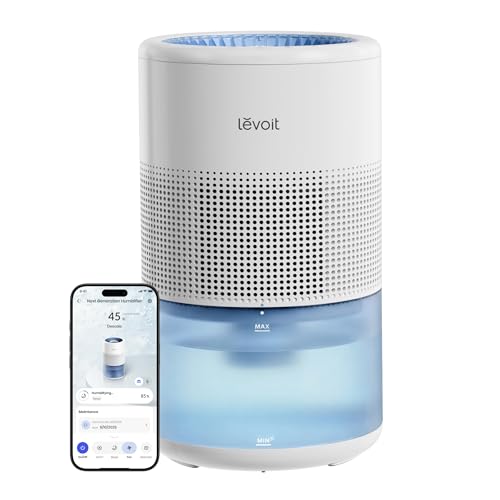
A dedicated air purifier with a true HEPA filter and an AHAM-verified CADR matching your room volume
Physical filtration captures pollen, dander, and smoke particles down to 0.3 microns without adding humidity or mineral dust to your air.


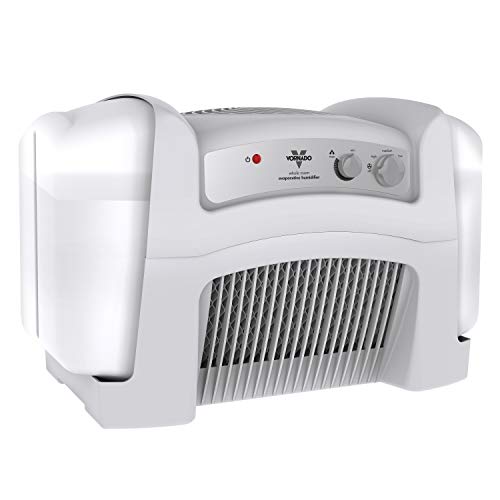
An evaporative wick humidifier with a dishwasher-safe reservoir and an integrated humidistat
Evaporative wicks introduce natural water vapour while trapping dissolved tap water minerals inside the paper filter, preventing white dust.
An ultrasonic cool-mist humidifier paired with demineralization cartridges or dedicated distilled water use
Quiet operation and rapid mist dispersion relieve dry mucous membranes in large spaces, provided mineral filtration is maintained.


Prices are not shown here because they change daily and we will not display a stale one. Links open on Amazon, where the current price and availability are live.
Common questions
Can an air purifier help with dry skin or a dry throat?
No, an air purifier cannot relieve dry skin or irritated throats caused by low humidity. Air purifiers only capture solid airborne particles and do not emit water vapour. You need a humidifier to raise indoor relative humidity.
Can I use an air purifier and a humidifier in the same bedroom?
Yes, you can run both appliances in the same room if you keep them at least eight feet apart. Direct the humidifier mist nozzle away from the air purifier intake to prevent moist air from wetting the dry HEPA filter.
Does a humidifier remove dust and allergens from the air?
No, a humidifier does not remove dust, pollen, or pet dander from your room. Humidifiers add moisture to dry air and have no filtration mechanism. Heavy moisture may cause some dust particles to settle faster, but they remain in the room on your floor and furniture.
Why does my air purifier turn red when I run my humidifier?
Ultrasonic humidifiers emit fine mineral dust when filled with municipal tap water. The optical laser sensor inside an automated air purifier registers these floating calcium particles as air pollution and increases fan speed to filter them out.
Should I buy a 2-in-1 air purifier and humidifier combo?
Generally no, because combination units compromise on clean air delivery rate and water tank capacity. They are also harder to sanitize and risk exposing paper filter media to standing water, which encourages mold growth.
Which device should I buy first if I have winter allergies?
Purchase a digital hygrometer first to check your baseline room humidity. If relative humidity is between 30 and 50 percent, buy an air purifier for the allergens. If humidity sits below 30 percent, you likely need both machines to treat particle triggers and irritated membranes.