No single filter clears smoke because smoke is both fine particles and toxic gas. A standard filter catches visible ash but lets volatile organic compounds (VOCs) pass directly through. Choosing an effective air purifier for smoke means matching separate filter stages to the specific combustion source entering your living space.
Wildfire smoke, cooking grease, and tobacco fumes behave differently once they enter a room. Wildfire smoke floods an entire home with microscopic soot that stays suspended in air currents for days. Kitchen grease produces heavy aerosolized droplets that coat motor housings and clog paper media within weeks. Tobacco smoke deposits sticky chemical tars onto drywall and upholstery while releasing invisible gases like benzene and formaldehyde. According to the Environmental Protection Agency (EPA), fine combustion particles measuring 2.5 microns or smaller present the greatest indoor health hazard because they penetrate deep into human lung tissue.
You cannot solve these three distinct problems with a generic room cleaner. You need mechanical filtration for the particulate phase and sorbent media for the gaseous phase. When either component is undersized, airborne smoke odor persists even if the room looks visibly clear. The sections below outline the exact mechanical thresholds required to strip each smoke type from indoor air.
Smoke Exists as Both Microscopic Particles and Chemical Gases
Every smoke plume consists of solid particulate matter suspended alongside toxic chemical vapors. The solid fraction contains carbon soot, unburned fuel fragments, and ash. The gaseous fraction contains volatile organic compounds, carbon monoxide, and nitrogen oxides. The Centers for Disease Control and Prevention (CDC) warns that fine particles penetrate the alveolar regions of the lungs and enter the bloodstream. Meanwhile, chemical vapors cause throat irritation and long-term cellular damage. The solid fraction behaves predictably.
Most consumer air cleaners fail against smoke because they only address the solid fraction. A standard High-Efficiency Particulate Air (HEPA) filter captures solid particles down to 0.3 microns with 99.97 percent efficiency under the Department of Energy standard. That mechanical process halts the soot. Gaseous molecules pass straight through. If you smell lingering smoke after running a basic filter, your unit is only catching half the hazard.
| Smoke Type | Primary Hazard Phase | Particle Size Range | Required Filtration Stage |
|---|---|---|---|
| Wildfire smoke | Fine particulate matter and combustion gases | 0.1 to 2.5 microns | True HEPA filter with sealed perimeter gasket |
| Cooking smoke | Aerosolized grease droplets and burnt oils | 0.5 to 10 microns | Washable aluminum mesh prefilter followed by HEPA |
| Tobacco smoke | Condensed chemical tars and volatile vapors | 0.1 to 1.0 microns | Granular activated carbon bed weighing over five pounds |
Why Activated Carbon Weight Decides How Well Smoke Odors Clear
The volume and weight of granular activated carbon determine whether an air cleaner captures smoke gases or immediately saturates. Many budget purifiers include a thin sheet of foam sprayed with carbon dust. That cosmetic carbon layer weighs less than two ounces. It saturates within forty-eight hours of exposure to tobacco smoke or heavy kitchen grease. Once the binding sites on the carbon fill up, volatile organic compounds pass straight through the unit back into your room. Thin carbon sheets cannot hold smoke.
In some cases, a saturated carbon filter releases trapped odors back into the room when ambient humidity changes. To capture chemical vapors effectively, an air purifier for smoke needs multiple pounds of virgin activated carbon pellets. Sorbent beds use physical adsorption to trap volatile organic compounds inside microscopic pores. The Association of Home Appliance Manufacturers (AHAM) certifies performance for particle removal, but it provides no standardized test score for gas-phase adsorption. You must inspect the actual mass of the carbon cartridge. A canister holding five to fifteen pounds of granular carbon provides the residence time necessary for air molecules to contact and stick to the sorbent material.
Wildfire Smoke Demands Continuous Airflow and High CADR Ratings
Wildfire smoke events require rapid indoor air exchange to counteract continuous outdoor particle infiltration through window frames and exterior doors. During active fire seasons, fine particle counts spike across entire metropolitan areas. The Environmental Protection Agency (EPA) notes that indoor concentrations of fine particles can reach 70 to 80 percent of outdoor levels in leaky homes without active filtration. Infiltration happens continuously through construction seams, vent dampers, and door sweeps. Active fires demand continuous airflow.
A low-powered desktop purifier cannot generate enough clean air volume to keep pace with that relentless influx. To beat infiltration, focus on the CADR rating, which measures Clean Air Delivery Rate (CADR) for tobacco smoke. The Association of Home Appliance Manufacturers (AHAM) measures clean air delivery rate in cubic feet per minute. Under the AHAM two-thirds rule, the smoke CADR should equal at least two-thirds of the room's total square footage, assuming an eight-foot ceiling. A 300-square-foot living room requires an air cleaner with a smoke CADR of at least 200 cubic feet per minute. High CADR units overcome building leaks.
For active wildfire defense, running a unit with a CADR of 300 or higher provides four to five complete air changes per hour. That high exchange rate drops particulate concentrations faster than outdoor smoke can seep through the building envelope. You can track this clearance rate using an indoor air quality monitor that measures optical particle counts. Read our dedicated guide on how to keep wildfire smoke out of the house for whole-home pressurization techniques.
Cooking Smoke Destroys Standard Filters Without a Cleanable Prefilter
Cooking smoke contains vaporized oils and animal fats that coat pleated filter fibers and permanently destroy airflow. High-heat frying and searing release microscopic oil droplets into your kitchen air. Kitchen grease acts differently. When these sticky aerosols hit an unprotected HEPA filter, they coat the delicate glass-fiber or polypropylene mesh. Unlike dry dust, oil does not fall away or vacuum off. It forms an impermeable, gummy film across the pleats. Oil destroys pleated fiberglass media.
This film increases static pressure, strains the fan motor, and reduces airflow to a fraction of its rated capacity within weeks. The primary defense against cooking smoke is a dedicated, washable mesh prefilter. Metal mesh or dense woven synthetic screens capture the heavy grease aerosols before they reach the main filter stages. You must wash this prefilter weekly in hot soapy water during heavy cooking periods.
If your kitchen lacks an externally vented exhaust hood, position your portable air purifier between the stove and the rest of the living area. Do not place the unit directly beside the range where extreme heat can warp plastic housings or create fire hazards. Check how to choose an air purifier that clears the room to understand why fan motor strength matters when pulling air through grease-laden prefilters.
Tobacco and Cannabis Smoke Create Resilient Thirdhand Chemical Residues
Tobacco and cannabis smoke release chemical residues that condense onto interior surfaces and continually off-gas into living spaces. Combusting tobacco releases thousands of chemical compounds, including nicotine, hydrogen cyanide, and polycyclic aromatic hydrocarbons. The Centers for Disease Control and Prevention (CDC) warns that secondhand tobacco smoke causes heart disease and respiratory illness in nonsmoking adults and children. Particulate filters catch the visible haze, but the stickiest elements adhere to walls, curtains, and floorboards.
This settled material is thirdhand smoke. Thirdhand smoke poses distinct challenges. It continues to re-emit toxic chemical vapors long after cigarettes are extinguished. Running a portable air filter helps clear active plumes, but it cannot pull condensed tars out of porous drywall. Removing established smoke odor requires washing hard surfaces with alkaline detergents, replacing contaminated carpets, and running an air cleaner packed with untreated activated carbon. Units that incorporate potassium permanganate blends offer enhanced breakdown of smaller gas molecules like formaldehyde. Without deep surface cleaning, no portable device can permanently eliminate the smell of chronic indoor smoking.
Air Cleaners That Produce Ozone Create Additional Respiratory Hazards
Air cleaners that rely on intentional ozone generation or unshielded ionization produce dangerous indoor lung irritants instead of removing smoke. Some commercial vendors advertise ozone generators as smoke-odor neutralizers for rental properties or vehicles. Ozone damages delicate lung tissue. The Environmental Protection Agency (EPA) warns that ozone concentrations high enough to break down chemical odor molecules exceed public health safety standards by wide margins. Ozone chemically reacts with human lung tissue, causing chest tightness, coughing, and permanent airway damage. It also reacts with indoor terpenes from wood furniture and cleaning products, producing secondary ultrafine particles and formaldehyde.
Electronic precipitators and ionizing purifiers can also generate unintended ozone as a high-voltage electrical byproduct. The California Air Resources Board (CARB) strictly limits indoor air cleaner ozone emissions to no more than 0.050 parts per million. Mechanical filtration produces zero ozone. For smoke filtration in occupied rooms, mechanical filtration combined with physical carbon adsorption is the only method that adds zero chemical byproducts to your breathing zone. Never operate an intentional ozone machine in an occupied home.
Remember that no filtration device removes carbon monoxide. Carbon monoxide requires different hardware. If combustion smoke originates from wood stoves, fireplaces, or indoor heaters, you must install a certified carbon monoxide detector to safeguard against lethal odorless gas accumulation.
When an Air Purifier for Smoke Is the Wrong Solution
A portable air purifier cannot resolve smoke hazards when structural combustion sources or severe building leaks remain unaddressed. Filtration acts as a remedial measure. It does not substitute for removing the combustion source. Filtration cannot fix faulty flues. If your furnace heat exchanger is cracked, or your wood-burning fireplace has a backdrafting flue, adding a portable filter does nothing to prevent deadly combustion gases from filling the room. You need a licensed heating contractor or a certified chimney sweep to repair venting faults at the source.
Similarly, renters facing tobacco smoke infiltration from neighboring apartments cannot rely solely on a portable machine. Air purifiers capture air that passes through their grilles, but they do not stop smoke from migrating through unsealed plumbing chases, electrical outlets, and shared HVAC ductwork. In these scenarios, sealing entry points with expanding foam, caulk, and magnetic vent covers provides far greater relief than adding more filtration horsepower. Consult our sizing guidelines to match an air purifier to your room by CADR, not square feet once building boundaries are secured. Seal physical infiltration points around window frames and exterior doors before running your air purifier for smoke on its highest fan setting.
What to Buy for This
Each entry below is a specification rather than a single model, because stock and pricing on this equipment change constantly. The products shown are what currently matches that specification. Match the spec, then buy whatever meets it.
True HEPA air purifier with minimum 250 CFM smoke CADR and sealed gasket housing
Delivers four air changes per hour in a 300-square-foot room to outpace continuous outdoor smoke infiltration through window frames.
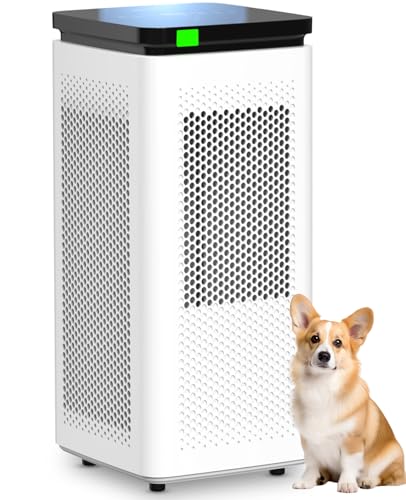

High-capacity air purifier with minimum 10 pounds of granular activated carbon and HEPA filtration
Provides the necessary sorbent residence time to capture volatile organic compounds and prevent chemical re-emission.


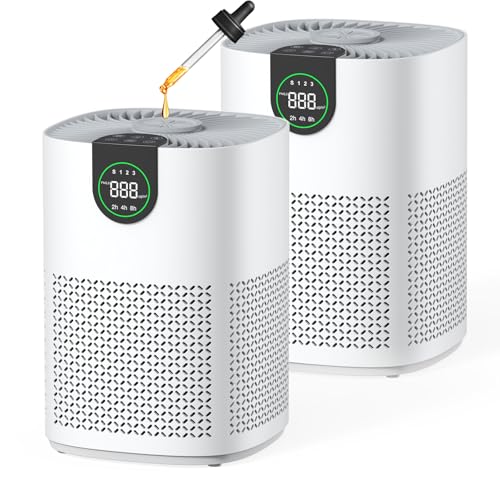
Compact air cleaner with washable aluminum prefilter and true HEPA stage
Washable metal mesh catches sticky grease aerosols before they can permanently clog expensive pleated glass fibers.

Prices are not shown here because they change daily and we will not display a stale one. Links open on Amazon, where the current price and availability are live.
Common questions
Can an air purifier for smoke remove carbon monoxide?
No, an air purifier cannot remove carbon monoxide from indoor air. Carbon monoxide is a small gas molecule that passes freely through both HEPA filters and standard activated carbon beds. You must install an Underwriters Laboratories listed carbon monoxide detector on every floor to protect against dangerous gas accumulation from combustion sources.
How long does it take an air purifier to clear smoke from a room?
A properly sized air purifier with a smoke CADR matching two-thirds of your room area clears visible haze in thirty to forty-five minutes. Heavy smoke odors require several hours or days of continuous operation because chemical molecules slowly desorb from walls and furniture. Running the device on its highest fan speed dramatically accelerates this clearance cycle.
Does a HEPA filter remove smoke smell?
A HEPA filter does not remove smoke smell because odors are caused by volatile organic gases rather than solid particles. High-efficiency particulate air filters capture microscopic soot, but they let gaseous odor molecules pass straight through. You need a dense bed of granular activated carbon to physically adsorb the chemical vapors responsible for the smell.
How often should you replace filters when using an air purifier for smoke?
During heavy smoke conditions like active wildfire seasons, you should replace the carbon filter every one to three months and check the HEPA filter after six months. Heavy smoke loads exhaust the adsorption sites on activated carbon far faster than normal household dust. If the air purifier begins exhausting a sweet or sour smell, the carbon is fully saturated and must be changed immediately.
Can opening windows clear smoke faster than an air purifier?
Opening windows works well for isolated cooking burns if outdoor air is clean and breezy, but it worsens indoor conditions during wildfire events or outdoor burning bans. When outdoor air quality is hazardous, keep all windows firmly shut and run your filtration system on high. Check local ambient particulate readings before using natural ventilation to flush a room.