Basement air stays damp because cool foundation masonry draws moisture from surrounding soil. Warm air channelling downward from upper floors cools against below-grade walls, which drives up relative humidity (RH) and creates persistent humidity in basement spaces even without plumbing leaks. Physics explains the problem. Cold air holds less vapor than warm air. When basement temperatures sit ten degrees below upper living spaces, the exact same volume of moisture produces a much higher humidity reading downstairs.
Soil contact compounds that temperature drop. Concrete acts like a hard sponge. Porous foundation masonry pulls groundwater out of perimeter dirt through capillary action and evaporates that moisture into your indoor air. Opening basement windows during humid summer afternoons accelerates this damp cycle instead of drying the room. You must balance wall temperatures, stop exterior water sources, and use mechanical removal to protect your framing.
Stopping subterranean moisture requires three steps. First, direct rainwater away from your foundation perimeter. Second, keep windows closed during hot weather to block humid outdoor air. Finally, run dedicated equipment sized for cool spaces to pull remaining moisture out of the air. Tracking these changes with a reliable gauge confirms your basement stays dry all year.
Cool Masonry Drops Air Down to Its Dew Point
Subterranean walls stay naturally cold because deep ground temperatures hover between 50 and 55 degrees Fahrenheit year-round in most temperate regions according to the Department of Energy (DOE). That cool earth absorbs heat directly from your foundation. Concrete surfaces match the surrounding ground. When warm, moist air circulates down from your living areas, it cools rapidly against these chilly masonry boundaries. Air contracts as it cools.
This thermal contraction forces the relative humidity to climb without any new water entering the room. Relative humidity measures how much water air holds compared to its maximum capacity at that specific temperature. Drop the temperature, and the container shrinks. If air at 75 degrees Fahrenheit and 50 percent relative humidity cools down to 55 degrees near a foundation wall, its relative humidity climbs past 90 percent. Condensation begins at the dew point.
Water droplets then form on exposed masonry, cold plumbing pipes, and steel support posts. You might mistake this condensation for an active foundation leak. Damp spots frequently reflect temperature differences rather than liquid seepage. Taping a square of aluminum foil to the wall clarifies the source. Moisture on the room side points to airborne condensation, while moisture trapped behind the foil indicates liquid seeping through the wall.
The American Society of Heating, Refrigerating and Air-Conditioning Engineers (ASHRAE) notes that condensation occurs whenever surface temperatures drop below the dew point of the surrounding air.
Insulating cold water pipes stops surface sweating immediately.
Soil Moisture Migrates Straight Through Concrete Slabs
Porous concrete draws ground moisture upward through capillary action. Liquid water moves through microscopic pores inside cast concrete and cinder blocks. Think of a sponge resting in a puddle. The material wicks moisture from wet earth toward the dry interior air. This transmission occurs silently as invisible vapor. Musty odors usually provide the first clear warning sign.
Vapor pressure drives this continuous inward moisture migration. Wet soil beneath your foundation slab creates significantly higher vapor pressure than your indoor air. Moisture travels toward dry air. Without a continuous polyethylene vapor barrier installed beneath the concrete during construction, soil water diffuses through the slab every day. Mineral deposits provide visual proof. White chalky powder on your walls, known as efflorescence, appears when evaporating water leaves dissolved soil salts behind on the masonry surface.
| Entry Pathway | Primary Driving Force | Typical Indicator |
|---|---|---|
| Capillary suction | Surface tension in porous concrete pores | Damp foundation base and dark slab edges |
| Vapor diffusion | Vapor pressure differences between soil and air | White efflorescence salts on bare masonry |
| Air leakage | Stack effect pulling summer air through rim joists | Musty smells near sill plates and floor joists |
| Hydrostatic pressure | Standing groundwater against exterior walls | Active water trickling through floor cracks |
Outdoor Ventilation Adds Moisture During Summer Months
Opening basement windows on warm summer days introduces massive moisture loads into cool lower levels. Many people open windows hoping for a drying cross-breeze. That strategy fails completely in humid weather. Outdoor summer air carries high absolute moisture content. When that 85-degree outdoor air enters a 65-degree basement, its relative humidity surges as it touches cold surfaces.
You cannot dry a cool space with warm, humid air. The arriving air cools, loses its capacity to hold moisture, and deposits vapor onto concrete floors and finished framing. Finished basements suffer warped drywall and buckling baseboards from this mistake. Keep basement windows firmly shut from May through September. Rely on mechanical dehumidification during these humid months instead of natural ventilation.
The stack effect pulls air through rim joists. Warm air rises through your upper floors and escapes through attic vents. This draft depressurizes your basement. The house then sucks humid outdoor air through gaps around sill plates, utility penetrations, and old window frames. Sealing those upper rim joists with rigid foam blocks stops unwanted summer infiltration.
Targeting Fifty Percent Relative Humidity Halts Fungal Growth
The Environmental Protection Agency (EPA) recommends maintaining indoor relative humidity between 30 percent and 50 percent to prevent mold growth. Relative humidity above 60 percent allows biological contaminants to flourish on organic building materials. Wood studs, cardboard storage boxes, and drywall paper all support rapid mold colonization once moisture levels cross that threshold. Spores remain dormant when air stays dry. Reviewing the ideal humidity in house standards helps you protect both storage items and structural framing.
According to the Centers for Disease Control and Prevention (CDC), mold spores can begin germinating within 24 to 48 hours on damp surfaces when relative humidity exceeds 60 percent. Time works against damp basements. Dust mites also proliferate when humidity stays above 50 percent according to the American Lung Association. Dropping basement moisture eliminates their primary water supply. If mold has already colonized unfinished framing, apply an EPA-registered mold removal spray to clean the wood before sealing the area.
- 30 to 50 percent: EPA-recommended indoor target range that halts fungal germination on building materials.
- 50 to 60 percent: Warning zone where dust mite populations expand and musty odors begin forming.
- Above 60 percent: Active growth threshold where the CDC warns that mold colonizes drywall within 48 hours.
- Above 70 percent: Extreme condensation zone where wood framing rots and metal fasteners corrode.
Exterior Drainage Adjustments Remove Bulk Water at Zero Operating Cost
Fixing exterior roof drainage stops the majority of basement dampness before water touches your foundation. Roof runoff dumps thousands of gallons against your foundation during a standard rainstorm. Gutters must stay clean. Clogged gutters overflow, pooling water directly against exterior masonry. Guidance from the Department of Energy (DOE) recommends extending downspout discharge pipes at least 5 feet away from foundation walls to prevent roof runoff from soaking the perimeter soil. Ten feet provides even better protection.
Ground slope around your foundation dictates where groundwater flows. Soil should slope downward away from your house at a drop of 6 inches over the first 10 feet according to the International Residential Code (IRC). Settling soil often reverses this slope over time. Backfilled soil around basement walls naturally compacts and creates a sunken trench that traps surface runoff. Add dense clay soil around the perimeter to re-establish a positive outward grade.
Keep organic mulch away from exterior masonry. Wood chips retain rainwater and hold persistent moisture against your exterior siding and concrete. Maintain an 8-inch clear inspection gap between ground mulch and your lowest siding board. Learning how to lower humidity in a room starts outdoors with downspouts, grading, and perimeter vegetation management.
- Clear all roof gutters of leaves and sediment so water flows freely to downspouts.
- Attach rigid downspout extensions that discharge water at least 5 feet away from exterior foundation walls.
- Inspect the soil grade around your foundation to ensure it slopes downward 6 inches over a 10-foot span.
- Clear organic mulch and dense shrubbery at least 12 inches away from the exterior masonry.
Mechanical Equipment Lowers Stubborn Humidity in Basement Rooms
Even with perfect exterior drainage, subterranean walls remain cool and require dedicated dehumidification during humid summer weather. An air conditioner cannot solve this alone. Basements rarely call for cooling because ground temperatures keep them comfortable. Running a central air conditioning unit overcools the space and creates shivering temperatures without removing enough moisture. You need a dedicated basement dehumidifier that extracts water vapor without dropping air temperatures.
Select an appliance tested under current Department of Energy (DOE) standards. The Association of Home Appliance Manufacturers (AHAM) tests portable dehumidifier water removal capacity at 65 degrees Fahrenheit and 60 percent relative humidity. Older testing standards used 80 degrees Fahrenheit, which overstated basement performance. Cold basements cause compressor coils to frost over quickly. Ensure your unit features an automatic defrost cycle that melts frost before ice blocks airflow. Check the dehumidifier size guidelines to match the pints per day (PPD) rating to your floor area.
A portable dehumidifier will not solve active water intrusion from a cracked foundation or a failed sump pump. If water pools across your floor during heavy storms, stop shopping for indoor appliances and hire a structural waterproofing contractor to install perimeter drainage. Continuous drainage is non-negotiable for normal operation. Emptying collection buckets by hand fails because the machine shuts down as soon as the reservoir fills. Connect a garden hose to a floor drain or use an internal condensate pump to lift water into an overhead utility sink.
Closed Foundation Vents Stop Humid Summer Air from Entering
Legacy building codes once required open foundation vents to flush moisture out of lower crawl spaces and basements. Modern building science disproved that practice decades ago. Open vents allow warm, humid summer air to pour into cool spaces beneath your house. The incoming air meets cool masonry, condenses, and feeds mold colonies. Seal foundation vents with rigid foam and exterior covers to keep summer moisture outside where it belongs.
Uninsulated rim joists create another massive air leak. The rim joist sits directly on top of your foundation wall around the entire perimeter of your home. Unsealed wood framing in this zone allows unconditioned outdoor air to seep into floor cavities. Cut two-inch extruded polystyrene foam boards to fit snugly between each floor joist bay. Seal edges with expanding spray foam. This simple air sealing project eliminates summer moisture infiltration while lowering winter heating bills.
If you finish your basement with continuous exterior rigid foam insulation and a complete sub-slab vapor barrier, mechanical moisture removal drops substantially. In that scenario, standard central air conditioning can maintain moisture levels without a dedicated basement unit. Most existing homes lack exterior insulation. Targeted interior air sealing provides an immediate, low-effort barrier against summer humidity.
Digital Monitors Track Hidden Moisture Pockets Near Rim Joists
A single humidity reading taken in the center of your basement does not reflect conditions near cold exterior walls. Air stratifies by temperature. Warm air sits near the ceiling, while cold, dense air settles across the concrete floor. Because relative humidity depends directly on temperature, floor-level air often registers 15 percent higher humidity than air four feet higher. Hidden corners harbor moisture pockets.
Invest in a dedicated hygrometer that includes a remote wireless sensor probe. Mount the main display upstairs for quick daily checks. Set the wireless probe against your coldest north-facing foundation wall. North walls receive no sun and remain the coldest. If your coldest corner stays below 50 percent relative humidity, your entire basement remains protected against mold.
Check the high and low memory on your digital gauge after major rainstorms. Spikes that exceed 60 percent relative humidity signal drainage overflows or unsealed penetrations. Catching these moisture spikes early allows you to correct gutter clogs before mold colonizes your storage items. Place a digital sensor on your basement floor near the exterior wall tonight to measure baseline humidity in basement air before adjusting your downspouts.
What to Buy for This
Each entry below is a specification rather than a single model, because stock and pricing on this equipment change constantly. The products shown are what currently matches that specification. Match the spec, then buy whatever meets it.
50-pint portable dehumidifier with built-in condensate pump and low-temperature defrost control
A built-in pump lifts extracted water into an overhead utility sink or drain, preventing the machine from shutting off when an internal collection bucket fills.
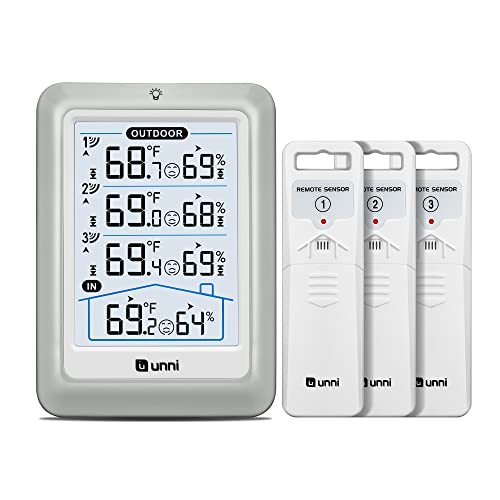
Digital hygrometer with remote wireless sensor probe and high-low humidity memory
Placing a remote probe directly against a cool perimeter foundation wall tracks localized relative humidity spikes that room-center sensors miss.

50-pint portable dehumidifier with gravity drain hose connection and automatic humidistat
Continuous gravity drainage through a garden hose into a floor drain eliminates bucket emptying while maintaining setpoints between 45 and 50 percent relative humidity.


Prices are not shown here because they change daily and we will not display a stale one. Links open on Amazon, where the current price and availability are live.
Common questions
What should the humidity level be in a basement?
The Environmental Protection Agency (EPA) recommends maintaining indoor relative humidity (RH) between 30 percent and 50 percent. Keeping basement air below 50 percent prevents mold spores from germinating on wood framing and stored cardboard. If relative humidity climbs above 60 percent, biological contaminants and dust mites multiply rapidly.
Why does my basement feel humid even with no leaks?
Basement walls stay naturally cold because surrounding earth absorbs their heat. When warm air from upper living floors enters the basement and touches cool masonry, the air contracts and its relative humidity spikes toward the dew point. Concrete also wicks invisible ground moisture vapor directly from damp perimeter soil into the room through capillary action.
Does opening basement windows in the summer help reduce dampness?
No, opening windows in warm weather increases basement dampness. Warm summer air carries high moisture levels that condense when coming into contact with cold concrete floors and foundation walls. Keep basement windows tightly shut during humid months and rely on a dedicated dehumidifier instead.
Can a standard air conditioner dehumidify a basement?
A central air conditioner dehumidifies only while actively cooling the air, which makes it ineffective in cold subterranean spaces. Because earth keeps basements naturally cool, thermostats rarely call for cooling, leaving excess moisture unaddressed. Running an air conditioner downstairs creates chilly, clammy conditions rather than dry air.
How far should downspouts extend away from the foundation?
The Department of Energy (DOE) recommends extending downspout discharge pipes at least 5 feet away from your foundation walls. Directing roof runoff 10 feet away provides even greater protection against soil saturation. Keeping water away from perimeter earth stops groundwater from migrating through porous concrete slabs.