An air purifier for asthma reduces airborne triggers, but it cannot cure a chronic respiratory condition. The device pulls ambient air through a dense fibrous mesh to capture microscopic irritants before you inhale them. You still need an asthma action plan overseen by your doctor. Using a mechanical filter simply limits the volume of particulate matter circulating in your immediate airspace.
Most household asthma attacks stem from common indoor particles such as pet dander, mold spores, and pest fragments. An air cleaner captures these irritants only while they remain suspended in moving air currents. Irritants that have already dropped onto carpeting, bedding, or upholstery stay there until physical cleaning lifts them into the air. Clean air alone is not a cure.
Public health agencies treat room air filtration as an auxiliary defense rather than a standalone remedy. The Environmental Protection Agency (EPA) emphasizes that source reduction and targeted ventilation provide the foundation of healthy indoor air. Running a filtration unit in a room with active mold growth or unwashed bedding leaves the primary causes of airway inflammation untouched.
What Filtration Can and Cannot Do for Inflamed Airways
Mechanical air filters capture floating particles that irritate sensitive bronchial passages. Asthma inflames the airways. When you breathe in microscopic foreign matter, your immune system can react with inflammation, airway constriction, and excess mucus production. Removing those particles lowers the total volume of allergens entering your respiratory tract each minute.
Clinical trials summarized by the Environmental Protection Agency (EPA) show modest improvements in bronchial symptoms when homes install portable air cleaners. The greatest benefit appears in controlled bedrooms where individuals spend seven to nine consecutive hours resting. Even in those trials, filtration reduced nighttime coughing and chest tightness without eliminating the baseline need for controller medications.
Filtration does not remove gaseous irritants unless the unit contains substantial chemical adsorbent material. Cooking fumes, paint vapors, and combustion gases pass straight through standard particulate filters. For homes dealing with seasonal allergens or animal dander, our guide to air purifiers for allergies outlines how particle size alters filter effectiveness.
Why True HEPA Filtration Is Mandatory for Asthma Triggers
A certified High-Efficiency Particulate Air (HEPA) filter captures particles down to microscopic sizes that penetrate deep into lung tissue. The Department of Energy (DOE) standard requires a true HEPA filter to remove at least 99.97 percent of particles sized at 0.3 microns. That standard ensures capture of fine pollen fragments, cat dander, and fungal spores.
Lower-tier filters let the most hazardous respiratory particles pass straight through the unit. Cheap synthetic pads marketed under terms like HEPA-type or HEPA-style have no standardized testing requirements. Check the label carefully. Those loosely woven media catch visible lint while allowing microscopic trigger particles to blow back into the room.
A true HEPA filter creates substantial resistance against the moving air stream. The motor inside the purifier must generate enough static pressure to pull air through that tight barrier. Our review of what a HEPA rating guarantees explains why cabinet construction and air seals matter just as much as the paper filter itself.
Cat dander particles measure from 0.1 to 2.5 microns, remaining suspended in still room air for hours. Pollen grains range from 10 to 100 microns, while fungal spores fall between 2 and 20 microns according to the American Society of Heating, Refrigerating and Air-Conditioning Engineers (ASHRAE). Only true HEPA media capture all three categories consistently.
Clean Air Delivery Rate Determines Bedroom Relief
The Clean Air Delivery Rate (CADR) measures how many cubic feet of clean air a machine delivers every minute. The Association of Home Appliance Manufacturers (AHAM) certifies CADR numbers through standardized laboratory chamber testing. Looking at the AHAM seal gives you verified performance data rather than manufacturer marketing claims.
To control asthma symptoms, a room purifier should exchange the full volume of air in the space at least 4 to 5 times per hour. The Environmental Protection Agency (EPA) advises that a unit CADR for smoke should equal at least two-thirds of the room floor area in square feet. For a 150-square-foot bedroom, you need a minimum smoke CADR of 100 cubic feet per minute.
Running a machine that is too small for the room forces you to use the loudest fan speed constantly. Sound levels dictate compliance. Most people switch small purifiers down to low settings to sleep, which cuts the delivered clean air to a fraction of the needed volume. You can check our calculation guide on matching an air purifier to room size to calculate the exact cubic footage requirements.
| Room Floor Area | Minimum Smoke CADR | Air Exchanges Per Hour | Target Use Case |
|---|---|---|---|
| 100 to 150 sq ft | 100 cfm | 4 to 5 ACH | Small Nursery or Guest Bedroom |
| 150 to 250 sq ft | 165 cfm | 4 to 5 ACH | Standard Primary Bedroom |
| 250 to 350 sq ft | 230 cfm | 4 to 5 ACH | Large Master Suite or Home Office |
| 350 to 500 sq ft | 330 cfm | 4 to 5 ACH | Open Concept Living Area |
Electronic Cleaners and Ionizers Pose Direct Respiratory Risks
Air cleaning technologies that generate ozone or secondary oxidants can provoke asthma attacks instead of preventing them. Electronic precipitators, ionizers, and plasma generators use high voltage electrical charges to attract particles to plates or surfaces. This ionization process frequently produces ozone as an unintended byproduct.
Ozone harms human lungs. The Environmental Protection Agency (EPA) warns that even small concentrations of ground-level ozone inflame the linings of the bronchial tubes and reduce lung capacity. For an asthmatic airway, ozone exposure triggers coughing, throat tightness, and rapid wheezing.
The California Air Resources Board (CARB) certifies air cleaners that emit less than 0.050 parts per million of ozone. For anyone with reactive airways, the safest choice is zero intentional emission. Stick to pure mechanical filtration with dense fiberglass or synthetic media and turn off any optional ion generation features.
Avoid devices marketed as ozone generators, hydroxyl generators, or air sterilizers for occupied rooms. The Centers for Disease Control and Prevention (CDC) advises against using ozone-producing equipment in spaces where people live or work. If your purifier has an independent ionizer button, leave it permanently switched off.
Settled Allergens Require Physical Cleaning Beyond Air Cleaners
Air purifiers cannot capture triggers that rest on floors, pillows, and upholstered furniture. Dust mites fall quickly. Dust mite feces and fragments are relatively large and heavy, measuring between 10 and 40 microns according to the American Academy of Allergy, Asthma and Immunology (AAAAI). Because of that physical weight, they settle out of the air within ten minutes of disturbance.
Running a filter does not clear a mattress teeming with dust mites. The Centers for Disease Control and Prevention (CDC) recommends zippered allergen-impermeable encasements for pillows and mattresses to isolate these pests. Washing bed linens weekly in water heated to at least 130 degrees Fahrenheit kills live mites and denatures allergenic proteins.
Vacuuming without a sealed HEPA exhaust merely throws settled dust back into your breathing zone. Pairing an air cleaner with damp dusting and a sealed canister vacuum keeps settled allergens from multiplying. Our analysis of household dust filtration limits details why cleaning routines must support room filtration.
Placing an Air Purifier for Asthma in Sleeping Areas
Positioning your air cleaner within your nighttime breathing zone delivers the highest concentration of filtered air where you need it most. Nighttime exposure matters most. People spend approximately one-third of their lives in the bedroom, making it the primary site of overnight airway recovery. Setting the unit between three and six feet from the head of the bed establishes a clean airflow envelope.
Keep the purifier away from room corners, closets, and thick drapes that block intake grilles. The machine needs at least two feet of open clearance on all sides to pull ambient air across the floor and walls efficiently. Point the clean air exhaust toward your bed without creating an uncomfortable direct draft across your face.
Keep windows and bedroom doors closed while the filtration unit runs throughout the night. Filtration requires continuous power. An open window pulls in outdoor pollen, soot, and road dust faster than any portable unit can remove them. If you suspect structural moisture or dampness in the room, read our guide on remediating indoor mold before adding filtration.
When Environmental Controls Fall Short of Clinical Stability
An air filter is a mechanical risk-reduction tool, not a substitute for prescribed medical therapy. If you experience daily wheezing, wake up gasping at night, or use a rescue inhaler more than twice weekly, your asthma is clinically uncontrolled. The National Heart, Lung, and Blood Institute (NHLBI) guidelines state that these warning signs require medical adjustment of controller medications.
No filtration setup can overcome catastrophic indoor hazards like active tobacco smoking or gas appliance exhaust leaks. Unvented gas stoves release nitrogen dioxide, which the Environmental Protection Agency (EPA) identifies as a significant trigger for pediatric asthma hospitalizations. Installing an exhaust hood vented to the outdoors or switching to electric cooking resolves that chemical source directly.
Your long-term stability depends on knowing your personal triggers through formal medical allergy testing. Once an allergist identifies whether cat dander, grass pollen, or alternaria mold causes your bronchospasm, you can tailor your cleaning and equipment strategies. Select an appropriate air purifier for asthma to protect your sleeping space while scheduling a comprehensive clinical review of your symptoms.
What to Buy for This
Each entry below is a specification rather than a single model, because stock and pricing on this equipment change constantly. The products shown are what currently matches that specification. Match the spec, then buy whatever meets it.
True HEPA filtration unit with a smoke CADR between 150 and 200 cfm, sealed mechanical housing, and quiet low-speed operation under 35 decibels.
Delivers four to five air changes per hour in standard 150 to 250 square foot bedrooms without disruptive motor whine that interrupts sleep.

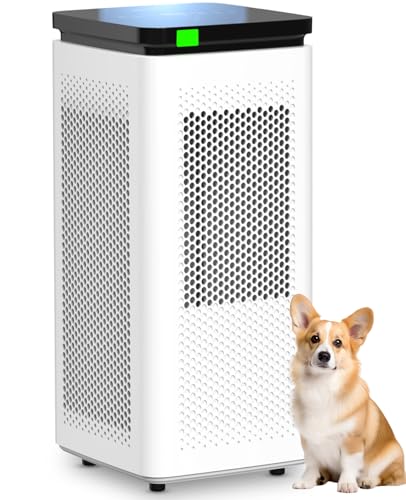
Mechanical air cleaner with certified smoke CADR of at least 300 cfm, true HEPA media, physical pre-filter screens, and zero ozone emission certification.
Circulates high air volumes across open floor plans to capture pet dander and tracked-in pollen before particles settle into carpeting.

True HEPA filtration unit paired with at least three pounds of activated carbon granules and potassium permanganate media in a bypass-free steel frame.
Captures fine particulate matter while adsorbing volatile organic compounds and combustion gases that pass straight through standard particulate filters.
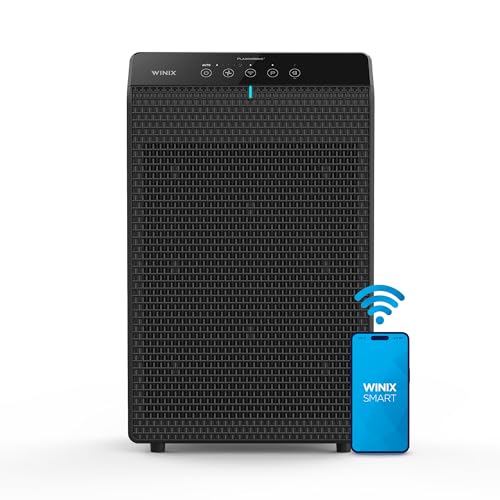
Prices are not shown here because they change daily and we will not display a stale one. Links open on Amazon, where the current price and availability are live.
Common questions
Can an air purifier reduce asthma attacks?
A true HEPA air purifier can reduce asthma attacks caused by airborne triggers like pet dander, mold spores, and pollen. The device works by filtering fine particles out of the air before they reach your respiratory tract. However, it cannot prevent flare-ups caused by cold air, exercise, respiratory viruses, or allergens settled into carpets.
Can an air purifier make asthma symptoms worse?
An air purifier can worsen asthma if it generates ozone or uses an active electrostatic ionizer. The Environmental Protection Agency (EPA) warns that ground-level ozone irritates bronchial linings and triggers acute airway constriction. Devices using unsealed cabinets can also blow collected dust back into the room if filters are improperly seated.
Should I run an air purifier all day for asthma?
You should run an air purifier continuously 24 hours a day on a steady fan setting. Turning the unit off allows ambient dust, animal dander, and outdoor infiltration to rebuild to baseline levels within an hour. Continuous low or medium operation maintains a stable clean air delivery rate in the room.
Where is the best place to put an air purifier for asthma?
The best location for an air purifier is in the primary bedroom, positioned three to six feet from the head of the bed. Placing the unit near your sleeping breathing zone ensures you inhale filtered air during nighttime hours when airways are most vulnerable. Keep the device two feet away from walls and heavy drapes.
Does an air purifier help with dust mite asthma?
An air purifier provides limited help for dust mite allergies because dust mite allergens are heavy and settle onto fabrics within minutes. The Centers for Disease Control and Prevention (CDC) recommends allergen-proof zippered mattress and pillow covers as the primary defense against dust mites. Air filters only capture the small fraction of mite dust kicked up during active vacuuming or bed-making.
What type of filter is best for asthma?
A certified true HEPA filter is the best choice for asthma because it captures 99.97 percent of particles down to 0.3 microns. Avoid uncertified filters labeled HEPA-type or HEPA-like, which lack standardized efficiency ratings for fine respirable particles. For secondary chemical triggers, look for a unit that also incorporates a dense bed of activated carbon.