No single well water filter solves every groundwater problem. Private wells draw from unmanaged aquifers that carry unpredictable mixtures of silt, dissolved metals, and living bacteria. A mechanical screen cannot remove dissolved iron. An ordinary carbon cartridge cannot kill microbial pathogens. Treating well water requires a sequenced series of specialized components called a treatment train.
Every stage in that train depends on the stage before it. Skip the sediment pre-filter, and sand destroys the delicate internal seals on your water softener valve. Omit iron treatment, and orange rust coats the quartz sleeve of your ultraviolet lamp within days. Once coated, ultraviolet light cannot penetrate the water to neutralize coliform bacteria. The equipment fails, and your household drinks contaminated water.
Fixing your supply begins with an accredited laboratory analysis rather than trips to a hardware store. You must know your exact contaminant levels before selecting hardware. The pages here cover how each treatment stage operates, which physical thresholds determine equipment sizing, and how to assemble a reliable system for your home.
A Single Well Water Filter Cannot Treat Every Contaminant
Contaminants in groundwater exist in fundamentally different physical states that require distinct separation mechanisms. Sand and rust flakes are suspended solids. Dissolved minerals like ferrous iron are invisible liquids in solution. Gases such as hydrogen sulfide dissolve directly into the water stream. Bacteria and viruses are living microbiological cells.
A standard porous cartridge traps suspended particles by physical exclusion. Dissolved ions simply pass through the pores of a sediment filter regardless of micron rating. According to the Environmental Protection Agency (EPA), private wells are not regulated under the Safe Drinking Water Act. The EPA reports that well owners hold sole responsibility for testing and maintaining their private drinking water systems.
Relying on a single universal filter cartridge always leads to premature clogging or unfiltered exposure. You must install dedicated equipment for each category of contaminant identified in your well.
- Suspended solids require mechanical barrier filtration.
- Dissolved iron and manganese require chemical oxidation before filtration.
- Calcium and magnesium require ion-exchange softening.
- Organic chemicals and odors require catalytic carbon adsorption.
- Microbiological organisms require ultraviolet disinfection.
Laboratory Testing Dictates Your Entire Equipment Sequence
A certified laboratory test is the only valid foundation for purchasing well treatment hardware. Do not rely on store-bought test strips. Dip strips lack the precision required to size media beds or identify trace toxins.
The Centers for Disease Control and Prevention (CDC) recommends testing private well water at least once every year for total coliform bacteria, nitrates, total dissolved solids, and pH levels. That panel identifies heavy metals, mineral hardness, and volatile organic compounds (VOCs).
Our guide on selecting a laboratory water test explains how to collect uncompromised samples at the tap. Testing tells you whether iron is dissolved or oxidized. That single distinction dictates whether you need an aeration tank or a standard sediment unit. Without verified numbers, you risk buying undersized media tanks that foul prematurely.
Aquifer chemistry shifts with heavy rainfall, spring snowmelt, and agricultural runoff. The CDC notes that surface runoff can carry agricultural fertilizers and animal waste into shallow groundwater tables. If your initial test occurs during a dry month, retest after heavy spring rains to confirm your treatment train handles peak contaminant spikes.
Coarse Sediment Traps Protect Downstream Plumbing Valves
The first component at your point of entry must always be a dedicated sediment pre-filter. Water straight from an aquifer carries grit, shale fragments, and coarse sand. These hard particles score moving parts inside automatic control valves. They shred rubber O-rings.
A spin-down separator filter installed immediately after the pressure tank traps abrasive grit using centrifugal force and a cleanable stainless steel mesh screen. Pairing a spin-down unit with a secondary 20-micron pleated sediment cartridge catches finer silt before the main treatment tanks.
You can inspect how a dedicated sediment filter catches particulate matter without causing severe water pressure loss across your distribution lines. The pre-filter absorbs the heaviest physical wear. Cartridges are inexpensive to replace. Rebuilding motorized control valves costs significantly more.
Dissolved Iron and Hydrogen Sulfide Demand Air Injection Oxidation
Dissolved ferrous iron remains invisible in water until exposure to air forces it out of solution as an orange solid. When oxidized inside plumbing pipes, it stains sinks, toilets, and laundry. Rust stains ruin fixtures.
The EPA sets a secondary drinking water standard for iron at 0.3 parts per million (ppm) to prevent severe fixtures staining and metallic tastes. The EPA also sets a secondary standard for manganese at 0.05 ppm because higher concentrations cause dark brown staining. Standard cartridge filters cannot capture dissolved iron.
An Air Injection Oxidation (AIO) filter uses a pocket of compressed air inside a mineral tank to convert dissolved ferrous iron into insoluble ferric iron particles. The media bed then filters out the solid rust particles and backwashes them down the drain on a timed cycle. Selecting a dedicated iron filter eliminates the sulfur gas that creates a rotten egg odor throughout the building. Chemical-free air injection systems handle up to 10 ppm of dissolved iron without requiring continuous chlorine injection pumps.
Ion Exchange Softeners Strip Calcium and Magnesium Scale
Hard water damages water heaters, corrodes plumbing fixtures, and prevents soap from lathering. The United States Geological Survey (USGS) classifies water with more than 7 grains per gallon (gpg) of calcium carbonate as hard. Scale ruins appliance efficiency.
A traditional water softener uses polystyrene resin beads charged with sodium or potassium ions to capture dissolved calcium and magnesium. As mineral-laden water flows through the resin bed, the beads attract hardness minerals and release harmless sodium ions into the supply.
Understanding that hardness and contamination require different equipment keeps you from expecting a softener to eliminate chemicals or bacteria. Softeners must sit downstream from iron oxidation filters. If raw water contains more than 1 ppm of dissolved iron, iron coats the ion-exchange resin beads permanently, ruining the exchange capacity.
| Hardness Level | Grains Per Gallon (gpg) | Expected Impact | Recommended Treatment |
|---|---|---|---|
| Soft | 0 to 3.5 gpg | Negligible mineral scaling | No softening required |
| Moderate | 3.5 to 7.0 gpg | Light scale deposits on shower doors | Optional point-of-use conditioning |
| Hard | 7.0 to 10.5 gpg | Visible scale accumulation in water heaters | Whole-house ion exchange softener |
| Very Hard | 10.5 gpg and above | Severe pipe restriction and appliance failure | High-capacity ion exchange softener |
Backwashing Carbon Filters Remove Solvents and Pesticides
Agricultural runoff and industrial solvents frequently infiltrate shallow aquifers across rural regions. Activated catalytic carbon provides vast surface area to adsorb synthetic organic chemicals, volatile organic compounds, and lingering odors. Porous carbon traps dissolved chemicals.
A whole-house backwashing carbon tank operates without disposable internal cartridges, cleaning its media bed automatically through periodic reverse flow flushes. Integrating a broad-spectrum whole-house water filter filled with acid-washed coconut shell carbon removes earthy tastes and traces of naturally occurring radon.
Carbon media also neutralizes trace chlorine if you maintain an upstream chemical disinfection injector. The carbon tank must always sit before ultraviolet disinfection equipment. Removing organic compounds improves water clarity and light transmission. Cloudy water shields pathogens from sanitizing rays.
Ultraviolet Disinfection Destroys Microorganisms Without Chemicals
Microbial contamination in private wells poses immediate human health hazards. The CDC warns that private wells can harbor dangerous microorganisms, including Escherichia coli, Giardia lamblia, and Cryptosporidium. Boiling water works during an emergency, but an automated Ultraviolet (UV) disinfection system provides continuous whole-building microbiological protection.
NSF International (NSF) and the American National Standards Institute (ANSI) certify ultraviolet disinfection hardware under the NSF/ANSI 55 standard. Class A systems under NSF/ANSI 55 must deliver a minimum ultraviolet dose of 40 millijoules per square centimeter (mJ/cm2). That intensity deactivates pathogenic bacteria, viruses, and protozoan cysts. Class B systems only provide supplemental bactericidal treatment for non-pathogenic nuisance organisms.
UV light does not alter water chemistry. It leaves no chemical aftertaste. However, water clarity dictates ultraviolet effectiveness.
According to the EPA and water treatment equipment manufacturers, water entering a UV chamber must have turbidity below 1 Nephelometric Turbidity Unit (NTU). Iron must measure below 0.3 ppm, and hardness must stay under 7 gpg. Suspended sediment particles act as shields for bacteria, casting microscopic shadows that allow living microbes to pass through uninjured. For this reason, the UV reactor is always the final stage of your whole-house treatment train.
Point-of-Use Reverse Osmosis Clears Dissolved Heavy Metals
Whole-house systems protect plumbing pipes and bathing water, but drinking water requires tighter filtration. Naturally occurring arsenic, nitrates from nearby farm fertilizer, and dissolved uranium pass directly through sediment filters, softeners, and carbon beds. These dissolved toxins bypass whole-house systems.
The EPA sets the maximum contaminant level for arsenic in public drinking water at 10 parts per billion (ppb) due to long-term cancer risks. The EPA also caps nitrate levels at 10 ppm to protect infants from methemoglobinemia, commonly known as blue baby syndrome. Installing an under-sink reverse osmosis system certified under NSF/ANSI 58 strips dissolved heavy metals and inorganic salts at the kitchen sink.
Semi-permeable synthetic membranes reject particles as small as 0.0001 microns. Whole-house reverse osmosis is rarely practical for typical residences because the process produces significant wastewater volumes and leaves water aggressively demineralized. Acidic, mineral-stripped water leaches copper and lead directly from indoor household plumbing. Targeting drinking and cooking taps with an under-sink reverse osmosis unit provides maximum purification where ingestion occurs without destroying structural pipes.
Regular Maintenance Schedules Prevent Bacterial Colonization in Media
Water treatment hardware is never a permanent install-and-forget purchase. Neglected filter housings and exhausted media beds quickly turn into breeding grounds for heterotrophic bacteria. Fouled filters breed microbes.
Sediment filter cartridges require replacement as soon as pressure drop across the housing reaches 10 to 15 pounds per square inch. Our guide on how often to change a water filter outlines monitoring protocols based on gallon throughput rather than arbitrary calendar dates.
UV sterilizer lamps require annual replacement. The CDC notes that ultraviolet lamps experience internal solarization that degrades germicidal output after approximately 9,000 hours of continuous operation. Even if the bulb glows visibly blue, the emitted germicidal wavelength drops below biocidal intensity after 12 months. You must also inspect your water softener brine tank every month to break up salt bridges that prevent brine formation. Take your certified lab report and map your water quality parameters before investing in any well water filter system.
What to Buy for This
Each entry below is a specification rather than a single model, because stock and pricing on this equipment change constantly. The products shown are what currently matches that specification. Match the spec, then buy whatever meets it.
Spin-down sediment separator with 50-micron reusable stainless steel mesh and manual flush valve
Traps high-density abrasive sand directly at the well pressure tank, shielding downstream automated control valves from mechanical wear without requiring disposable filter replacements.


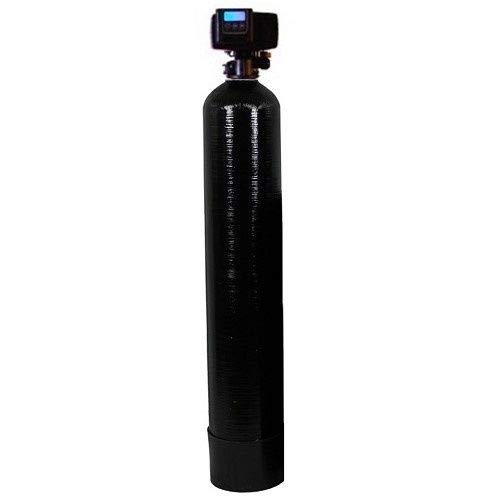
Air injection oxidation filter with catalytic media, 1-inch digital backwashing control valve, and internal air pocket
Oxidizes and precipitates clear-water ferrous iron and eliminates sulfur odors without adding chemical reagents, automatically purging trapped rust particles on a scheduled timer.

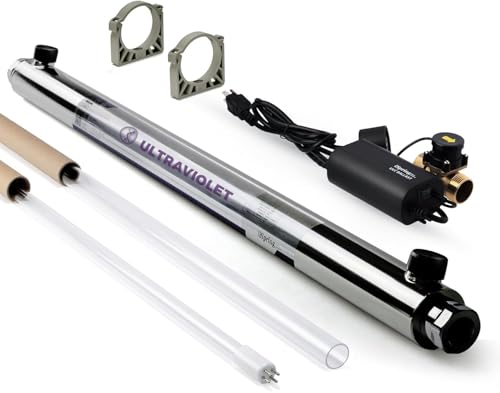
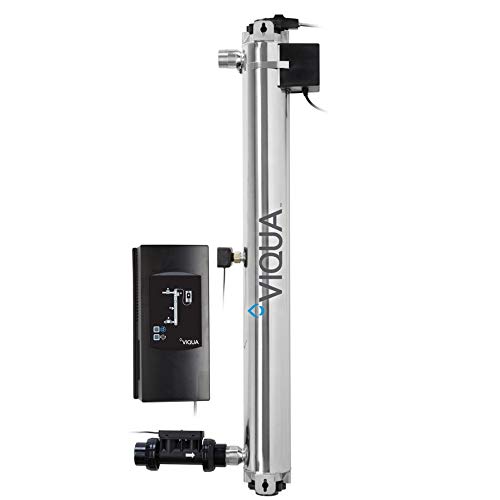
NSF/ANSI 55 Class A ultraviolet disinfection system rated for 12 gallons per minute with optical UV sensor and audible lamp alarm
Provides verified germicidal dose of 40 mJ/cm2 against waterborne bacteria and cysts without chlorine, featuring a real-time monitor that alerts occupants if water transmission drops.
Under-sink reverse osmosis system certified under NSF/ANSI 58 with remineralization stage and high-recovery membrane
Removes dissolved nitrates, arsenic, and total dissolved solids at the kitchen tap where drinking occurs, avoiding the massive wastewater penalties and pipe corrosion of whole-house reverse osmosis.
 iSpring RCC7AK-BN NSF Certified, 75 GPD, Alkaline 6-Stage Reverse Osmosis System, pH+ Remineralization RO Water Filter System Under Sink Patented Top-Mounted Faucet Design for Easy InstallationiSpring
 iSpring RCC7-BLK, NSF/ANSI 58 Certified, 5-Stage Reverse Osmosis System, RO Water Filter System Under Sink, Drinking Water Filter, 75 GPD, Stylish Black RO FaucetiSpring
Prices are not shown here because they change daily and we will not display a stale one. Links open on Amazon, where the current price and availability are live.
Common questions
Can a single cartridge filter treat all well water problems?
No single cartridge can eliminate every well water contaminant. Cartridge filters trap physical sediment and silt through mechanical filtration. Dissolved minerals, iron, and living bacteria require dedicated oxidation tanks, ion-exchange softeners, and ultraviolet disinfection hardware arranged in sequence.
Why does my well water smell like rotten eggs?
A rotten egg smell is caused by hydrogen sulfide gas produced by sulfur-reducing bacteria living in the aquifer or inside water heaters. The gas can be eliminated using an air injection oxidation filter or catalytic carbon media tank, which oxidizes the dissolved gas into odorless solid sulfur.
How often should private well water be tested?
The CDC recommends testing private well water at least once a year for coliform bacteria, nitrates, total dissolved solids, and pH. You should test immediately if you notice changes in water clarity, color, or taste, or following local flooding.
Does a water softener purify well water?
A water softener does not purify drinking water or remove bacteria, chemicals, or heavy metals. Softeners perform ion exchange, swapping dissolved calcium and magnesium ions for sodium ions to prevent plumbing scale. They must be paired with dedicated filtration equipment to handle safety hazards.
Where should an ultraviolet disinfection system sit in the treatment line?
An ultraviolet disinfection system must be installed as the final stage of your whole-house treatment train. Sediment, iron, and mineral hardness must be removed upstream so that suspended solids and mineral scaling do not block the germicidal light from reaching bacteria.