Controlling camper moisture requires continuous ventilation paired with regulated exterior water filtration. Managing recreational vehicle (RV) humidity and water is challenging because compact living spaces concentrate vapor rapidly. Breathing, cooking, and washing release liquid into an enclosed cabin every hour. That vapor hits cold exterior surfaces and condenses immediately.
Campground plumbing introduces a separate set of moisture hazards. Unfiltered supply hookups carry grit, chemical disinfectants, and pressure spikes that can fracture delicate plastic lines concealed behind interior paneling. Stagnant storage tanks breed organic slime if left unmanaged. You cannot treat a mobile rig like a stationary house because the interior volume is tiny and structural tolerances are low.
Daily Living Generates Heavy Moisture in Confined Cabins
The Environmental Protection Agency (EPA) advises maintaining indoor relative humidity (RH) between 30 percent and 50 percent to prevent mold growth. Meeting that benchmark inside a travel trailer requires constant effort. Boiling water, simmering soup, and running hot showers dump water vapor directly into a living footprint smaller than a standard bedroom.
Vapor concentrates fast. The Department of Energy (DOE) notes that unvented combustion heating appliances release water vapor directly into indoor living spaces as a normal byproduct of burning fuel. If you operate an unvented propane heater during cold weather, fuel combustion adds liquid directly into your enclosed air. That water has no escape path unless you deliberately create one.
Activities inside your kitchen and bathroom produce the sharpest moisture spikes. Dedicated exhaust fans must run during every shower and remain operating until the air clears completely. You should also cover pots while cooking to limit steam escape. Without active ventilation, airborne moisture migrates into overhead cabinets, clings to window panes, and settles into fabric cushions.
Thermal Bridging Makes Thin Exterior Walls Condensation Traps
Recreational vehicle walls lack the thick insulation cavities common to permanent home construction. Most camper walls sandwich minimal foam board between hollow aluminum framing and thin interior paneling. Metal conducts heat rapidly.
Cold frames pull heat outward. When outdoor temperatures drop, aluminum wall studs become cold conduits that chill interior wall surfaces. Warm, humid indoor air strikes the paneling directly over those hidden frame members. The air chills below its dew point, forming lines of wet droplets along your walls.
You can often see the structural frame mapped out in condensation on cold mornings. Hidden moisture causes deeper structural rot. Vapor penetrates panel seams, travels along electrical wiring, and pools on untreated plywood floors beneath cabinets. Black mold quickly infests porous luan plywood backing behind decorative vinyl wallcoverings. Surface cleaning cannot reach mold colonies once they colonize the interior wall core.
Continuous Ventilation Prevents Condensation Where Heat Fails
Raising your thermostat does not remove water vapor from indoor air. Warm air holds more moisture than cold air, masking humidity levels while you sleep. The moment that warm air touches uninsulated glass or a cold outer wall, the suspended water drops out.
You must replace moist indoor air with drier outdoor air. Cracking a roof vent and opening a small window on the sheltered side of the rig establishes continuous airflow. The American Society of Heating, Refrigerating and Air-Conditioning Engineers (ASHRAE) standard 62.2 outlines mechanical ventilation rates to dilute indoor contaminants and humidity in residential structures. While mobile campers are exempt from building codes, the physical requirement for air exchange remains identical.
You can track whether your ventilation rate is sufficient by monitoring cabin air. A portable carbon dioxide monitor serves as a direct indicator of overall fresh air delivery. Fresh air stops buildup. When carbon dioxide readings climb, exhaled moisture accumulates at the same rate. Opening roof vents slightly lowers both gas concentrations without freezing your living space.
Compressor Dehumidifiers Handle Heavy Moisture Loads Effectively
Thermoelectric Peltier dehumidifiers lack the capacity to dry an occupied recreational vehicle. These mini desktop units collect only small cups of liquid over days, failing to offset the continuous moisture added by living occupants. Desiccants fail here.
Disposable chemical tubs also provide insufficient extraction. Calcium chloride crystals dissolve slowly and suit small sealed plastic bins, not active living rooms. Relying on passive chemical buckets leaves walls damp and promotes hidden rot. A dedicated compressor unit provides reliable mechanical moisture extraction.
Choose a machine rated under Association of Home Appliance Manufacturers (AHAM) test baselines to ensure consistent water removal under standard room conditions. Sizing guidance in our best dehumidifier comparison explains why compressor efficiency matters when managing tight spaces. Run a continuous gravity drain hose directly into a sink or shower drain so the unit operates without shutting down when an internal tank fills. Active drainage prevents overflow.
Mechanical dehumidification is not suitable for travelers camping off-grid on basic battery banks without substantial solar reserves. If you camp without shore power, forgo compressor appliances and rely entirely on natural cross-ventilation through roof vents. If trailer manufacturers begin integrating compact energy recovery ventilators into factory builds, standalone compressor dehumidifiers would become unnecessary for winter condensation management.
| Equipment Type | Extraction Capacity | Power Requirement | Cold Operation | Verdict |
|---|---|---|---|---|
| Calcium Chloride Tubs | Ounces per month | None | Slows in cold air | Suitable only for sealed storage bins |
| Peltier Semiconductor Units | Ounces per day | Low direct current | Fails below room temperature | Too weak for occupied living spaces |
| Compressor Dehumidifiers | Pints per day | 120-volt alternating current | Requires auto-defrost cycle | The only mechanical option for winter living |
Freshwater Storage Tanks Harbor Biofilm if Left Undisinfected
Water stored inside translucent plastic tanks develops bacterial slime when exposed to warmth. Even treated municipal water loses its sanitizing chlorine residual after standing in a warm recreational vehicle utility bay. Biofilms grow quickly.
The Centers for Disease Control and Prevention (CDC) recommends sanitizing closed drinking water storage vessels with a chlorine solution mixed to 50 parts per million. CDC guidelines specify mixing one quarter cup of plain, unscented household liquid bleach for every fifteen gallons of water capacity to achieve this sanitizing strength. Dilute the bleach in a bucket of water before pouring it into your freshwater fill port.
Pump the mixture through all hot and cold lines until a chlorine smell emerges from every tap. CDC protocols recommend letting the sanitizing mixture stand in the plumbing lines for at least four hours to eliminate biofilm. Drain the system completely. Flush the freshwater system with clean potable water until the bleach scent clears entirely. Disinfect the tank before every camping season and whenever the camper sits parked for extended periods.
Campground Water Supplies Require Pressure Regulation and Intake Filtration
Campground spigots supply inconsistent water quality and unpredictable pressure spikes. Rural park pumps can surge unexpectedly, straining cross-linked polyethylene (PEX) plumbing joints and plastic valve fittings behind your shower walls. Unregulated surges crack fittings.
Thread an adjustable brass water pressure regulator directly onto the park spigot before connecting your drinking hose. Adjust the regulator to deliver moderate pressure that protects internal plumbing joints from sudden supply line surges. Run the supply water through an exterior sediment filter to catch sand, pipe scale, and grit before particles enter your freshwater plumbing. Coarse debris ruins valves.
Position a solid carbon block filter directly downstream of your sediment canister. NSF International (NSF) standard 42 covers aesthetic contaminants like chlorine taste and odor, while NSF standard 53 covers health hazards like lead and microbial cysts. For high-purity drinking water directly at the kitchen tap, install a dedicated under-sink water filter to remove fine particles that slip past exterior line filters.
Never connect directly to an unfamiliar municipal or private campground spigot without an inline pressure regulator installed first. Water pressure surges can rupture concealed PEX fittings before you notice water dripping from your subfloor.
Controlling RV Humidity and Water Protects Structural Wood from Dry Rot
Plumbing leaks and ambient condensation cause identical structural decay over time. Water trapped beneath seamless vinyl flooring softens subfloor wood until panels sag underfoot. Rot destroys structural integrity.
Inspect rubber seals around every slide-out room twice each year to catch tearing before rain seeps past the exterior flange. Lift the mattress off its wooden bed platform regularly during cold-weather trips. Cold under-bed storage areas chill the plywood, causing warm body heat to condense into the bottom of the mattress fabric. Check under the bed.
Hidden moisture breeds mold. If you smell musty odors but see no pooling water, an uncultured mold test kit can help detect whether hidden fungal spores are multiplying inside closed cabinetry. Regular inspections keep minor seepage from destroying your rig. Address every plumbing drip immediately and vent daily living moisture to manage rv humidity and water.
What to Buy for This
Each entry below is a specification rather than a single model, because stock and pricing on this equipment change constantly. The products shown are what currently matches that specification. Match the spec, then buy whatever meets it.
Compact 20-to-30-pint compressor dehumidifier with a low-temperature auto-defrost cycle and continuous gravity drain port
Compressor systems extract real moisture volume from cold cabins where thermoelectric chips and desiccant packs fail.
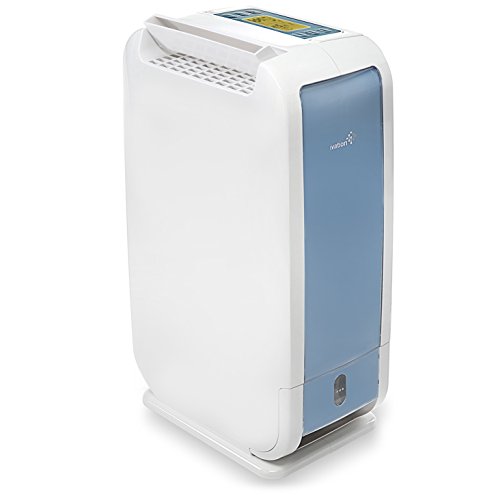 Ivation 13-Pint Small-Area Desiccant Dehumidifier Compact and Quiet - With Continuous Drain Hose for Smaller Spaces, Bathroom, Attic, Crawlspace and Closets - For Spaces Up To 270 Sq Ft, WhiteIvation
 4500 Sq. Ft Dehumidifier for Basement Quilt Compressor Dehumidifiers for Home with Drain Hose, Energy Efficient, Intelligent Humidity Control, Dehumidifier for Bathroom, Bedroom, OfficeMIONJO
Lead-free adjustable brass water pressure regulator with an oil-filled pressure gauge
Prevents high campground water pressure from blowing apart internal PEX plumbing fittings and plastic check valves.


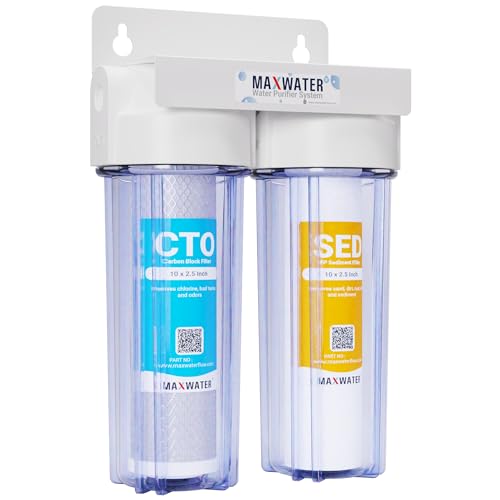
Dual-canister exterior water filter housing using a 5-micron sediment cartridge and a solid carbon block cartridge
Removes grit before it clogs the onboard pump while reducing chlorine, chemical tastes, and sediment across all indoor fixtures.

Prices are not shown here because they change daily and we will not display a stale one. Links open on Amazon, where the current price and availability are live.
Common questions
Why do RV windows sweat so much in the winter?
Single-pane glass conducts outdoor cold straight into the living area. When warm indoor air containing moisture from your breath and cooking hits the freezing pane, the surface drops below the dew point and water condenses instantly. Cracking a roof vent and running a circulating fan stops this moisture from pooling on the sills.
Can you use a residential dehumidifier in a travel trailer?
Standard compressor dehumidifiers work well if you have adequate alternating current shore power. You must select a model with an automatic restart feature so it resumes operation after campsite power interruptions. Ensure the unit has a continuous gravity drain hose to prevent the collection bucket from overflowing.
How often should you sanitize an RV fresh water tank?
Sanitize your freshwater holding tank at least twice a year, once when taking the rig out of storage and once mid-season. The Centers for Disease Control and Prevention recommends using a 50 parts per million chlorine bleach solution to kill harmful bacterial biofilms. You should also disinfect the tank anytime the water sits stagnant for more than thirty days.
Do moisture absorbing crystals work in an RV?
Calcium chloride crystals work only in tiny, sealed enclosures like storage bins or unventilated closets. They absorb water far too slowly to keep up with the moisture produced by living, breathing occupants. Relying on chemical tubs to dry an entire cabin will result in damp walls and mold growth.
What water pressure is safe for RV plumbing lines?
Keep your incoming water pressure at a moderate level to protect internal plumbing lines. Many camper manufacturers use flexible plastic lines and push-fit connections that fail when exposed to municipal surges. An adjustable brass regulator placed directly at the campground spigot prevents pressure spikes from reaching your internal valves.