Independent testing standards resolve the Brita vs PUR debate faster than brand advertising. Look at the standard. Both companies manufacture basic taste cartridges alongside specialized filters that extract toxic metals.
Most municipal tap water contains chemical disinfectants that create unpleasant odors. The Environmental Protection Agency (EPA) sets legal limits for public drinking water, but aging service lines often introduce lead in drinking water directly downstream. A basic gravity filter leaves dissolved metals untouched.
You should not buy a water filter pitcher based on shelf placement or pitcher aesthetics. Examine the performance data sheet. That document reveals whether the unit carries validation from NSF International (NSF) and the American National Standards Institute (ANSI) for your specific contaminants.
NSF 42 Validates Aesthetic Chlorine Removal Instead of Health Contaminants
An NSF/ANSI 42 certification confirms only that a filter improves aesthetic qualities like taste, odor, and visible clarity. It does not verify safety. The standard tests whether media removes chemical disinfectants like chlorine in tap water and traps nominal particulate matter.
Most entry-level cartridges rely on loose Granular Activated Carbon (GAC) mixed with basic ion-exchange resin beads. Carbon adsorbs chlorine molecules through chemical attraction. Under NSF International test protocol 42, a manufacturer must demonstrate at least 50 percent chlorine reduction across the entire rated lifespan of the cartridge.
This level of treatment satisfies users who dislike the swimming-pool odor of city tap water. Taste improvements do not equal purification. Dissolved heavy metals, synthetic pesticides, and industrial solvents pass straight through standard aesthetic carbon granules without stopping.
NSF 53 Mandates Verified Reduction of Dangerous Heavy Metals
Filters carrying NSF/ANSI 53 certification are tested by accredited laboratories to reduce specific contaminants that cause adverse human health effects. This standard targets chemical toxicity. Earning this mark requires strict laboratory validation for individual named compounds rather than broad marketing categories.
Lead reduction represents the primary reason buyers seek this higher rating. The Environmental Protection Agency maintains a public health goal of zero for lead because no safe blood level exists for children. To pass NSF International standard 53, a filter must reduce challenge water containing 150 parts per billion of lead down to 5 parts per billion or lower.
Meeting that threshold requires specialized media. Manufacturers blend fine powdered carbon into solid blocks and embed specialized ion-exchange binders. These materials chemically bind heavy metal ions so they cannot enter your drinking glass.
- Lead extraction down to 5 parts per billion under NSF International protocol requirements.
- Cryptosporidium and Giardia cyst filtration requiring 99.95 percent physical capture under NSF International testing standards.
- Volatile Organic Compounds (VOCs) reduction verified by accredited laboratory testing to meet published health thresholds.
Gravity Pitchers Rely on Contact Time While Faucet Mounts Use Pressure
Pour-through pitchers filter water using natural gravitational pull, whereas faucet-mounted systems use municipal water line pressure to push liquid through dense media. This physical difference changes performance. Gravity systems require loose media beds so liquid can drip through within several minutes.
Loose carbon particles allow fast flow, but they provide less surface area contact. Water finds paths of least resistance. NSF International protocol documentation explains that gravity filters rely on roughly 15 to 30 seconds of media contact as water drips through the upper reservoir.
Faucet-mounted systems operate under direct household plumbing pressure. The Environmental Protection Agency notes typical residential municipal water pressure ranges between 40 and 60 pounds per square inch. That mechanical force drives water through compressed solid carbon blocks with sub-micron pore sizes.
| Filter Format | Driving Force | Standard Certification | Contaminant Target | Typical Flow Rate |
|---|---|---|---|---|
| Basic Pour-Through Pitcher | Gravity | NSF/ANSI 42 | Chlorine taste and coarse sediment | Moderate drip flow |
| Advanced Pour-Through Pitcher | Gravity | NSF/ANSI 53 | Lead, heavy metals, and chlorine | Slow drip flow |
| Faucet-Mounted Filter | Line Pressure | NSF/ANSI 53 and 401 | Lead, chemicals, and emerging contaminants | Fast on-demand stream |
Channeling and Saturation Cause Gravity Filters to Fail Early
Internal fluid channeling and media saturation represent the two primary failure mechanisms that degrade gravity filter performance before cartridges reach their rated gallon limits. Channeling occurs inside loose media. Water cuts narrow vertical tunnels through granular carbon, bypassing unexposed adsorption sites completely.
When channeling develops, water flows quickly but exits without adequate contaminant reduction. Shaking the cartridge redistributes beads temporarily. NSF International testing standards establish standard gravity pitcher ratings at 40 gallons of water processing to account for this gradual media exhaustion.
Chemical saturation creates a different hidden hazard. Once ion-exchange resin sites fill with calcium or lead ions, they cannot capture additional incoming contaminants. Learning how often to change your filter based on your family consumption protects you against media breakthrough.
Activated carbon removes chlorine disinfectants that keep municipal tap water sterile. The Centers for Disease Control and Prevention (CDC) notes that unchlorinated water stored at room temperature allows airborne bacteria to colonize internal filter housings. Keep your pitcher refrigerated, wash the reservoir weekly, and replace wet cartridges on schedule.
Faucet Filtration Systems Add Structural Strain to Sink Hardware
Faucet-mounted water filters deliver faster on-demand flow than pitchers, but their physical weight and backpressure place continuous mechanical stress on residential aerator threads. Metal threads strip easily. Most modern designer faucets feature decorative pull-out spray wands that cannot support external hardware.
The diverter valve mechanism redirects water between your normal spray and the treated cartridge port. O-rings wear out over time. NSF International certification protocols rate faucet-mounted carbon block cartridges up to 100 gallons of flow before replacement becomes necessary.
Thermal shock causes immediate media damage. The Environmental Protection Agency notes that hot water exceeding 100 degrees Fahrenheit dissolves adhesives in carbon blocks and strips captured organic compounds back into the flow. You must always run cold water through the filtration setting to preserve media integrity.
Total Dissolved Solids Meters Mislead Filter Pitcher Buyers
A Total Dissolved Solids (TDS) meter measures electrical conductivity from dissolved mineral ions rather than detecting harmful chemical pollutants or heavy metal toxins. High readings do not mean danger. Mineral ions like calcium, magnesium, and potassium conduct electricity cleanly without posing any health hazard.
Standard carbon pitcher filters do not remove dissolved mineral salts. They are designed to leave minerals intact. Testing water before and after an NSF 42 or NSF 53 filter often yields identical numbers on a handheld TDS meter because carbon adsorbs uncharged molecules instead of charged minerals.
Only deionization resins or reverse osmosis membranes strip total dissolved minerals down to zero. Do not evaluate filter health using conductivity pens. The Environmental Protection Agency treats total dissolved solids as a secondary aesthetic standard with a recommended upper threshold of 500 milligrams per liter rather than a mandatory safety limit.
Water Testing Clarifies Whether Pitcher Filtration Fits Your Home
Purchasing a water filter without testing your tap water first often leads to buying equipment that leaves your primary household contaminants untreated. Municipal utility reports show averages. Those annual water quality reports measure contamination at the treatment plant rather than at your kitchen tap.
Lead and copper leach from home plumbing. The Environmental Protection Agency estimates that up to 20 percent of human lead exposure comes from drinking water passing through older service lines. Using a certified water test kit establishes exact baseline numbers for your specific kitchen faucet.
Testing helps you decide whether you need a pitcher or an under-sink water filter for heavy contamination. Do not guess your water chemistry. Learning whether is tap water safe to drink in your neighborhood directs your budget toward the correct NSF standard.
Point-of-Use Pitchers Cannot Solve Municipal Chloramine or Whole-House Water Issues
Pour-through pitchers and faucet attachments cannot handle whole-house water demands, severe microbiological contamination, or persistent municipal chloramine disinfectants. Scope limits apply to countertop devices. If your municipal provider treats water with chloramine, standard activated carbon fails to remove it.
Chloramine binds chlorine with ammonia to create a long-lasting disinfectant. Breaking that chemical bond requires catalytic carbon. The Environmental Protection Agency notes that standard activated carbon filters require substantially longer contact times than gravity pitchers provide to break down chloramine molecules.
Similarly, emerging contaminants like Per- and Polyfluoroalkyl Substances (PFAS) addressed in our PFAS water filter guide demand advanced media. The Centers for Disease Control and Prevention warns that private well water with bacterial contamination requires certified disinfection rather than simple carbon filtration. Know the limits of small filters.
Certified Replacement Cartridges Decide Real Brita vs PUR Performance
Real filtration performance between Brita and PUR is determined entirely by the certified rating of the replacement cartridge you insert into the housing. Housings are just molded plastic. The internal block contains the active chemistry that traps impurities.
Both brands engineer product lines spanning basic taste filters and certified lead reduction models. Brand loyalty provides zero filtration protection. NSF International created standard 401 to test whether modern cartridges reduce up to 15 emerging chemical compounds like prescription drugs and flame retardants.
Always read the data sheet enclosed in the replacement box before purchase. Verify the exact NSF standard numbers. Choosing the correct certified cartridge resolves the Brita vs PUR comparison by matching proven media specifications directly to your tap water needs.
What to Buy for This
Each entry below is a specification rather than a single model, because stock and pricing on this equipment change constantly. The products shown are what currently matches that specification. Match the spec, then buy whatever meets it.
Pour-through gravity pitcher with NSF/ANSI 42 certified activated carbon filter
Reduces aesthetic chlorine taste and coarse particulate matter in municipal water where lead and chemical pollutants are not present.


Pour-through pitcher with NSF/ANSI 53 certified lead reduction carbon block
Captures dissolved lead and toxic heavy metals through verified ion-exchange binders and dense compressed carbon media.
Faucet-mount filtration unit with NSF/ANSI 53 and NSF/ANSI 401 certifications
Uses municipal water line pressure to push tap water through a solid carbon block that removes heavy metals and emerging chemical compounds.
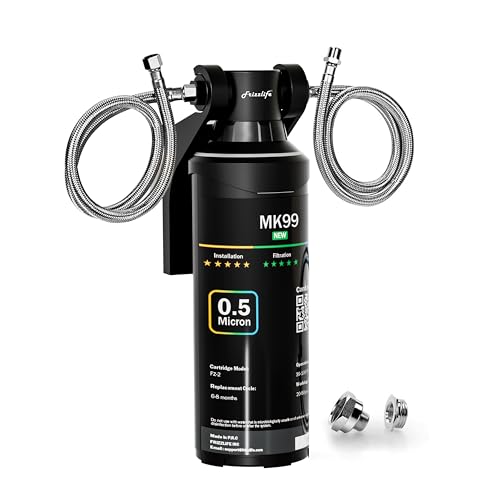

Prices are not shown here because they change daily and we will not display a stale one. Links open on Amazon, where the current price and availability are live.
Common questions
Does a standard Brita or PUR pitcher remove lead?
Standard basic filters from either brand do not remove lead unless the specific replacement cartridge is certified under NSF/ANSI 53. Basic white pitcher filters typically only carry NSF/ANSI 42 certification for aesthetic chlorine and odor. You must check the cartridge packaging for the specific NSF/ANSI 53 mark before relying on it for heavy metals.
Why does water filter slower through some cartridges?
Denser filtration media requires more time for water to pass through under gravity pressure. Cartridges certified for lead or fine particulates use tightly compressed carbon blocks or specialized resins that create resistance. Faster flow usually indicates looser granular carbon designed only for chlorine taste reduction.
Can a pitcher filter remove fluoride from municipal water?
Standard pour-through pitcher filters using activated carbon do not remove fluoride. Fluoride ions are dissolved minerals that pass through granular carbon and basic ion-exchange resins without adhering. Removing fluoride requires specialized activated alumina media, distillation, or a multi-stage reverse osmosis system.
How do you know when a filter cartridge is exhausted?
Filter cartridges lose effectiveness when their internal media pores become fully saturated with contaminants. Because dissolved chemicals and heavy metals do not change the appearance of water, you cannot determine filter life by eye. You must track gallon usage or follow the manufacturer replacement calendar based on your household consumption.
Can running hot water ruin a faucet-mounted filter?
Hot water degrades the activated carbon bed and can cause previously trapped contaminants to release into your cup. High temperatures also damage delicate plastic diverter valves and internal rubber seals inside the housing. Always divert hot water through the unfiltered bypass stream to protect the cartridge media.
Will a Brita or PUR filter lower my TDS meter reading?
Standard carbon filters from both brands do not meaningfully lower total dissolved solids readings. Carbon media removes uncharged organic molecules and chlorine while allowing dissolved conductive minerals like calcium and magnesium to pass through. A stable mineral reading does not mean the filter is failing to remove target contaminants.