Reverse osmosis and solid carbon blocks are the only home methods proven to reduce PFAS. In 2024, the Environmental Protection Agency (EPA) established legally enforceable National Primary Drinking Water Regulations for six per- and polyfluoroalkyl substances (PFAS) because these synthetic compounds linger indefinitely in human blood and organs. Standard sediment traps leave them behind. If you are shopping for a pfas water filter, basic mesh screens or uncertified pitchers will not protect your household.
Per- and polyfluoroalkyl substances (PFAS) rely on carbon-fluorine bonds. These bonds are among the strongest known in organic chemistry. Chemical manufacturers spent decades applying them to nonstick cookware, waterproof fabrics, stain-resistant carpets, and firefighting foams. Industrial facilities and disposal sites eventually discharged millions of gallons of fluorinated wastewater into aquifers and municipal reservoirs. The resulting contamination carries zero scent, zero flavor, and zero cloudiness.
Stopping these dissolved industrial chemicals requires dense physical adsorption or high-pressure molecular separation. Choosing the right system depends on incoming water pressure, your plumbing space, and local water quality. Some homes need only a compact under-sink cartridge, while others require multi-stage membrane separation to handle short-chain industrial replacements.
How Carbon Blocks Trap Long-Chain Fluorinated Compounds
Solid extruded carbon blocks capture fluorinated chemicals by forcing incoming water across an intensely compressed porous matrix. Extrusion binds pulverized coconut shell or coal-based carbon into a rigid, solid cylinder under extreme mechanical pressure. Millions of microscopic pores run through this dense wall. As water pushes through the tortuous pathways, dissolved industrial molecules collide with the porous carbon structure.
Pores alone do not stop them. The capture mechanism relies on physical adsorption powered by hydrophobic interaction and electrostatic attraction. The carbon surface naturally repels water while attracting non-polar fluorinated tails. According to research published by NSF International, contact time determines how many molecules bond to the internal carbon surfaces. When water moves past the media too quickly, weak electrostatic forces cannot pull the compounds out of the flow stream.
Granular activated carbon (GAC) uses loose particles instead of a solid extruded block. Loose beds allow liquid to carve bypass channels between the grains under normal line pressure. Once water creates a pathway of low resistance, fluid bypasses the remaining media entirely. Solid extruded blocks prevent channeling by forcing every single drop through an impenetrable, uniform barrier. This dense design maintains steady contact between contaminants and carbon particles.
- Extruded carbon blocks compress fine media under hydraulic pressure to eliminate bypass channels.
- Hydrophobic attraction binds fluorinated hydrocarbon tails directly to porous carbon walls.
- Extended fluid contact time allows slow-acting adsorption forces to secure dissolved molecules.
Reverse Osmosis Separates Short-Chain Chemicals Under Pressure
Reverse osmosis separates fluorinated chemicals by driving pressurized water across a semipermeable synthetic sheet. The microscopic pores in a commercial reverse osmosis (RO) membrane measure approximately 0.0001 microns across. Water molecules pass through the thin-film composite barrier under household line pressure. Dissolved minerals, heavy metals, and synthetic chemicals remain on the upstream feed side.
Membranes reject particles by molecular size and electrostatic charge. This mechanical barrier makes RO exceptionally reliable against newer, short-chain fluorinated compounds. Industrial manufacturers introduced replacements like hexafluoropropylene oxide dimer acid (HFPO-DA, commonly known as GenX), perfluorobutane sulfonic acid (PFBS), and perfluorohexanoic acid (PFHxA) after older compounds faced regulatory bans. These shorter molecules contain fewer carbon atoms, allowing them to slip past loose carbon filters.
Clean water flows forward into a pressurized storage bladder. The concentrated wastewater stream carries rejected contaminants directly down the household sewer line. According to research summaries from the EPA, membrane separation consistently achieves the deepest reduction across diverse chemical mixtures. Installing an under-sink water filter operating on membrane separation protects drinking water even when municipal supply levels fluctuate unexpectedly.
A standard reverse osmosis system discharges three to five gallons of reject water for every single gallon of purified drinking water produced. Running a system with an integrated permeate pump reduces wastewater volume by increasing operating pressure inside the housing.
Why Pitcher Filters Lose Effectiveness Within Weeks
Gravity pitchers fail to provide the contact time required to capture dissolved industrial compounds consistently. They rely on unpressurized downward flow. Without mechanical line pressure to force water through a dense block, a water filter pitcher must use loose granules so liquid drips into the lower reservoir before the user grows impatient.
Water trickles through the small cartridge in mere seconds. Brief exposure allows smaller chemical compounds to bypass the media completely. Furthermore, media volume inside the plastic cartridge is tiny, holding only a few ounces of loose media. A busy household will exhaust those binding sites in three or four weeks. Saturated carbon stops working.
Worse, competitive adsorption causes trapped toxins to wash free. Heavier organic matter, natural tannins, and common minerals compete for the exact same physical pores as synthetic chemicals. Over time, naturally occurring organic molecules displace the lighter fluorinated compounds. Chemicals wash straight into your glass. Unless a gravity system holds verified third-party performance listings, treat it as a tool for chlorine taste rather than chemical protection.
| System Format | Primary Mechanism | Typical Contact Time | Short-Chain PFAS Capture |
|---|---|---|---|
| Gravity Pitcher | Loose Granular Carbon | 1 to 3 seconds | Low to moderate |
| Solid Carbon Block | Compressed Adsorption | 15 to 45 seconds | Moderate to high |
| Reverse Osmosis | Semipermeable Membrane | Continuous under pressure | Very high |
| Whole-House GAC | Large-Bed Granular Carbon | 5 to 10 seconds | Moderate without frequent changes |
Selecting a Certified PFAS Water Filter Requires Specific Standards
Independent laboratory certification separates genuine chemical reduction systems from unverified marketing claims. When shopping for reliable equipment, look for explicit certification under NSF/ANSI 53 or NSF/ANSI 58. NSF International and the American National Standards Institute (ANSI) established these rigorous standards to prove contaminant reduction claims through standardized laboratory trials.
Standard 53 applies to pressurized adsorption systems like solid carbon blocks. Testing laboratories challenge cartridges with high baseline concentrations of perfluorooctanoic acid (PFOA) and perfluorooctane sulfonic acid (PFOS). The unit must reduce influent concentrations below the health advisory thresholds established by the standard. Standard 58 governs reverse osmosis equipment, verifying membrane material purity, chemical recovery, and system structural integrity under pressure.
Vague claims fail consumer protection standards. Packaging that claims testing to standards does not equal a verified listing. Manufacturers sometimes claim their product removes chemicals based on internal factory tests that lack third-party oversight. Verify the manufacturer in the public database maintained by the Water Quality Association (WQA) or NSF International before buying.
- NSF/ANSI 53 covers health effects for point-of-use carbon block filtration systems.
- NSF/ANSI 58 establishes health performance criteria for reverse osmosis membrane units.
- NSF/ANSI 401 certifies reduction for emerging compounds and incidental contaminants.
- Official listings from WQA or IAPMO verify adherence to these exact test protocols.
Whole-House Systems Create Severe Flow Restrictions and Premature Breakthrough
Treating incoming water at the main service entry sounds comprehensive, but whole-house chemical filtration suffers from severe hydraulic constraints. Residential plumbing requires high volume. Fixtures demand seven to twelve gallons per minute during typical morning use when showers, washing machines, and sinks operate simultaneously.
Pushing that much water through a dense carbon block causes severe friction. Municipal line pressure drops sharply throughout the entire home. Because dense blocks restrict flow, a whole house water filter relies on loose granular carbon tanks instead. Water moves through those tanks far too fast for thorough adsorption.
Household appliances compound the problem. A typical family sends hundreds of gallons through the media each day for lawn sprinklers, toilet tanks, and laundry loads. Filtering utility water exhausts expensive media prematurely. The bed reaches chemical breakthrough within months, allowing toxins to pass into the household pipes. This is why point-of-use units under the kitchen counter remain the practical choice for drinking water.
Installing a compressed carbon block dense enough to capture synthetic compounds on a primary service line causes a massive drop in household water pressure. Showers, irrigation lines, and water heaters will experience severe flow degradation.
Exhausted Filter Cartridges Release Accumulated Chemicals Back Into Drinking Water
Exhausted carbon filters stop capturing fluorinated compounds long before they stop removing chlorine taste. Chlorine binds aggressively to nearly any carbon surface, even when other adsorption sites are full. Chemical capture fails silently. You cannot smell or taste fluorinated substances in your tap water, giving you false confidence while drinking exhausted water.
Meanwhile, natural organic matter (NOM) and common minerals compete for pore space inside the cartridge. Heavier organic particles displace smaller chemical molecules over time. This displacement triggers desorption. The cartridge dumps accumulated contaminants back into the drinking stream at higher levels than the municipal supply.
Tracking your gallon usage avoids this failure mode. Knowing how often to change a water filter prevents catastrophic desorption. Replace cartridges according to total metered volume instead of an arbitrary six-month reminder sticker. If your household consumes high daily volumes for cooking and drinking, swap the internal elements well before reaching the certified gallon ceiling.
- Install a digital water meter or gallon counter directly on the under-sink supply line.
- Track household drinking and cooking usage against the certified gallon rating of the filter element.
- Replace the primary carbon stage immediately upon reaching eighty percent of the rated capacity.
- Sanitize the plastic filter housing thoroughly before inserting each new replacement element.
What Changes the Recommended Treatment Strategy
Incoming water chemistry determines whether an adsorption block or a reverse osmosis membrane serves your household best. High mineral hardness, dissolved iron, and particulate matter clog delicate filter stages prematurely. Excess sediment ruins carbon pores. Plumbing with high turbidity requires a dedicated sediment pre-filter to safeguard downstream stages.
Municipal customers can review their annual water quality report to confirm local treatment numbers and decide whether tap water is safe to drink without extra treatment. Private wells require independent testing. If your well sits near an industrial zone, airport, or military installation, run a specialized laboratory water test kit using EPA Method 533 or EPA Method 537.1.
Short-chain compounds demand membrane separation. A multi-stage reverse osmosis system provides the necessary barrier if your laboratory report indicates elevated levels of PFBS, PFBA, or GenX. Renters who cannot alter under-sink plumbing should choose a certified countertop carbon unit. Order a laboratory test to identify your specific regional contaminants before purchasing a certified pfas water filter for your kitchen.
Renters who cannot drill countertops or splice cold-water supply lines can install a certified countertop carbon block filter. These units attach directly to the aerator thread of standard kitchen faucets and deliver pressurized filtration without plumbing changes.
What to Buy for This
Each entry below is a specification rather than a single model, because stock and pricing on this equipment change constantly. The products shown are what currently matches that specification. Match the spec, then buy whatever meets it.
Under-sink reverse osmosis system certified to NSF/ANSI 58 with an integrated permeate pump and remineralization stage
Provides membrane separation for short-chain and long-chain compounds while reducing wastewater production through mechanical pressure enhancement.
Dual-stage compressed carbon block filter certified to NSF/ANSI 53 and NSF/ANSI 401 with dedicated lead-free faucet
Captures long-chain fluorinated compounds through dense adsorption without generating wastewater or requiring an electrical connection.
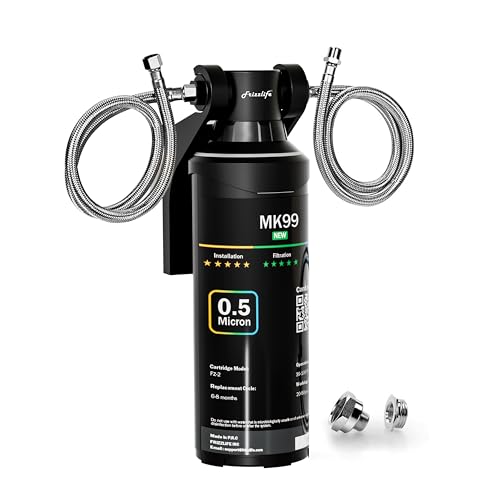 Frizzlife Under Sink Water Filter System-NSF/ANSI 53&42 Certified High Capacity Direct Connect Under Counter Drinking Water Filtration System-0.5 Micron Reduces Lead, Chlorine, Bad Taste & Odor, BlackFRIZZLIFE
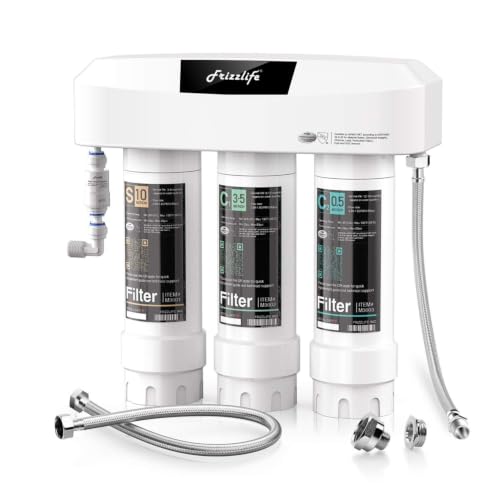 Frizzlife Under Sink Water Filter System, NSF/ANSI 53&42&372 Certified, 8 Layer 0.5 Micron Water Filtration Reduce Chloramine, PFOA/PFOS, Lead, Chlorine, Bad Taste & Odor, Under Counter, SK99-NEWFRIZZLIFE
Countertop solid carbon block system with kitchen faucet diverter valve certified to NSF/ANSI 53 for health effects
Uses municipal water pressure to push liquid through a dense block without modifying permanent plumbing lines or drilling countertops.


Gravity carafe system utilizing composite solid carbon core certified to NSF/ANSI 53 for PFOA and PFOS reduction
Delivers verified fluorinated chemical reduction in a freestanding format without requiring a water line connection, provided filters are replaced on schedule.


Prices are not shown here because they change daily and we will not display a stale one. Links open on Amazon, where the current price and availability are live.
Common questions
Can boiling tap water remove PFAS chemicals?
Boiling water does not remove PFAS and concentrates the chemicals instead. These synthetic compounds do not vaporize at standard cooking temperatures. Water escapes into the room as steam while the fluorinated molecules remain behind in the pot in higher relative concentrations.
Does a standard refrigerator filter remove PFAS?
Standard refrigerator filters rarely capture dissolved fluorinated chemicals. Most built-in cartridges use thin carbon mesh designed only for chlorine taste and basic sediment. Unless the replacement cartridge holds an explicit NSF/ANSI 53 certification for health effects, it will not protect against synthetic chemical compounds.
Will a water softener remove fluorinated compounds?
A home water softener cannot remove fluorinated chemicals. Softeners operate through ion exchange engineered exclusively for dissolved minerals like calcium and magnesium. Synthetic chemical molecules pass right through the resin bed without sticking.
How do I know if my tap water contains PFAS?
Municipal water suppliers publish annual water quality reports detailing tested contaminants. If your utility does not test for fluorinated compounds, or if you draw from a private well, you must purchase a specialized laboratory drinking water test kit. Standard home test strips cannot detect parts-per-trillion chemical concentrations.
What is the difference between NSF 53 and NSF 58 certifications?
Standard NSF/ANSI 53 evaluates point-of-use adsorption systems like solid carbon blocks, testing whether the media reduces specific hazardous chemicals. Standard NSF/ANSI 58 applies exclusively to reverse osmosis systems, measuring membrane rejection efficiency, recovery rates, and structural safety under continuous household water pressure.