Standard water filters do not remove fluoride from tap water. Only reverse osmosis (RO), distillation, and specialized activated alumina media reliably extract the dissolved mineral. If you plan to buy a fluoride water filter, you must select equipment built around one of these three physical separation mechanisms.
Fluoride dissolves into municipal supplies as a microscopic, negatively charged ion. It slips directly through standard carbon blocks without binding to the carbon matrix. The Environmental Protection Agency (EPA) sets the maximum legal limit for fluoride at 4.0 milligrams per liter to protect against skeletal fluorosis. Meanwhile, the Centers for Disease Control and Prevention (CDC) recommends maintaining 0.7 milligrams per liter in public water systems to support dental health.
Most retail shoppers purchase pour-through pitchers expecting complete mineral removal. That expectation is incorrect. Pitcher carbon filters target taste, odor, and chlorine by design. Removing dissolved ionic minerals requires fundamentally different equipment, dedicated contact time, and higher operating pressure.
Standard Carbon Filters Leave Fluoride in Your Water
Granular activated carbon (GAC) cannot capture dissolved fluoride ions. Carbon filters operate through surface adsorption. They pull non-polar organic compounds and chlorine onto microscopic pores. Fluoride behaves differently. The dissolved ion carries a tight negative electrical charge that bonds with surrounding water molecules. It repels the non-polar carbon matrix. As a result, fluoride passes straight through the filter bed. A standard water filter pitcher leaves fluoride concentrations completely untouched.
Treating chlorine in tap water requires only a fraction of a second of contact time with activated carbon. Fluoride requires far more aggressive chemical or mechanical intervention. Pitchers, refrigerator cartridges, and standard faucet attachments rely almost exclusively on coconut-shell carbon. These products improve taste noticeably. They do not alter dissolved mineral content. If a standard pitcher package claims general contaminant reduction without naming fluoride specifically, the filter leaves the mineral in your glass.
- Standard pitcher filters remove aesthetic chlorine and particulates while leaving all dissolved fluoride in the water.
- Refrigerator carbon blocks improve clarity and smell but lack the media required for ionic reduction.
- Faucet-mounted carbon filters pass water too quickly to achieve the contact time ionic capture demands.
Reverse Osmosis Extracts Fluoride Through a Semi-Permeable Membrane
Reverse osmosis separates dissolved ions by forcing pressurized water across a semi-permeable membrane. The membrane sheet features microscopic openings measuring roughly 0.0001 microns, according to specifications published by the Water Quality Association (WQA). Water molecules pass through. Dissolved minerals stay behind. The rejected ions wash down the drain in a concentrated stream known as brine. The purified water collects in a dedicated storage tank for drinking.
Certification provides proof of performance. Under standard 58 established by NSF International (NSF) and the American National Standards Institute (ANSI), certified RO systems must demonstrate verified fluoride reduction. Testing protocols from NSF International require the system to reduce an initial challenge concentration of 8.0 milligrams per liter down to 1.5 milligrams per liter or less. That benchmark represents an 81 percent reduction under laboratory conditions. In residential plumbing, a dedicated under-sink water filter rejects between 85 percent and 95 percent of incoming fluoride, according to evaluation data from NSF International.
Membrane systems require trade-offs. You must accept wastewater production and slower delivery speeds. According to technical guidance from the EPA, residential reverse osmosis units generate between two and four gallons of reject brine for every gallon of purified drinking water produced. This volume increases if household water pressure drops below 40 pounds per square inch, according to the EPA. An under-counter reverse osmosis system also strips beneficial calcium and magnesium. This yields treated water with a slightly acidic taste. Many manufacturers add a downstream remineralization cartridge to restore neutral pH.
| Technology | Primary Mechanism | Typical Reduction | Primary Limitation |
|---|---|---|---|
| Reverse Osmosis | Thin-film composite membrane separation | 85% to 95% (NSF 58) | Produces reject brine wastewater |
| Distillation | Phase-change thermal vaporization | 99% or higher (NSF 62) | High electricity consumption per batch |
| Activated Alumina | Chemical surface adsorption | 80% to 95% (NSF 53) | Efficiency drops sharply above pH 8.2 |
| Standard Carbon Block | Physical porous surface adsorption | 0% to 5% (Unrated) | Cannot capture dissolved negative ions |
Activated Alumina Adsorbs Fluoride Under Specific Acidity Levels
Activated alumina removes fluoride through chemical adsorption. The media consists of porous aluminum oxide. When water flows across the bed, dissolved fluoride ions exchange places with hydroxide groups attached to the solid lattice. This reaction locks the fluoride into the cartridge. The EPA identifies activated alumina as a Best Available Technology for reducing fluoride in small water systems.
Water pH dictates whether activated alumina functions properly. The media operates best in slightly acidic water. According to water treatment manuals from the EPA, activated alumina achieves maximum fluoride removal capacity when water pH sits between 5.5 and 6.5. If tap water measures above pH 8.2, the EPA reports that adsorption capacity drops by more than 50 percent. Hydroxide ions compete directly for binding sites in alkaline water. The media quickly becomes overwhelmed.
Cartridge life depends on throughput and flow speed. Water must remain in contact with the alumina granules long enough to exchange ions. For residential applications, NSF/ANSI 53 certifies activated alumina filters designed for specific health-related contaminant reduction claims. The system produces zero wastewater. That remains its primary advantage over reverse osmosis. However, exhausted media gives no warning sign. Once internal binding sites fill, incoming fluoride flows straight through the housing.
Activated alumina performance collapses in alkaline water. Municipal utilities often elevate distribution pH above 8.0 to protect city pipes from lead corrosion. Check your local water report or test baseline acidity before purchasing an activated alumina filter.
Water Distillers Eliminate Fluoride by Boiling and Condensing
Thermal distillation relies on phase change to separate water from dissolved contaminants. An electric heating element boils raw water inside a stainless steel boiling tank, converting liquid into pure steam. Fluoride cannot vaporize at boiling temperatures. The steam rises into a cooling coil and condenses into purified liquid. The dissolved fluoride stays behind in the boiling chamber as solid mineral scale.
Distillation achieves exceptional purity without relying on membranes or chemical media. According to testing standards in NSF/ANSI 62 for home distillation systems, properly maintained units eliminate 99 percent or more of incoming dissolved inorganic salts. That includes fluoride, nitrates, and heavy metals. You can review how distilled vs filtered water compares across household uses. Because distillation captures pure steam, incoming water pH does not disrupt the separation process.
The drawbacks involve time and electrical power. Countertop distillers process roughly one gallon of water every four to five hours, based on equipment monitoring by the Department of Energy (DOE). The heating element draws continuous power throughout the entire cycle. Scale builds up quickly. You must descale the stainless chamber regularly using citric acid. Distillation delivers high purity, but it operates slowly.
Bone Char Carbon Uses Hydroxyapatite for Targeted Adsorption
Bone char carbon offers an alternative adsorption method. It behaves differently from standard carbon. The material consists of roughly 80 percent tricalcium phosphate, or hydroxyapatite, alongside 10 percent elemental carbon, according to technical profiles published by the EPA. Hydroxyapatite possesses a natural affinity for fluoride ions. When water passes through the cartridge, fluoride replaces hydroxide ions within the mineral structure.
Water chemistry dictates how long bone char lasts. Unlike activated alumina, bone char operates effectively up to pH 8.0, according to technical summaries from the EPA. Flow speed matters tremendously. The water must move slowly through the bed to allow complete ionic exchange. High levels of competing phosphates can exhaust the media prematurely, as noted by the EPA. You must replace cartridges based on gallon counts to prevent fluoride breakthrough.
Bone char also involves personal considerations. Because the media derives from animal bones, some individuals avoid it for ethical or dietary reasons. Synthetic hydroxyapatite offers an alternative, but it appears rarely in residential cartridges. If you choose bone char, pair it with proper pre-filtration. A downstream carbon block prevents fine mineral dust from reaching your drinking glass.
Whole-House Systems Rarely Provide Practical Fluoride Removal
Treating an entire house for fluoride is rarely sensible. A whole house water filter typically targets sediment and chlorine at the main shutoff valve. It treats every fixture indiscriminately. You do not need fluoride removal for toilets, laundry, or lawn sprinklers. Fluoride does not absorb through intact skin during bathing, according to public health documentation from the CDC. Treating non-potable water creates unnecessary expense.
The engineering requirements make whole-house fluoride extraction difficult. Whole-house reverse osmosis demands commercial membranes, large storage tanks, and dedicated booster pumps. The Water Quality Association (WQA) notes that whole-house RO installations generate thousands of gallons of wastewater every month. That volume strains residential septic systems and drives up utility bills. Whole-house alumina tanks face similar engineering hurdles. Treating household peak flow rates of 10 to 15 gallons per minute requires massive contact vessels, according to design data from the EPA.
Shower attachments cannot solve this problem. A shower filter often promises broad mineral reduction on retail packaging. Most rely on copper-zinc alloys or calcium sulfite media. These materials reduce free chlorine at high water temperatures. They do not alter dissolved fluoride concentrations. Focus your filtration budget strictly on the kitchen faucet where you draw water for drinking and cooking.
Independent Testing Confirms Baseline Concentrations Before You Buy
Check your water data before buying specialized equipment. Municipal water customers can find local fluoride concentrations without spending money on tests. The EPA requires every public water utility to publish an annual Consumer Confidence Report (CCR) listing all detected substances. You can download this report directly from your water provider's website. The document lists the annual average fluoride concentration alongside the detected range across the municipal distribution network.
Private well owners face an entirely different situation. Well water receives no municipal treatment. However, natural minerals dissolve into groundwater from surrounding bedrock formations. The CDC estimates that roughly two million Americans drink private well water with natural fluoride concentrations exceeding 2.0 milligrams per liter. If you operate a private well, purchase a certified laboratory water test kit to establish baseline chemistry.
Do not rely on consumer electrical meters. A handheld meter measures total dissolved solids across all ions combined. It registers calcium, sodium, and chloride without distinguishing between them. The device cannot isolate fluoride. A general conductivity reading will not tell you if fluoride is present or absent. Reviewing our analysis on whether is tap water safe to drink provides a structured method for evaluating official laboratory results.
How to Choose a Fluoride Water Filter for Your Home
Your choice depends on plumbing access, daily volume, and maintenance willingness. Under-sink reverse osmosis systems deliver the most consistent long-term results for homeowners. They run continuously on line pressure. They deliver water through a dedicated faucet. If you rent an apartment, a countertop thermal distiller provides identical mineral separation without plumbing modifications. Both approaches outperform standard gravity pitchers by a wide margin.
Activated alumina canisters suit kitchens requiring an under-counter setup without wastewater discharge. Remember the acidity constraint. Local tap water must stay below pH 8.0 for the media to capture ions reliably. If utility records show elevated distribution pH, reverse osmosis remains the safer choice. Review physical housing dimensions and replacement schedules before making a final commitment.
Review your municipal water report for local fluoride concentrations before selecting a dedicated fluoride water filter for your kitchen sink.
What to Buy for This
Each entry below is a specification rather than a single model, because stock and pricing on this equipment change constantly. The products shown are what currently matches that specification. Match the spec, then buy whatever meets it.
Under-sink multi-stage reverse osmosis system certified to NSF/ANSI 58 with an integrated remineralization cartridge and dedicated lead-free faucet
Extracts dissolved fluoride ions using a thin-film composite membrane while restoring essential calcium and magnesium to prevent acidic treated water
 iSpring RCC7AK-BN NSF Certified, 75 GPD, Alkaline 6-Stage Reverse Osmosis System, pH+ Remineralization RO Water Filter System Under Sink Patented Top-Mounted Faucet Design for Easy InstallationiSpring
 iSpring RCC7-BLK, NSF/ANSI 58 Certified, 5-Stage Reverse Osmosis System, RO Water Filter System Under Sink, Drinking Water Filter, 75 GPD, Stylish Black RO FaucetiSpring
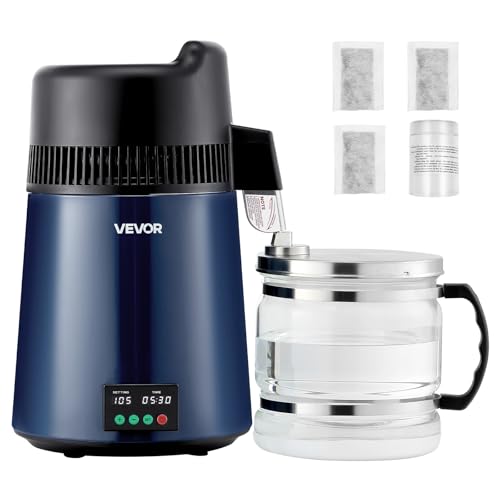
Countertop stainless steel water distiller with a glass collection carafe and post-distillation carbon polishing pod
Boils raw water to separate pure steam from non-volatile fluoride salts without requiring permanent plumbing modifications or dedicated drain lines

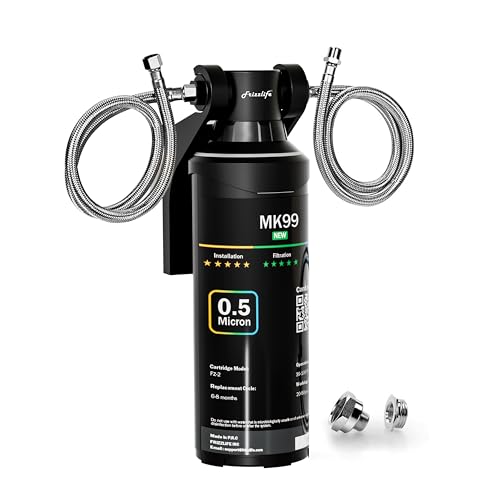
Under-sink dual-stage activated alumina and carbon block filter system with dedicated faucet
Binds fluoride directly to aluminum oxide media without producing a wastewater brine stream, provided municipal water remains below pH 8.0

Prices are not shown here because they change daily and we will not display a stale one. Links open on Amazon, where the current price and availability are live.
Common questions
Can boiling water remove fluoride from tap water?
No, boiling water does not remove fluoride. The Centers for Disease Control and Prevention (CDC) warns that boiling water evaporates pure water vapor while leaving non-volatile minerals behind. This process increases the fluoride concentration in the remaining liquid. Removing fluoride requires physical separation methods such as distillation or reverse osmosis.
Does a standard Brita or PUR pitcher remove fluoride?
Standard activated carbon pitcher filters do not remove fluoride. They use granular activated carbon designed to capture chlorine, taste compounds, and larger organic chemicals. Because dissolved fluoride ions carry a strong electrical charge, they pass through standard carbon media without binding to the surface.
What certification should I look for on a fluoride filter?
Look for systems certified under NSF/ANSI 58 for reverse osmosis units or NSF/ANSI 53 for media adsorption cartridges. These standards, developed by NSF International and the American National Standards Institute (ANSI), require verified laboratory reduction of fluoride to safe drinking thresholds. Check the official listing directory to confirm the specific manufacturer model holds active certification.
Does a water softener remove fluoride from drinking water?
A water softener does not remove fluoride. Softeners use ion exchange resin charged with sodium or potassium to capture positively charged calcium and magnesium ions. Fluoride dissolves as a negatively charged anion, meaning softening resin repels it completely. You must install a dedicated reverse osmosis or activated alumina unit downstream of the softener.
Do refrigerator filters remove fluoride?
Standard refrigerator water filters do not remove fluoride. Almost all built-in refrigerator filters use compact carbon blocks optimized strictly for chlorine reduction and sediment filtration. Unless the manufacturer explicitly documents a specialized activated alumina or reverse osmosis membrane inside the refrigerator system, fluoride flows directly into your dispenser.