Distilled water removes minerals completely, while filtered water targets specific chemical contaminants. The choice between distilled vs filtered water comes down to whether you are filling a drinking glass or protecting an appliance from mineral buildup.
Distillation turns liquid into steam to leave heavy metals and dissolved rock behind. Filtration instead forces water through porous media that bind chemicals without stripping essential minerals. They do different jobs.
Understanding what your household tap water contains prevents buying equipment you do not need. A municipal water report provides the baseline data to guide your decision.
Thermal Distillation Leaves Nonvolatile Solids Behind in the Boiling Chamber
A residential water distiller purifies water by boiling liquid into steam and condensing it into a separate collection jug. Minerals stay behind. As the heating element warms the boiling chamber to 212 degrees Fahrenheit, pure water vapor rises into the stainless steel cooling coil.
Heavy metals, dissolved salts, and biological cysts have higher boiling points than water and remain trapped in the boiling tank. Minerals settle as a hard crust on the heating element. You must rinse this scale out of the chamber with a citric acid wash after every few gallons.
Certain chemical compounds cause problems for simple distillation. Volatile Organic Compounds (VOCs), including benzene and industrial solvents, boil at temperatures lower than water. These gases convert to vapor alongside the steam and travel directly into the finished distillate unless a post-carbon filter captures them.
- Dissolved inorganic minerals including calcium, magnesium, and sodium that cause scaling in household equipment
- Toxic heavy metals such as lead, copper, and arsenic that carry high boiling points
- Biological contaminants including bacteria, viruses, and parasite cysts that fail to survive boiling temperatures
- Nonvolatile nitrate and phosphorus compounds originating from agricultural fertilizer runoff
- Microscopic plastic particles and suspended silt that settle at the bottom of the stainless steel boiling vessel
Media Filtration Targets Specific Contaminants Without Removing Dissolved Minerals
Drinking water filters use physical porous barriers and chemical adsorption to extract contaminants from flowing tap water without boiling. Water moves under standard plumbing pressure. Because no thermal phase change occurs, the process demands zero electrical energy.
Most kitchen systems rely on activated carbon blocks to trap organic chemicals and chlorine byproducts. The carbon surface attracts nonpolar compounds through chemical adsorption while letting water molecules and beneficial minerals pass through untouched. This preserves dissolved calcium and magnesium that give drinking water a crisp, balanced taste.
Advanced systems combine carbon with an under-sink water filter configuration or a dedicated reverse osmosis system. A semipermeable reverse osmosis membrane filters down to 0.0001 microns to reject dissolved ions. This membrane strips minerals similarly to distillation while producing water continuously on demand.
- Activated carbon blocks that reduce chlorine, chloramine, objectionable odors, and synthetic Volatile Organic Compounds (VOCs)
- Sub-micron mechanical sediment stages that capture silt, rust flakes, and microplastics from plumbing lines
- Ion exchange resins that bind specific dissolved heavy metals like lead while releasing harmless ions
- Semipermeable thin-film composite membranes in reverse osmosis units that reject dissolved mineral salts under hydraulic pressure
Contaminant Removal Profiles Differ Across Separation Mechanisms
The physical mechanisms of distillation and filtration result in distinctly different purity profiles and mineral levels. Total Dissolved Solids (TDS) measure the combined content of all inorganic and organic substances in water. A distiller drops Total Dissolved Solids (TDS) to near zero, while a standard carbon filter leaves that number unchanged.
Independent certifications verify whether a system reduces target contaminants. NSF International (NSF), an independent public health organization, maintains standards that verify treatment claims. NSF/ANSI 53 certifies health contaminant reduction like lead in water, whereas NSF/ANSI 58 evaluates reverse osmosis systems.
| Performance Metric | Steam Distillation | Activated Carbon Filter | Reverse Osmosis System |
|---|---|---|---|
| Total Dissolved Solids (TDS) | Reduces by 99 percent to near zero | Leaves dissolved minerals intact | Reduces by 90 to 98 percent |
| Chlorine and Taste Compounds | Requires post-carbon filter pod | Reduces by 95 percent or more (NSF 42) | Reduces by 95 percent or more |
| Lead and Heavy Metals | Separates nonvolatile metals completely | Requires certified binder media (NSF 53) | Rejects via membrane and pre-filters (NSF 58) |
| Microbiological Pathogens | Inactivates and separates all bacteria and cysts | Cannot reliably stop viruses without UV | Rejects cysts and bacteria larger than pore size |
| Volatile Organic Compounds (VOCs) | Passes through steam without carbon pod | Adsorbs high percentages of volatile organics | Removes via integrated carbon block stages |
| Production Rate per Hour | Roughly 0.25 to 0.33 gallons per hour | Direct flow at 0.5 to 1.5 gallons per minute | Slow tank refill at 2 to 4 gallons per hour |
| Energy and Water Waste | Consumes continuous electrical heat | Produces zero wastewater during use | Discharges brine wastewater during operation |
Distillation alone does not eliminate chemicals that boil at a lower temperature than water. The Centers for Disease Control and Prevention (CDC) notes that Volatile Organic Compounds (VOCs) evaporate into steam and condense back into the collection carafe. Always confirm your countertop distiller includes an activated carbon filter pod in the collection nozzle to trap these lightweight gases.
Choosing Distilled vs Filtered Water for Everyday Household Needs
Choosing between distilled and filtered water depends entirely on whether the water is destined for human consumption or household appliances. Appliances suffer when exposed to minerals. When water heats up inside an iron, steam mop, or espresso boiler, dissolved calcium and magnesium precipitate into hard limescale.
Medical and breathing equipment requires absolute purity to protect your lungs. The Centers for Disease Control and Prevention (CDC) explicitly advises using distilled or sterile water in Continuous Positive Airway Pressure (CPAP) humidifiers and nasal irrigation neti pots to prevent fatal amoebic infections. Using unboiled tap water or simple carbon-filtered water in a neti pot introduces real biological risk.
Evaporative and ultrasonic humidifiers also react differently to these water types. As detailed in our guide to the best humidifier, ultrasonic models disperse all dissolved minerals into the air as fine white mineral dust. Distilled water prevents this white dust completely, while filtered water still allows minerals to aerosolize into the bedroom.
Drinking water presents the inverse priority. Pure distilled water tastes noticeably flat and insipid because it lacks natural bicarbonate, calcium, and magnesium ions. Filtered water removes offensive chlorine smells while retaining these dissolved alkaline minerals, resulting in superior taste and everyday drinkability.
Operating Costs and Output Rates Shape Daily Usability
Operating a home water distiller requires substantial electrical power and patience compared to running an on-demand water filter. Boiling water takes time. A standard countertop distiller draws 500 to 800 watts of continuous electrical power and takes roughly four hours to produce a single gallon of water.
Filtration provides immediate volume at the turn of a faucet handle. An under-sink cartridge produces filtered water at normal line pressure with zero electricity consumption. You get fresh water instantly without waiting for a heating cycle to finish or waiting for hot distillate to cool in a glass jug.
Maintenance routines also differ between thermal and mechanical systems. Distillers require frequent descaling baths with warm water and citric acid to dissolve the mineral crust baked onto the stainless steel floor. Media filters require replacing cartridge elements based on gallon throughput rather than scrubbing baked minerals.
- Electricity consumption: distillers use roughly three kilowatt-hours per gallon, while standard media filters consume zero power
- Production speed: distillers yield one quart per hour, while under-sink filters deliver over one gallon per minute
- Heat generation: distillers exhaust warm air into your kitchen living area during operation
- Maintenance tasks: distillers demand manual acid descaling of the boiling tank, while filters use quick-twist cartridge swaps
Situations Where Distilled Water Fails Practical Drinking Needs
Distilled water is impractical as a primary whole-house drinking water solution for active households. The slow batch production cannot keep up with family cooking, pets, and hydration demands. If you need sixty gallons of clean water per month, running a countertop distiller non-stop creates unnecessary heat and continuous fan noise in your kitchen.
Athletes and outdoor workers frequently dislike the mouthfeel and hydration characteristics of demineralized water. The World Health Organization (WHO) published a study on the health risks from drinking demineralized water, highlighting that water devoid of minerals fails to supply dietary calcium and magnesium and can cause diuresis. For pure drinking hydration, a certified carbon or multi-stage filtration system serves everyday health far better.
Renters also face distinct physical hurdles. Countertop distillers vent warm, humid air into the room during their four-hour boiling cycle. A compact sink-mounted filter or gravity pitcher provides clean drinking water without heating up a small apartment kitchen.
- High-volume family kitchens where waiting four hours for a single gallon creates hydration bottlenecks
- Hot climates where running an 800-watt heating appliance increases indoor cooling loads and humidity
- Daily table hydration where family members reject the flat, demineralized taste of pure distilled water
- Homes seeking energy efficiency without added monthly electric kilowatt-hour consumption
Testing Profiles Determine When Distillation Becomes Necessary
A comprehensive water analysis dictates whether you need the extreme purity of distillation or the targeted protection of mechanical filtration. Unknown water demands testing. If a certified laboratory test from a water test kit shows extreme nitrate levels, heavy salinity, or complex industrial solvent contamination, standard carbon filtration falls short.
The presence of microbiological contamination shifts the recommendation toward thermal boiling. If municipal advisories warn that your supply is not safe, or if well testing detects bacterial coliforms, standard carbon filters cannot protect you. In that scenario, the phase change of distillation provides definitive pathogen destruction that a sediment filter cannot match.
Checking your baseline with a consumer TDS meter provides a rough indicator of dissolved solids but does not identify toxic compounds. You should always review your municipal utility annual consumer confidence report before buying any treatment system. The data in that report reveals whether targeted carbon filtration solves your issues at a fraction of distillation energy costs.
- Extreme mineral salinity exceeding 1,000 parts per million that fouls carbon filters rapidly
- Documented microbiological threats in private well supplies requiring thermal sterilization
- Heavy agricultural nitrate runoff that carbon blocks fail to attract or reduce
- Industrial solvent contamination that overwhelms standard residential sink filters
Practical Steps for Selecting the Proper Home Treatment Method
Selecting the correct water purification method begins with identifying the specific end use for every gallon you produce. Dedicate separate methods to separate jobs. Keep a countertop distiller or purchase commercial jugs for steam appliances, neti pots, and medical humidifiers where mineral deposits cause damage or infection.
Install a dedicated under-sink carbon or reverse osmosis filter for your kitchen drinking faucet to handle hydration and culinary needs. This dual strategy prevents wasting electricity boiling drinking water while shielding your sensitive home equipment from limescale damage.
Order a certified laboratory test kit today to analyze your tap chemistry before deciding between distilled vs filtered water for your household needs.
What to Buy for This
Each entry below is a specification rather than a single model, because stock and pricing on this equipment change constantly. The products shown are what currently matches that specification. Match the spec, then buy whatever meets it.
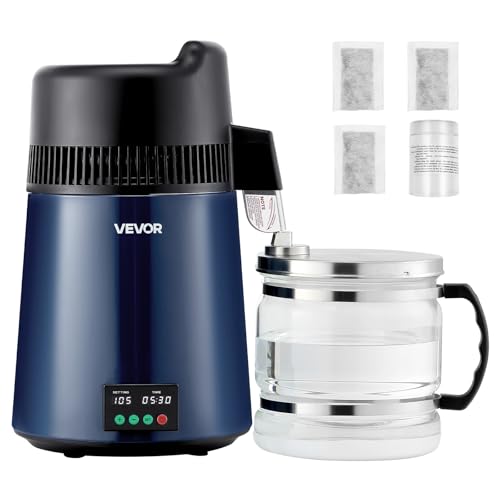
Countertop stainless-steel batch water distiller with a borosilicate glass collection carafe and post-distillation coconut shell carbon filter pods
Eliminates all dissolved minerals to prevent scale buildup in CPAP humidifiers and steam irons, while the glass carafe prevents plastic leaching into warm distillate.

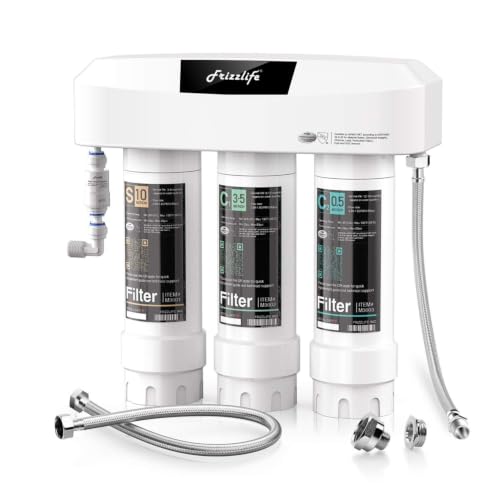
Multi-stage under-sink water filter system with dual catalytic carbon blocks and a sub-micron sediment pre-filter
Removes chlorine, chloramines, lead, and volatile organic compounds at normal household water pressure without stripping healthy dissolved minerals or consuming electricity.

Under-sink reverse osmosis system with an NSF 58 certified thin-film membrane, storage pressure tank, and post-membrane remineralization cartridge
Provides near-distillation purity by rejecting up to 98 percent of dissolved solids, then restores a light balance of calcium and magnesium minerals for optimal drinking taste.


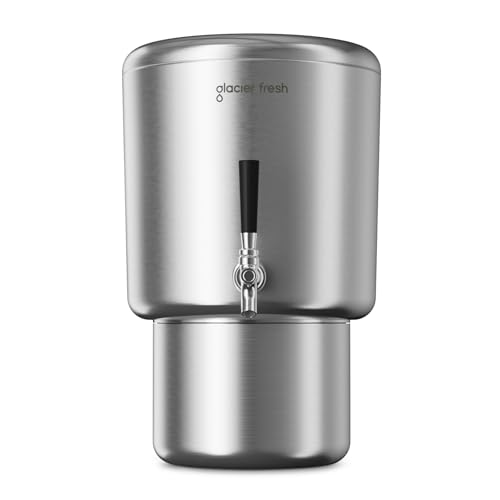
Gravity-fed countertop stainless-steel water filter with dual microporous carbon composite elements
Filters drinking water without plumbing alterations, electricity, or wastewater discharge while retaining essential minerals for daily hydration.

Prices are not shown here because they change daily and we will not display a stale one. Links open on Amazon, where the current price and availability are live.
Common questions
Can you safely drink distilled water every day?
Yes, drinking distilled water does not cause immediate physical harm, but it lacks essential dietary minerals like calcium and magnesium. The World Health Organization (WHO) warns that regular consumption of demineralized water may lead to suboptimal mineral intake and produce a bland taste that discourages proper hydration.
Does boiling tap water at home produce distilled water?
No, simply boiling tap water in an open pot kills biological pathogens but concentrates dissolved minerals and heavy metals as liquid evaporates. Distilled water requires capturing, cooling, and condensing the steam into a completely separate container while discarding the concentrated residue in the boiling chamber.
Will a standard carbon filter remove minerals and hard water scale?
No, activated carbon filters capture nonpolar organic molecules, chlorine, and sediment, but they allow dissolved mineral ions like calcium and magnesium to pass through freely. If you need to remove hard minerals at the sink, you must use a reverse osmosis system or a water distiller.
Why is distilled water required in CPAP machines and humidifiers?
Distilled water contains zero dissolved solids, preventing mineral crust from clogging heating elements and ultrasonic transducers. The Centers for Disease Control and Prevention (CDC) also recommends distilled or sterile water to prevent aerosolizing bacteria or minerals into your respiratory system.
Is reverse osmosis water the same as distilled water?
No, reverse osmosis forces water through a dense semipermeable membrane under hydraulic pressure, while distillation boils water into steam. Reverse osmosis reduces dissolved minerals by 90 to 98 percent, whereas distillation removes virtually 100 percent of nonvolatile minerals.
How can you tell if bottled water is distilled or filtered?
The Food and Drug Administration (FDA) strictly regulates bottled water labeling standards. The label must explicitly state distilled water or purified water produced by distillation, whereas filtered products are marked as spring water, purified water, or filtered drinking water.