An RV water filter protects your plumbing, but it cannot sanitize a contaminated holding tank.
Campground water hookups expose your rig to fluctuating pressures, heavy silt, and aggressive chemical disinfectants. Relying on a single blue cylinder at the hose bib leaves major gaps in your water quality.
Clean water in a recreational vehicle requires two separate jobs. First, you must filter incoming water at the pedestal before it enters your lines. Second, you must periodically disinfect the holding tank so stored water does not breed bacterial biofilms.
Point-of-Entry Filtration Protects RV Lines from Sediment and Chlorine
Exterior filtration treats all water entering the vehicle before it reaches internal plumbing fixtures. Sediment damages delicate components quickly. Toilet valves, water pump diaphragms, and water heater check valves jam when fine sand enters the lines.
Using a dedicated sediment filter at the campground pedestal captures grit before it passes through your drinking water hose.
Municipal park connections also deliver water treated with chemical disinfectants. You can read more about how municipal utilities treat supplies with chlorine in tap water to prevent distribution illness. While chlorine prevents microbial growth in municipal pipes, it dries out RV rubber seals and off-gasses offensive odors inside a small camper living area.
A solid carbon block cartridge adsorbs free chlorine and unpleasant tastes. According to NSF International (NSF) testing criteria, activated carbon reduces chlorine taste and odor under Standard 42 protocols.
Micron Ratings Dictate Water Flow Rates and Sediment Capture
Filter pore sizing determines whether your system protects water pressure or captures microscopic sediment. Pore sizes receive ratings in microns. One micron equals one-thousandth of a millimeter.
Under NSF International (NSF) Standard 42 particulate guidelines, Class 1 filtration requires the capture of particles between 0.5 and 1 micron. Coarser sediment cartridges typically use ratings between 5 and 20 microns as defined by American Water Works Association (AWWA) filtration guidelines.
According to the American Water Works Association (AWWA), a 20-micron spun polypropylene cartridge lets fine silt pass through while preserving high water delivery. The American Water Works Association (AWWA) also notes that a 5-micron cartridge traps fine silt but clogs faster on turbid campground wells.
Water pressure drops when filters clog. According to guidelines from the American Water Works Association (AWWA), standard residential plumbing fixtures operate best between 40 and 60 pounds per square inch (PSI) of water pressure. The Recreation Vehicle Industry Association (RVIA) recommends operating interior RV plumbing below 50 pounds per square inch (PSI) to avoid ruptured fittings.
According to NSF International (NSF) flow rate benchmarks, pairing a restrictive 0.5-micron filter with low spigot pressure reduces water delivery significantly. Staging filters from coarse to fine solves this flow problem. Under NSF International (NSF) residential guidelines, a dual-canister system runs water through a 5-micron pre-filter first to catch dirt, followed by a dense carbon block.
Standards 42 and 53 Define Legitimate Contaminant Reduction
Standardized testing distinguishes simple taste improvements from verified health contaminant removal. Not all filters perform the same tasks. NSF International (NSF) and the American National Standards Institute (ANSI) certify drinking water treatment units under specific numbered protocols.
Standard 42 covers aesthetic effects. A Standard 42 listing means the product reduces non-health contaminants such as chlorine, taste, odor, and visible particulates. In contrast, NSF/ANSI Standard 53 covers health effects.
A Standard 53 certification requires verified reduction of specific regulated contaminants such as lead, volatile organic compounds (VOC), and parasitic cysts. The Environmental Protection Agency (EPA) sets the maximum contaminant level goal for lead in drinking water at zero milligrams per liter.
You can evaluate specialized media for lead in water when plumbing or older park infrastructure presents heavy metal risks. Under NSF International (NSF) testing protocols, basic inline exterior cylinders carry only Standard 42 claims for chlorine reduction. They do not remove heavy metals, industrial solvents, or dissolved salts.
| Standard | Target Contaminants | Typical Equipment |
|---|---|---|
| NSF/ANSI 42 | Chlorine taste, odor, coarse particulate matter | Standard inline cartridges and exterior sediment filters |
| NSF/ANSI 53 | Lead, volatile organic chemicals, microscopic cysts | Dense solid carbon blocks and specialized galley filters |
| NSF/ANSI 58 | Total dissolved solids, heavy metals, nitrates | Multi-stage reverse osmosis systems with pressurized tanks |
| NSF/ANSI 401 | Emerging compounds, select pharmaceuticals, herbicides | Advanced composite carbon blocks and dual-stage canisters |
Holding Tanks Require Routine Chemical Disinfection
A mechanical filter cannot prevent bacterial growth inside a warm recreational vehicle freshwater holding tank. Filters trap physical particles at the inlet. They do not leave a residual disinfectant in the tank water.
When water sits in plastic tanks during warm weather, bacteria multiply along tank walls to form sticky biofilms. According to the Centers for Disease Control and Prevention (CDC), chlorine bleach solutions provide reliable sanitation for emergency water storage containers and recreational tanks.
The Centers for Disease Control and Prevention (CDC) outlines a target concentration of 50 parts per million (PPM) of available chlorine with a minimum contact time of 4 hours to sanitize an RV freshwater tank. According to the Centers for Disease Control and Prevention (CDC) guidelines, a standard sanitation ratio requires one-quarter cup of regular household bleach for every 15 gallons of freshwater tank capacity.
Mix the bleach with water in a clean bucket before pouring it into your gravity fill port. Never pump undiluted bleach directly into the plumbing lines. Fill the freshwater tank completely to push chlorinated water against the upper ceiling of the tank.
Open every faucet in the vehicle until you smell chlorine at the sink aerator, then shut the taps. The Centers for Disease Control and Prevention (CDC) advises letting the solution sit undisturbed for 4 to 12 hours before draining the entire system. Flush the tank thoroughly with clean water to remove chemical residues.
According to the Occupational Safety and Health Administration (OSHA), mixing chlorine bleach with acids or ammonia generates toxic chloramine and chlorine gases. Always flush the freshwater system completely with pure water before adding any vinegar or descaling acids to clean your water heater tank.
Well Water and Hard Water Require Separate Treatment Steps
Dissolved minerals pass directly through standard sediment and activated carbon filter pores. Many rural campgrounds source water from private underground aquifers. These supplies frequently carry high concentrations of dissolved calcium and magnesium.
Dissolved rock is not sediment. Because calcium and magnesium ions dissolve completely in liquid, mechanical filtration cartridges cannot trap them. Learn the signs of hard water before scale accumulation damages your tankless water heater or leaves mineral deposits on plumbing fixtures.
The United States Geological Survey (USGS) classifies water as hard when calcium carbonate concentrations exceed 120 milligrams per liter. Treating hard mineral water requires ion-exchange resin rather than carbon blocks.
Portable RV water softeners contain charged resin beads that trade sodium ions for calcium and magnesium ions. If you visit parks with extreme mineral content, connect a portable softener downstream of your sediment filter. Using a mail-in water test kit provides an exact mineral breakdown when staying at an extended campsite for several months.
Point-of-Entry Canisters vs Under-Sink Drinking Water Units
Splitting utility water from drinking water prevents premature clogging of high-performance filtration media. Whole-coach exterior systems treat utility water. Your toilet, shower, and exterior rinse hose do not require laboratory-grade drinking water.
Forcing all utility water through dense sub-micron blocks wears out expensive cartridges within weeks. According to our guide on how often to change a water filter, cartridge lifespans depend directly on total gallons filtered and raw water sediment levels.
Under NSF International (NSF) testing criteria, a rugged 5-micron dual-canister system at the exterior pedestal removes particulate matter before water enters internal lines. Then, install a dedicated under-sink water filter at the galley faucet for cooking and drinking.
Point-of-use galley systems house specialized carbon blocks certified for lead, cysts, and chemical reduction without restricting shower pressure. Confirming whether is tap water safe to drink depends on verifying treatment at the specific tap you use for drinking.
Winter Storage and Freezing Temperatures Crack Filter Housings
Water trapped inside filter canisters expands during freezing weather and shatters plastic housings. Never allow filter canisters to freeze while full of water. According to the National Weather Service (NWS), standing water freezes at 32 degrees Fahrenheit and expands with enough force to rupture rigid plastic containers.
Always remove exterior filter cartridges and drain plastic sumps before cold weather arrives. Never pump pink RV plumbing antifreeze through your filtration media. Antifreeze ruins activated carbon and leaves chemical residues that persist for months.
Remove the cartridges and install a bypass hose before winterizing your coach lines with compressed air or antifreeze fluid. Store reusable filter housings in a dry space. Discard wet carbon cartridges at the end of the camping season. Bacteria multiply in damp carbon pores when filters sit dormant in warm storage between trips.
Connecting an RV Water Filter System at the Campground Spigot
Assembling your exterior connection in the correct mechanical order protects hoses and filter housings from over-pressurization. Campground water pressures occasionally spike past 100 pounds per square inch (PSI) during off-peak night hours according to the American Water Works Association (AWWA). High pressure splits plastic filter canisters and bursts drinking water hoses.
Follow this connection sequence every time you hook up to a campground pedestal:
- Maintain a clean RV water filter assembly alongside a regular tank sanitizing schedule to safeguard your water supply wherever you travel.
- Inspect the campground spigot threads and run water for 30 seconds to flush loose pipe rust as recommended by the Centers for Disease Control and Prevention (CDC).
- Attach a calibrated brass water pressure regulator directly to the spigot to control line surges.
- Connect your exterior filter system to the regulator outlet using a drinking-water rated lead-in hose.
- Attach a certified drinking water safe hose between the filter outlet and your RV city water inlet.
- Turn on the spigot slowly to bleed air from the filter housings before pressurizing interior lines.
What to Buy for This
Each entry below is a specification rather than a single model, because stock and pricing on this equipment change constantly. The products shown are what currently matches that specification. Match the spec, then buy whatever meets it.
Dual-canister exterior filtration system with a 5-micron sediment pre-filter and a 0.5-micron solid carbon block
Separating coarse sediment from chemical filtration protects water pressure while removing chlorine taste and fine particulate matter before it enters coach plumbing.
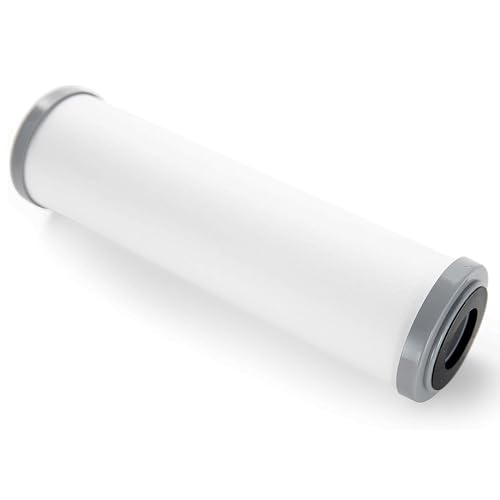

Single-stage inline exterior cylinder with a 20-micron sediment barrier and granular activated carbon
Provides basic chlorine and aesthetic treatment for short trips without the bulk or weight of a multi-canister bracket.
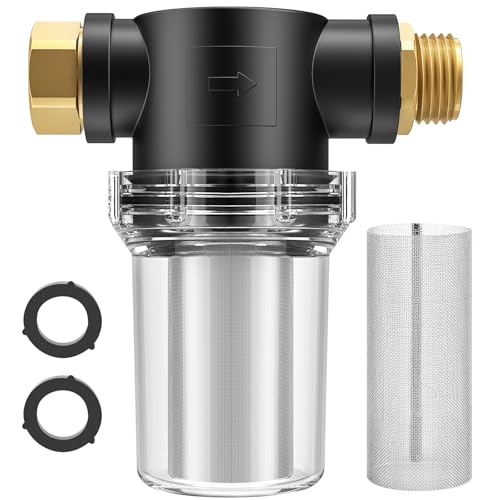

Dedicated under-sink secondary filtration unit certified to NSF/ANSI Standard 53 for lead and cyst reduction
Treats water used specifically for drinking and cooking without wasting filter capacity on showers or toilet flushing.
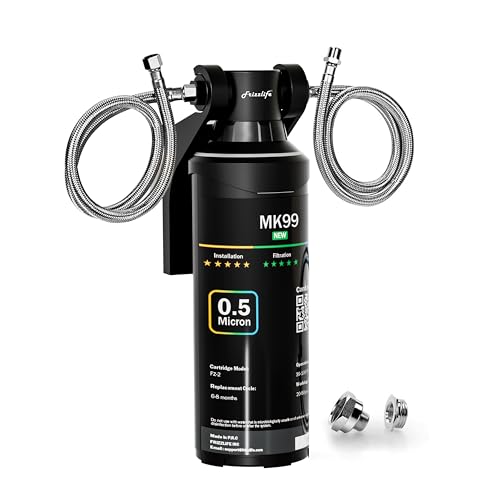 Frizzlife Under Sink Water Filter System-NSF/ANSI 53&42 Certified High Capacity Direct Connect Under Counter Drinking Water Filtration System-0.5 Micron Reduces Lead, Chlorine, Bad Taste & Odor, BlackFRIZZLIFE
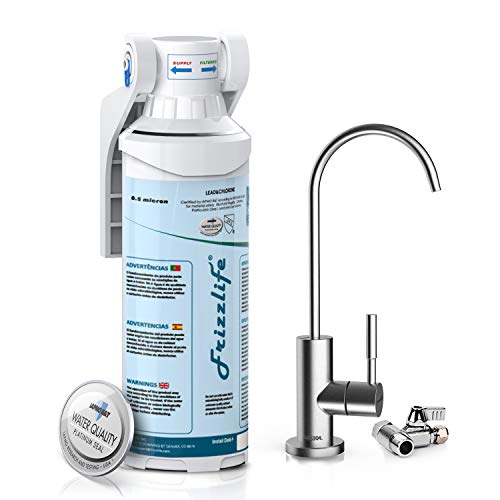 Frizzlife Under Sink Water Filter-NSF/ANSI 53&42 Certified Drinking Water Filtration System-0.5 Micron Removes Lead, Chlorine,Bad Taste & Odor, W/Dedicated FaucetFRIZZLIFE
Prices are not shown here because they change daily and we will not display a stale one. Links open on Amazon, where the current price and availability are live.
Common questions
Does an RV water filter make campground water safe to drink?
An exterior filter removes sediment and improves taste by reducing chlorine, but basic models do not neutralize biological pathogens. According to the Centers for Disease Control and Prevention (CDC), water contaminated with biological agents requires chemical disinfection, boiling, or sub-micron microbiological purification. If a campground issues a boil-water advisory, standard exterior filters cannot make the supply safe.
Should the water filter go before or after the pressure regulator?
Place your pressure regulator directly onto the campground spigot before the filter system. Campground water supply pressures occasionally exceed 100 pounds per square inch (PSI) according to the American Water Works Association (AWWA), which can crack plastic filter sumps. Regulating water pressure at the spigot protects the filter housing, the supply hose, and your interior RV plumbing from sudden pressure surges.
Can you leave an RV water filter outside in freezing weather?
No, freezing water expands and shatters plastic filter housings and tears internal filter membranes. According to the National Weather Service (NWS), water freezes at 32 degrees Fahrenheit and expands inside rigid plastic housings. When nighttime temperatures drop near freezing, disconnect your exterior filter setup, drain the canisters, and bring the cartridges inside the heated living space.
How often do you need to change RV water filter cartridges?
According to the Water Quality Association (WQA), replace exterior sediment and carbon cartridges every three to six months during active travel, or immediately if water flow drops significantly. Even if you camp infrequently, discard wet carbon cartridges at the end of every camping season. Stagnant moisture inside carbon pores encourages bacterial colonization when stored in unconditioned environments between trips.
Does an RV water filter remove hard water minerals?
Standard sediment and activated carbon filters do not remove dissolved calcium or magnesium minerals. According to the United States Geological Survey (USGS), water hardness results from dissolved mineral ions that easily pass through mechanical filter pores. Removing hard water scale requires an ion-exchange water softener containing charged resin beads rather than a standard filter.